-
Use Cases
-
Resources
-
Pricing
Confucianism is a philosophical and ethical system founded on the teachings of the Chinese sage Confucius (Kong Fuzi). Emerging during the Spring and Autumn period of ancient China, it emphasizes moral cultivation, filial piety, social harmony, and proper relationships between individuals. Over more than two millennia, Confucianism became the official state ideology of imperial China and profoundly influenced the cultures of Korea, Japan, Vietnam, and beyond. More Less
1600 BC
% complete
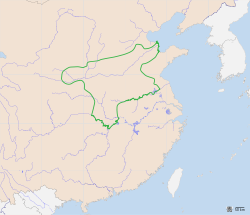
According to scholar He Guanghu, Confucianism may be identified as a continuation of the Shang-Zhou (c. 1600–256 BC) official religion, or the Chinese aboriginal religion which has lasted uninterrupted for three thousand years. The religious traditions of the Shang dynasty laid the earliest foundations for the ritual and cosmological ideas that Confucius would later systematize.
Image source: Shang dynasty
1046 BC - 256 BC
% complete
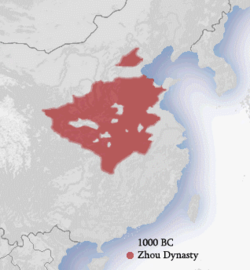
The Zhou dynasty continued the official religion inherited from the Shang, developing the concept of Tian (Heaven) and an elaborate system of rites. This Zhou heritage of ritual propriety and reverence for Heaven became the cultural soil from which Confucian thought emerged.
Image source: Zhou dynasty
600 BC - 500 BC
% complete
By the 6th century BC, the power of Tian and the symbols that represented it on earth—the architecture of cities, temples, altars and ritual vessels, and the Zhou system of rites—became 'diffuse' and were claimed by different potentates in the Zhou states to legitimise their economic, political, and military ambitions. This fragmentation of sacred authority formed the backdrop against which Confucius sought to restore moral order through ritual and virtue.
Image source: Tian
605 - 1905
% complete
Over the following centuries the imperial examination system grew until finally almost anyone who wished to become an official had to prove his worth by passing a set of written government examinations based largely on the Confucian classics. This institutionalized Confucian learning as the foundation of statecraft across East Asia for well over a millennium.
Image source: Imperial examination
1800
% complete
In later centuries, Confucianism heavily influenced many educated martial artists of great influence, especially from the 19th century onwards, when bare-handed martial arts in China became more widespread and began to more readily absorb philosophical influences from Confucianism, Buddhism and Daoism.
Image source: Chinese martial arts
1860 - 1933
% complete
Sun Lutang, one of the most influential Chinese martial artists, exemplified the fusion of martial practice with Confucian ethics. His life reflected how educated martial artists drew on Confucian self-cultivation ideals alongside Buddhist and Daoist philosophy.
Image source: Sun Lutang
1552 - 1699
% complete
In the 16th and 17th centuries, the earliest European arrivals in China, the Christian Jesuits, considered Confucianism to be an ethical system, not a religion, and one that was compatible with Christianity. This sympathetic portrayal shaped Europe's first substantial understanding of Confucian thought.
Image source: Jesuit missions in China
1687
% complete
Matteo Ricci was among the very earliest to report on the thoughts of Confucius, and father Prospero Intorcetta wrote about the life and works of Confucius in Latin in 1687. These writings introduced Confucian philosophy to European readers and contributed to Enlightenment-era interest in Chinese thought.
Image source: Prospero Intorcetta
1690
% complete
From the late 17th century onwards a whole body of literature known as the Han Kitab developed amongst the Hui Muslims of China who infused Islamic thought with Confucianism. This synthesis demonstrated Confucianism's capacity to serve as a shared intellectual vocabulary across religious traditions in China.
Image source: Han Kitab
1700 - 1742
% complete
By the early 18th century, the initial Jesuit portrayal of Confucianism was rejected by the Dominicans and Franciscans, creating a dispute among Catholics in East Asia known as the 'Rites Controversy'. The debate centered on whether Confucian rituals constituted civil observances or forbidden religious worship.
Image source: Chinese Rites controversy
1742
% complete
The view that Confucian rites were incompatible with Christianity was reinforced by Pope Benedict XIV, who ordered a ban on Chinese rituals. The ban deepened the divide between the Catholic Church and Confucian practice for nearly two centuries.
Image source: Pope Benedict XIV
1939
% complete
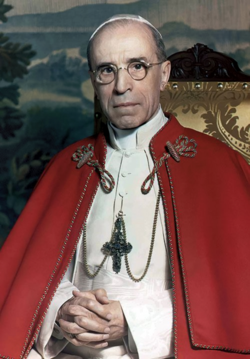
The ban on Chinese rituals ordered by Pope Benedict XIV was re-assessed and repealed in 1939 by Pope Pius XII, provided that such traditions harmonize with the true and authentic spirit of the liturgy. This opened the way for greater accommodation between Catholicism and Confucian customs.
Image source: Pope Pius XII
1894
% complete
The Confucian examination system was abolished in Korea in 1894 as part of the sweeping Gabo Reforms, marking a major step in the retreat of state-endorsed Confucianism in East Asia and the modernization of Korean government institutions.
Image source: Gwageo
1905
% complete
The abolition of the imperial examination system in 1905 marked the decline of state-endorsed Confucianism in China. With the examinations gone, the centuries-old link between Confucian learning and officialdom was severed, undermining the ideology's institutional foundations.
1911 - 1949
% complete
In the early 20th century, Chinese reformers came to associate Confucianism with China's 'Century of Humiliation', and instead embraced alternative ideologies such as Sun Yat-sen's 'Three Principles of the People' and later Maoism. Confucianism was recast as an obstacle to national strength and modernization.
Image source: Century of humiliation
1919
% complete
The Confucian examination system was abolished in Vietnam in 1919, the last of the great East Asian states to end the institution. Its demise completed the dismantling of the traditional Confucian bureaucratic order across China, Korea, and Vietnam.
Image source: Confucian court examination system in Vietnam
1934
% complete
The New Life Movement in the early 20th century was also influenced by Confucianism. Launched under Chiang Kai-shek, it sought to revive traditional Confucian virtues of propriety, righteousness, integrity, and shame as a basis for national renewal amid modernization.
Image source: New Life Movement
1998
% complete
South Korean writer Kim Kyong-il wrote a book in 1998 entitled 'Confucius Must Die For the Nation to Live', reflecting ongoing criticism of Confucianism's perceived role in social hierarchy and stagnation even as other voices celebrated its economic contributions.
Image source: Kim Kyong-hui
1920 - 2000
% complete
The New Confucians of the twentieth century sought to demonstrate that Confucian thought could respond to modernity, engaging with science, democracy, and human rights. Their work provided the intellectual foundation for later thinkers like Roy Tseng and for the broader Confucian revival of the twenty-first century.
Image source: New Confucianism
1958 - 2000
% complete
Roy Tseng, drawing on the New Confucians of the twentieth century, argues that Confucianism and liberal democracy can enter into a dialectical process, in which liberal rights and voting rights are rethought into resolutely modern, but nonetheless Confucian ways of life. This intellectual current repositioned Confucianism as a resource for modern political thought.
1979
% complete
Most scholars attribute the origins of the idea of a 'Confucian work ethic' driving East Asian growth to futurologist Herman Kahn's World Economic Development: 1979 and Beyond. Kahn argued that neo-Confucian cultures were exceptionally well suited to rapid industrialization.
Image source: Herman Kahn
1980 - 1999
% complete
In the late twentieth century, the Confucian work ethic was credited with the rise of the East Asian economy. As Japan, South Korea, Taiwan, Singapore, and Hong Kong boomed, scholars revived interest in Confucian values such as discipline, education, and family loyalty as engines of prosperity.
Image source: East Asia
2000
% complete
According to He Guanghu, Confucianism may be identified as a continuation of the Shang-Zhou official religion, or the Chinese aboriginal religion which has lasted uninterrupted for three thousand years. His framing presents Confucianism not as a mere philosophy but as the indigenous religious tradition of the Chinese people.
2003
% complete
In 2003, the Confucian intellectual Kang Xiaoguang published a manifesto making four suggestions: Confucian education should enter official education at any level, from elementary to high school; the state should establish Confucianism as the state religion by law; Confucian religion should enter daily life through standardised doctrines, rituals, organisations, churches and activity sites; and the Confucian religion should be spread through non-governmental organisations.
Image source: Qin Benli
2005
% complete
In 2005, the Center for the Study of Confucian Religion was established, marking growing institutional support for Confucian studies in China and signaling official tolerance of Confucianism as a living religious tradition rather than merely a philosophical heritage.
2005
% complete
Also in 2005, guoxue—national learning rooted in the Confucian classics—started to be implemented in public schools on all levels in China, reintroducing classical texts and Confucian moral teachings to a new generation of students.
2006
% complete
Being well received by the population, even Confucian preachers have appeared on television since 2006. Their popular lectures brought Confucian teachings into millions of households and fueled a mass cultural enthusiasm for traditional learning.
2009
% complete
In 2009, Zhou Beichen founded another institution which inherits the idea of Kang Youwei's Confucian Church, the Holy Hall of Confucius (孔聖堂) in Shenzhen, affiliated with the Federation of Confucian Culture of Qufu City. It became a model for organized Confucian congregational worship.
2015
% complete
The Holy Hall of Confucius was the first of a nationwide movement of congregations and civil organisations that was unified in 2015 in the Holy Confucian Church, creating a coordinated national structure for Confucian religious life in contemporary China.
Image source: Holy Confucian Church
2015
% complete
A modern Confucian revival has gained momentum in academic and cultural circles, culminating in the establishment of a national Confucian Church in China in 2015, reflecting renewed interest in Confucian ideals as a foundation for social and moral values.
Image source: Confucian church
Or browse the full history timeline directory, with more than 2,000 topics.
This Confucianism timeline was generated with the help of AI, using information found on the internet.
We work hard to keep these timelines accurate, but mistakes do get through. If you spot one, email us at [email protected] and we'll fix it for future visitors.
Generate yours with AI or build it from scratch, for free.
Export your timeline, add your own events, edit or remove AI-generated events, and much more
No credit card required.
Cancel anytime.
Cancel anytime.
You can create an unlimited number of timelines with up to 10 events on each one, customize how they look, export them to PDF, PNG, PowerPoint, CSV, and Excel, and share them with a link. Paid plans raise the event limit and add features like spreadsheet imports and collaborators.
Yes. You can cancel your subscription from your account page at any time, and you will not be charged again. Your subscription stays active for the rest of the period you already paid for.
Yes. We will email you a reminder before the annual renewal, and we will also email you a receipt.
Yes. You can email us within 15 days of any payment, and we will issue you a full refund.
Check out our pricing docs or send us an email anytime: [email protected].