-
Use Cases
-
Resources
-
Pricing
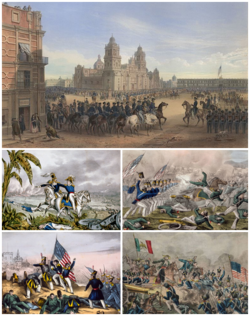
The Mexican-American War was a conflict between the United States and Mexico from 1846 to 1848, sparked by territorial disputes following the U.S. annexation of Texas. The war resulted in a decisive American victory and the Treaty of Guadalupe Hidalgo, through which Mexico ceded vast territories, including California, New Mexico, Arizona, Nevada, Utah, and parts of Colorado and Wyoming, to the United States. More Less
Feb 23, 1836 - Mar 6, 1836
% complete
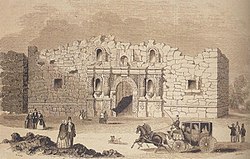
Mexican forces under Santa Anna besieged the Alamo mission in San Antonio, killing all of its defenders, including Davy Crockett and James Bowie. The battle became a rallying cry for Texan independence forces.
Image source: Battle of the Alamo
Mar 2, 1836
% complete
American settlers in Texas declared independence from Mexico, creating the Republic of Texas. The move followed years of tensions over immigration, slavery, and centralist policies under Mexican President Antonio López de Santa Anna, setting the stage for future conflict between Mexico and the United States.
Image source: Texas Declaration of Independence
Apr 21, 1836
% complete
Texan forces led by Sam Houston decisively defeated Santa Anna's army in a surprise attack lasting just 18 minutes. Santa Anna was captured and forced to sign treaties recognizing Texan independence, though Mexico never formally acknowledged the loss.
Image source: Battle of San Jacinto
Jan 1, 1846
% complete
The United States claimed the Rio Grande as Texas's southern border, while Mexico insisted the boundary lay at the Nueces River further north. President James K. Polk ordered General Zachary Taylor to occupy disputed land between the rivers, provoking Mexican resistance.
Image source: Mexican–American War
Nov 10, 1845 - Mar 6, 1846
% complete
President Polk sent diplomat John Slidell to Mexico City to negotiate the purchase of California and New Mexico and settle the Texas boundary. The Mexican government, facing public outrage, refused to receive him, pushing Polk toward military options.
Image source: John Slidell
Dec 29, 1845
% complete
Congress admitted Texas as the 28th state after nearly a decade as an independent republic. Mexico had warned that annexation would mean war, since it still considered Texas part of its territory, and it severed diplomatic relations with Washington.
Image source: Texas annexation
May 13, 1846
% complete
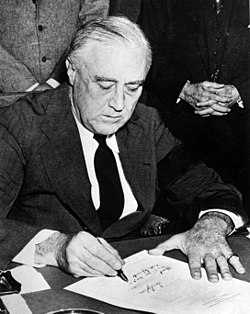
Congress passed a declaration of war against Mexico, with only a handful of dissenting votes. A young Whig congressman named Abraham Lincoln later challenged Polk's claims about where the war began, but the nation rallied behind the conflict.
Image source: Declaration of war by the United States
Aug 8, 1846
% complete
Representative David Wilmot proposed banning slavery in any territory acquired from Mexico. Though repeatedly defeated, the proviso intensified sectional tensions between North and South that would eventually lead to the Civil War.
Image source: Wilmot Proviso
Aug 24, 1847 - Sep 7, 1847
% complete
Scott agreed to a brief armistice to allow peace talks, but negotiations collapsed when Mexican commissioners rejected his terms. Fighting resumed with the costly American assault on Molino del Rey.
Image source: Battle of Molino del Rey
Sep 16, 1847
% complete
After the fall of the capital, Santa Anna resigned and fled, leaving a caretaker government under Pedro María Anaya. His repeated failures discredited him, though he would return to power again in later years.
Image source: Antonio López de Santa Anna
Apr 25, 1846
% complete
Mexican cavalry ambushed an American patrol under Captain Seth Thornton north of the Rio Grande, killing or capturing dozens of soldiers. Polk cited the incident as proof that Mexico had 'shed American blood upon American soil' and used it to justify a declaration of war.
Image source: Thornton Affair
May 3, 1846 - May 9, 1846
% complete
Mexican artillery bombarded the American fortification on the Rio Grande for several days. The siege ended when Taylor's relief force won victories at Palo Alto and Resaca de la Palma, forcing the Mexicans to withdraw across the river.
Image source: Siege of Fort Texas
May 8, 1846
% complete
General Zachary Taylor's army defeated a larger Mexican force near modern Brownsville, Texas, using superior artillery, including new flying grapeshot tactics. It was the first major battle of the war.
Image source: Battle of Palo Alto
May 9, 1846
% complete
Taylor's forces routed the retreating Mexican army in dense brushland near the Rio Grande, capturing General Rómulo Díaz de la Vega and numerous prisoners. The victory secured American control of the disputed territory.
Image source: Battle of Resaca de la Palma
Sep 21, 1846 - Sep 24, 1846
% complete
Taylor's army captured the heavily fortified city of Monterrey after brutal urban fighting. Taylor granted the Mexican garrison an eight-week armistice, drawing criticism from President Polk, who wanted unconditional terms.
Image source: Battle of Monterrey
Dec 6, 1846
% complete
General Stephen Kearny's exhausted dragoons clashed with Californio lancers under Andrés Pico near San Diego. The bloody engagement ended inconclusively, but American reinforcements soon secured the region.
Image source: Battle of San Pasqual
Feb 22, 1847 - Feb 23, 1847
% complete
Zachary Taylor's outnumbered army repelled Santa Anna's attack near Saltillo in fierce mountain fighting. The victory made Taylor a national hero and propelled him to the presidency in 1848.
Image source: Battle of Buena Vista
Apr 18, 1847
% complete
Scott's army outflanked Santa Anna's entrenched positions at Cerro Gordo, routing the Mexican army and capturing thousands of prisoners. Captain Robert E. Lee's reconnaissance played a key role in the flanking maneuver.
Image source: Battle of Cerro Gordo
Aug 19, 1847 - Aug 20, 1847
% complete
In two days of intense fighting outside Mexico City, Scott's forces crushed Mexican defenses at Contreras and Churubusco, inflicting heavy casualties. The victories brought the American army within reach of the capital.
Image source: Battle of Churubusco
Sep 13, 1847
% complete
American troops stormed the fortress of Chapultepec, defended in part by young military cadets known as Los Niños Héroes, several of whom died defending the castle. The fall of Chapultepec left Mexico City exposed.
Image source: Battle of Chapultepec
Jun 14, 1846 - Jul 9, 1846
% complete
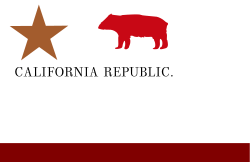
American settlers in Sonoma seized control of northern California and raised the Bear Flag, declaring the California Republic. Within weeks, U.S. naval forces under Commodore John D. Sloat claimed California for the United States.
Image source: California Republic
Aug 18, 1846
% complete
Brigadier General Stephen W. Kearny led the Army of the West into New Mexico, taking Santa Fe peacefully as Governor Manuel Armijo declined to resist. Kearny established a territorial government before continuing toward California.
Image source: Stephen W. Kearny
Mar 9, 1847 - Mar 29, 1847
% complete
General Winfield Scott executed the largest American amphibious operation to date, landing 12,000 troops south of Veracruz. After a three-week siege and bombardment, the city surrendered, opening the road to Mexico City.
Image source: Siege of Veracruz
May 15, 1847
% complete
Scott's army entered the major city of Puebla largely unopposed and rested there for months while awaiting reinforcements. The pause allowed Scott to rebuild his strength before the final push to the capital.
Image source: Puebla
Sep 14, 1847
% complete
Winfield Scott's army marched into the Mexican capital, becoming the first foreign army to occupy Mexico City. Marines have since commemorated the capture in the opening line of the 'Marines' Hymn.'
Jan 24, 1848
% complete
Just days before the peace treaty was signed, gold was discovered at Sutter's Mill in newly acquired California. The Gold Rush drew hundreds of thousands of settlers westward and accelerated California's path to statehood.
Image source: California Gold Rush
Feb 2, 1848
% complete
Nicholas Trist, acting despite Polk's order to recall him, negotiated a peace treaty with Mexico. The treaty set the Rio Grande as the Texas border and ceded vast territories including California and New Mexico to the United States for $15 million.
Mar 10, 1848
% complete
The Senate ratified the Treaty of Guadalupe Hidalgo by a vote of 38 to 14 after modifying some articles. Mexico ratified it in May, formally ending the war and confirming the massive territorial transfer.
Image source: Treaty of Guadalupe Hidalgo
Nov 7, 1848
% complete
War hero General Zachary Taylor won the presidency as the Whig candidate, defeating Lewis Cass. Ironically, Taylor had opposed Polk's expansionist ambitions even while leading armies during the war.
Image source: 1848 United States presidential election
Sep 9, 1850
% complete
As part of the Compromise of 1850, California entered the Union as a free state, bypassing territorial status thanks to its explosive growth during the Gold Rush. The compromise temporarily eased sectional tensions inflamed by the war's territorial gains.
Image source: Compromise of 1850
Jun 8, 1854
% complete
The United States purchased a strip of land in present-day southern Arizona and New Mexico from Mexico for $10 million, finalizing the continental boundaries sought during the Mexican-American War era and enabling a southern transcontinental railroad route.
Image source: Gadsden Purchase
Or browse the full history timeline directory, with more than 2,000 topics.
This Mexican-American War timeline was generated with the help of AI, using information found on the internet.
We work hard to keep these timelines accurate, but mistakes do get through. If you spot one, email us at [email protected] and we'll fix it for future visitors.
Generate yours with AI or build it from scratch, for free.
Export your timeline, add your own events, edit or remove AI-generated events, and much more
No credit card required.
Cancel anytime.
Cancel anytime.
You can create an unlimited number of timelines with up to 10 events on each one, customize how they look, export them to PDF, PNG, PowerPoint, CSV, and Excel, and share them with a link. Paid plans raise the event limit and add features like spreadsheet imports and collaborators.
Yes. You can cancel your subscription from your account page at any time, and you will not be charged again. Your subscription stays active for the rest of the period you already paid for.
Yes. We will email you a reminder before the annual renewal, and we will also email you a receipt.
Yes. You can email us within 15 days of any payment, and we will issue you a full refund.
Check out our pricing docs or send us an email anytime: [email protected].