-
Use Cases
-
Resources
-
Pricing
Millard Fillmore (1800–1874) was the 13th President of the United States, serving from 1850 to 1853. Rising from humble beginnings as a self-taught lawyer in New York, he became president after Zachary Taylor's death. His presidency is most associated with the Compromise of 1850, including the controversial Fugitive Slave Act, which deepened sectional tensions leading to the Civil War. More Less
Jan 7, 1800
% complete
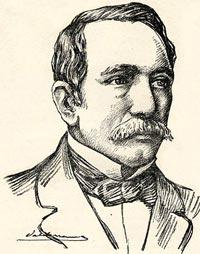
Millard Fillmore was born into a poor farming family in a log cabin in Summerhill, New York. The second of nine children, he grew up in poverty on the frontier and received little formal schooling in his youth.
Image source: Millard Fillmore
1815
% complete
At age 15, Fillmore was apprenticed to a cloth dresser, learning the wool-carding trade. He later bought out his apprenticeship and used his savings to pursue an education.
1819 - 1823
% complete
Fillmore began studying law under Judge Walter Wood while teaching school to support himself. He was admitted to the bar in 1823 and opened a law practice in East Aurora, New York.
Feb 5, 1826
% complete
Fillmore married Abigail Powers, a schoolteacher who had encouraged his early education. She became a highly literate First Lady who helped establish the White House library.
Image source: Abigail Fillmore
1830
% complete
Fillmore relocated his growing law practice to Buffalo, New York, where he built a successful career as a lawyer and became increasingly active in state politics.
Image source: Buffalo, New York
Nov 6, 1828
% complete
Fillmore won election to the New York State Assembly as an Anti-Mason, serving three one-year terms beginning in 1829. He focused on bankruptcy reform and abolishing imprisonment for debt.
Image source: New York State Assembly
1832 - Mar 3, 1843
% complete
Fillmore served four terms in Congress as a Whig, becoming a close ally of Henry Clay. He chaired the powerful Ways and Means Committee during his final term.
Image source: United States House of Representatives
Aug 30, 1842
% complete
As chairman of the Ways and Means Committee, Fillmore guided the Tariff of 1842 through Congress, restoring protective tariffs after the economic downturn following the Panic of 1837.
Image source: Tariff of 1842
1844
% complete
After declining renomination to Congress, Fillmore ran for governor of New York but narrowly lost to Democrat Silas Wright in a year dominated by national Democratic victories.
Image source: 1844 New York gubernatorial election
Jan 1, 1848 - Feb 20, 1849
% complete
Fillmore was elected comptroller of New York, overseeing the state's finances. He resigned after less than two years upon being elected Vice President of the United States.
Image source: New York State Comptroller
Nov 7, 1848
% complete
Fillmore was nominated for vice president to balance the ticket with General Zachary Taylor. The Whig ticket won the 1848 election over Democrat Lewis Cass.
Image source: 1848 United States presidential election
Dec 1849 - Jul 1850
% complete
As President of the Senate, Fillmore presided over fierce debates over the Compromise of 1850. Privately he told Taylor that if the vote were tied on admitting California, he would support it.
Image source: Compromise of 1850
1852 - 1856
% complete
The Whig Party fractured along sectional lines over slavery. Fillmore, identified with compromise, saw the party collapse as anti-slavery Northerners fled to new opposition parties.
Image source: Whig Party (United States)
Feb 22, 1856
% complete
The nativist American Party, known as the Know Nothings, nominated Fillmore for president in 1856, hoping his reputation as a moderate could unite the country amid rising sectionalism.
Image source: Reform Party of the United States of America
Nov 4, 1856
% complete
Running on the American Party ticket, Fillmore carried only Maryland, winning 21.6% of the popular vote. Democrat James Buchanan defeated him and Republican John Frémont.
Image source: 1856 United States presidential election
1850 - 1851
% complete
The Fillmore administration prosecuted Narciso López's American supporters for violating neutrality laws after failed filibuster attempts to seize Cuba from Spain, affirming federal authority over private military adventurism.
Image source: Narciso López
Jul 1850 - Sep 1850
% complete
Taylor's entire Cabinet resigned rather than serve under Fillmore. He appointed Daniel Webster as Secretary of State and built a cabinet committed to sectional compromise.
Image source: Presidency of Millard Fillmore
Jul 4, 1850
% complete
During Fillmore's presidency, the Clayton-Bulwer Treaty framework governed Anglo-American relations regarding a potential canal across Central America, with both powers agreeing not to colonize or control Nicaragua exclusively.
Image source: Clayton–Bulwer Treaty
Jul 9, 1850
% complete
President Zachary Taylor died suddenly of illness after Fourth of July celebrations. Millard Fillmore was sworn in as the 13th President of the United States the following day.
Sep 18, 1850
% complete
Fillmore signed the Fugitive Slave Act, which required Northern authorities to return escaped enslaved people. The law deeply angered abolitionists and became a defining controversy of his presidency.
Image source: Fugitive Slave Act of 1850
Sep 20, 1850
% complete
With Fillmore's strong support, the Compromise of 1850 passed, including admission of California as a free state, popular sovereignty in Utah and New Mexico territories, and resolution of the Texas boundary dispute.
Nov 24, 1852
% complete
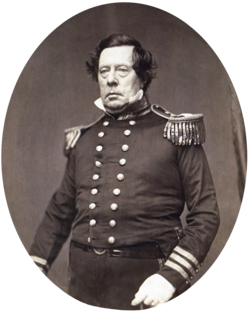
At Fillmore's direction, Commodore Perry departed for Asia with orders to open trade relations with Japan, carrying a presidential letter to the Emperor of Japan.
Image source: Matthew C. Perry
Mar 31, 1854
% complete
Commodore Matthew Perry, dispatched by Fillmore, secured the Convention of Kanagawa, opening Japanese ports to American trade and ending Japan's policy of isolation.
Image source: Convention of Kanagawa
Mar 30, 1853
% complete
Former First Lady Abigail Fillmore died of pneumonia weeks after leaving Washington, just 26 days after the end of her husband's term.
Oct 1854
% complete
Diplomats from Franklin Pierce's administration secretly drafted the Ostend Manifesto calling for acquisition of Cuba, illustrating continued Southern ambitions that Fillmore had resisted by enforcing neutrality laws.
Image source: Ostend Manifesto
Feb 10, 1858
% complete
Five years after Abigail's death, Fillmore married wealthy widow Caroline Carmichael McIntosh, and the couple lived comfortably in his Buffalo mansion until her death in 1881.
Image source: Caroline C. Fillmore
1861 - 1865
% complete
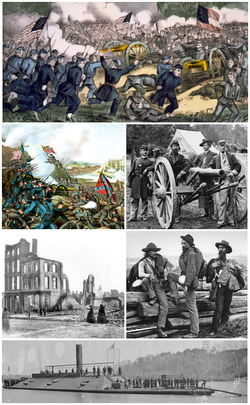
Though critical of Lincoln at times, Fillmore firmly opposed secession and supported the Union war effort, helping raise home guard troops in Buffalo during the Civil War.
Image source: American Civil War
1871 - Mar 8, 1874
% complete
Fillmore served as the first chancellor of the University at Buffalo, which he had helped found in 1846, remaining in the post until his death.
Image source: University at Buffalo
Feb 13, 1874
% complete
Millard Fillmore suffered a severe stroke at his home in Buffalo, New York, leading to declining health in his final weeks.
Mar 8, 1874
% complete
Millard Fillmore died at age 74 in Buffalo, New York. He was buried at Forest Lawn Cemetery, remembered as a president whose compromises delayed but did not prevent civil conflict over slavery.
Image source: Millard Fillmore
Or browse the full history timeline directory, with more than 2,000 topics.
This Millard Fillmore timeline was generated with the help of AI, using information found on the internet.
We work hard to keep these timelines accurate, but mistakes do get through. If you spot one, email us at [email protected] and we'll fix it for future visitors.
Generate yours with AI or build it from scratch, for free.
Export your timeline, add your own events, edit or remove AI-generated events, and much more
No credit card required.
Cancel anytime.
Cancel anytime.
You can create an unlimited number of timelines with up to 10 events on each one, customize how they look, export them to PDF, PNG, PowerPoint, CSV, and Excel, and share them with a link. Paid plans raise the event limit and add features like spreadsheet imports and collaborators.
Yes. You can cancel your subscription from your account page at any time, and you will not be charged again. Your subscription stays active for the rest of the period you already paid for.
Yes. We will email you a reminder before the annual renewal, and we will also email you a receipt.
Yes. You can email us within 15 days of any payment, and we will issue you a full refund.
Check out our pricing docs or send us an email anytime: [email protected].