-
Use Cases
-
Resources
-
Pricing
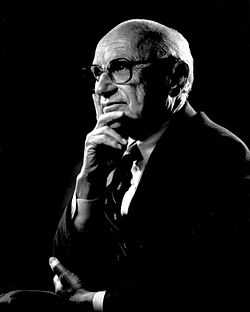
Milton Friedman (1912–2006) was an American economist at the University of Chicago and a leading advocate of free-market capitalism. A central figure of the Chicago School of Economics, he won the Nobel Memorial Prize in Economic Sciences in 1976 for his research on consumption analysis, monetary history, and stabilization policy. More Less
Jul 31, 1912
% complete
Milton Friedman was born on July 31, 1912, in Brooklyn, New York, to Jewish immigrants from Beregszasz, Hungary (now Ukraine). His family soon moved to Rahway, New Jersey, where his parents ran a small garment business.
Image source: Milton Friedman
1932
% complete
Friedman graduated from Rutgers College in 1932 with a degree in economics and mathematics. He was influenced by economists Arthur Burns and Homer Jones, who encouraged him to pursue graduate study in economics.
Image source: Rutgers University
1933
% complete
Friedman earned his master's degree in economics from the University of Chicago in 1933, where he was deeply influenced by Jacob Viner and other members of the Chicago economics faculty.
Image source: University of Chicago
1935 - 1937
% complete
Friedman worked in Washington, D.C., for the National Resources Committee, contributing to a major study of consumer expenditures that shaped his empirical approach to economics.
Jun 25, 1938
% complete
Friedman married economist Rose Director in 1938. She became his lifelong intellectual partner and co-author of several influential books on economics and public policy.
Image source: Rose Friedman
1946
% complete
Friedman completed his doctorate at Columbia University in 1946, writing a dissertation on income from independent professional practice that pioneered statistical analysis of income distribution.
Image source: Columbia University
1946
% complete
Friedman joined the economics department of the University of Chicago in 1946, beginning a three-decade tenure during which he became the leading figure of what became known as the Chicago school of economics.
Apr 1947
% complete
Friedman attended the founding meeting of the Mont Pelerin Society in Switzerland in April 1947, joining Friedrich Hayek and others in creating an international network devoted to classical liberalism and free markets.
Image source: Mont Pelerin Society
Nov 1955 - Jan 1956
% complete
At the invitation of Indian finance minister C.D. Deshmukh, Friedman spent several months in India advising the government on monetary policy and critiquing its plans for centralized economic planning.
Image source: Economic liberalisation in India
1967 - 1968
% complete
Friedman served as president of the American Economic Association in 1967–1968, delivering a presidential address on the role of monetary policy that introduced the concept of the natural rate of unemployment.
Image source: American Economic Association
1977
% complete
Friedman became a senior research fellow at the Hoover Institution, continuing to write and speak on public policy until well into his later years.
Image source: Hoover Institution
1977
% complete
After more than 30 years at Chicago, Friedman retired in 1977, moving to San Francisco while remaining active as a senior fellow at Stanford's Hoover Institution.
1953
% complete
Published in 'Essays in Positive Economics' (1953), this essay argued that theories should be judged by predictive power rather than realism of assumptions, becoming one of the most debated texts in economic methodology.
Image source: Essays in Positive Economics
1957
% complete
In this landmark work, Friedman introduced the permanent income hypothesis, arguing that consumers base spending on long-term expected income rather than current income, challenging prevailing Keynesian views of consumption.
Image source: Consumption function
1962
% complete
Based on his famous Chicago price theory course, this textbook distilled microeconomic reasoning and trained generations of students in applying price-theoretic tools to real-world problems.
Image source: Microeconomics
1962
% complete
This influential book argued that political freedom depends on free-market capitalism. It proposed ideas such as floating exchange rates, volunteer military service, negative income tax, and school vouchers.
Image source: Capitalism and Freedom
1963
% complete
Written with Anna J. Schwartz, this monumental study argued that the Federal Reserve's contraction of the money supply caused and deepened the Great Depression, reshaping understanding of macroeconomic policy.
Image source: A Monetary History of the United States
1969
% complete
This collection of essays consolidated Friedman's monetarist framework, including the k-percent rule proposing steady money supply growth as an alternative to discretionary central bank management.
Image source: Monetarism
1980
% complete
The Friedmans published 'Free to Choose', accompanied by a ten-part PBS television series hosted by Milton. The book became a bestseller, selling millions of copies and popularizing free-market economics worldwide.
1991
% complete
Friedman continued publishing into his eighties, defending and refining monetarist doctrine against new-Keynesian critiques and emphasizing the stability of money demand.
1992
% complete
In this accessible volume, Friedman traced episodes of inflation and monetary experimentation across history, warning of the dangers of fiat currency mismanagement.
Image source: Bimetallism
1998
% complete
The Friedmans jointly published their joint autobiography, 'Two Lucky People', recounting their personal lives and decades-long partnership in scholarship and advocacy.
Image source: Milton Friedman
1964
% complete
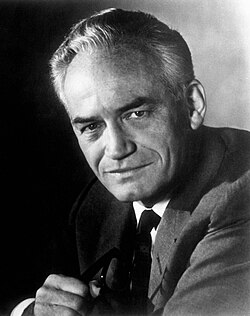
Friedman advised Senator Barry Goldwater's 1964 presidential campaign, helping shape conservative positions on taxation and spending and expanding his role as a public advocate of free markets.
Image source: Barry Goldwater
1966 - 1984
% complete
Friedman wrote a biweekly economics column for Newsweek from 1966 to 1984, bringing free-market arguments on policy issues such as inflation, regulation, and welfare to millions of general readers.
Image source: Newsweek
1968 - 1974
% complete
Friedman informally advised President Nixon, advocating flexible exchange rates and opposing wage-price controls, though he was disappointed by Nixon's imposition of price controls in 1971.
Image source: Richard Nixon
1970 - 1973
% complete
Friedman served on the Gates Commission, which recommended ending the draft. His long-standing advocacy contributed to the transition to an all-volunteer U.S. military, achieved by 1973 under President Nixon.
Image source: Conscription in the United States
1975
% complete
Friedman visited Chile in March 1975 and advised on shock therapy to curb hyperinflation. His association with the military regime drew intense controversy and protests, including at the Nobel ceremony, though he defended it as advice given to any government regardless of regime type.
Image source: Miracle of Chile
Oct 1976
% complete
Friedman received the 1976 Nobel Memorial Prize in Economic Sciences for his research on consumption analysis, monetary history, and the theory of stabilization policy.
Image source: Nobel Memorial Prize in Economic Sciences
1979 - 1990
% complete
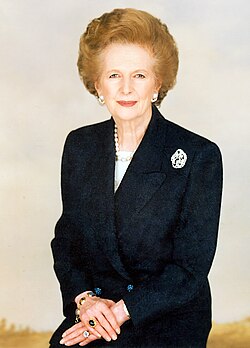
Friedman met with Prime Minister Margaret Thatcher and influenced her government's embrace of monetarist policies, privatization, and deregulation throughout the 1980s.
Image source: Margaret Thatcher
1988
% complete
President Ronald Reagan awarded Friedman the Presidential Medal of Freedom in 1988, recognizing his profound influence on American economic thought and policy.
Image source: Presidential Medal of Freedom
Nov 16, 2006
% complete
Milton Friedman died of heart failure at his home in San Francisco on November 16, 2006, aged 94. His death prompted tributes worldwide acknowledging his transformative impact on economic thought.
Or browse the full history timeline directory, with more than 2,000 topics.
This Milton Friedman timeline was generated with the help of AI, using information found on the internet.
We work hard to keep these timelines accurate, but mistakes do get through. If you spot one, email us at [email protected] and we'll fix it for future visitors.
Generate yours with AI or build it from scratch, for free.
Export your timeline, add your own events, edit or remove AI-generated events, and much more
No credit card required.
Cancel anytime.
Cancel anytime.
You can create an unlimited number of timelines with up to 10 events on each one, customize how they look, export them to PDF, PNG, PowerPoint, CSV, and Excel, and share them with a link. Paid plans raise the event limit and add features like spreadsheet imports and collaborators.
Yes. You can cancel your subscription from your account page at any time, and you will not be charged again. Your subscription stays active for the rest of the period you already paid for.
Yes. We will email you a reminder before the annual renewal, and we will also email you a receipt.
Yes. You can email us within 15 days of any payment, and we will issue you a full refund.
Check out our pricing docs or send us an email anytime: [email protected].