-
Use Cases
-
Resources
-
Pricing
Pop Art is an art movement that emerged in the mid-1950s in Britain and flourished in the United States during the late 1950s and 1960s. It challenged traditional fine art by incorporating imagery from popular culture—advertising, comic books, mass media, and everyday consumer products. Artists like Andy Warhol, Roy Lichtenstein, Claes Oldenburg, and Richard Hamilton blurred the line between 'high' art and commercial culture, using bold colors, mass-production techniques like silkscreen printing, and irony to comment on consumerism and modern life. More Less
1947
% complete
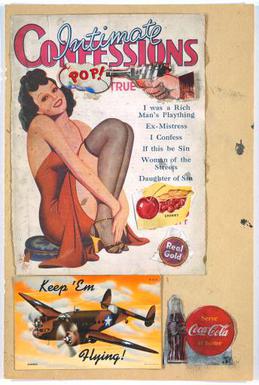
One of the collages in Paolozzi's 1952 presentation was his I was a Rich Man's Plaything (1947), which includes the first use of the word "pop", appearing in a cloud of smoke emerging from a revolver. This work is often cited as an early landmark on the road to pop art.
Image source: I Was a Rich Man's Plaything
1952
% complete
The Independent Group (IG), founded in London in 1952, is regarded as the precursor to the pop art movement. The group of artists, critics, and architects met to discuss popular culture and its relationship to fine art, laying the intellectual groundwork for what would become pop art.
1952
% complete
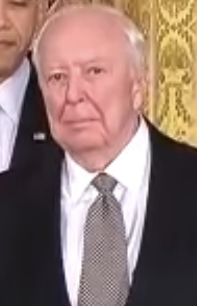
At the first Independent Group meeting in 1952, co-founding member, artist and sculptor Eduardo Paolozzi presented a lecture using a series of collages titled Bunk! that he had assembled during his time in Paris between 1947 and 1949. The presentation drew heavily on American advertising and mass media imagery.
Image source: Eduardo Paolozzi
1952
% complete
Following Paolozzi's seminal presentation in 1952, the IG focused primarily on the imagery of American popular culture, particularly mass advertising. This fascination with consumer culture became a defining characteristic of the emerging pop art movement.
1954
% complete
According to the son of John McHale, the term "pop art" was first coined by his father in 1954 in conversation with Frank Cordell, although other sources credit its origin to British critic Lawrence Alloway. The true origin of the phrase remains debated.
Dec 1954 - 1957
% complete
Sometime between the winter of 1954–55 and 1957 the phrase acquired currency in conversation among artists and critics, spreading informally before appearing widely in print and becoming attached to the new movement.
Image source: Pop art
1955
% complete
"Pop art" as a moniker was used in discussions by IG members in the Second Session of the IG in 1955, helping to establish the term within the group's conversations about art and mass culture.
1956
% complete
The specific term "pop art" first appeared in published print in the article "But Today We Collect Ads" by IG members Alison and Peter Smithson in Ark magazine in 1956, marking a key moment in the movement's naming.
Image source: Pop art
1958
% complete
The term is often credited to British art critic/curator Lawrence Alloway for his 1958 essay titled The Arts and the Mass Media, even though the precise language he uses is "popular mass culture". Alloway was one of the leading critics to defend the inclusion of mass culture imagery in the fine arts.
1960
% complete
In London, the annual Royal Society of British Artists (RBA) exhibition of young talent in 1960 first showed American pop influences, signaling the arrival of the new aesthetic in British art schools and galleries.
Image source: Royal Society of British Artists
Jan 1961
% complete
In January 1961, the most famous RBA-Young Contemporaries of all put David Hockney, the American R B Kitaj, New Zealander Billy Apple, Allen Jones, Derek Boshier, Joe Tilson, Patrick Caulfield, Peter Phillips, Pauline Boty, and Peter Blake on the map. Apple designed the posters and invitations for both the 1961 and 1962 exhibitions.
1958 - 1959
% complete
It was around 1958–1959 that Enrico Baj and Mimmo Rotella abandoned their previous careers, which might be generically defined as belonging to a non-representational genre despite being thoroughly post-Dadaist, to catapult themselves into a new world of images springing up all around them.
Image source: Mimmo Rotella
1958
% complete
The Japanese Gutai movement led to a 1958 Gutai exhibition at Martha Jackson's New York gallery that preceded by two years her famous New Forms New Media show that put pop art on the map, connecting Japanese avant-garde practice with the New York scene.
1960
% complete
Nouveau réalisme refers to an artistic movement founded in 1960 by the art critic Pierre Restany and the artist Yves Klein during the first collective exposition in the Apollinaire gallery in Milan. The movement's engagement with everyday objects paralleled and influenced pop art.
Oct 27, 1960
% complete
Pierre Restany wrote the original manifesto titled the "Constitutive Declaration of New Realism" in April 1960, proclaiming "Nouveau Réalisme—new ways of perceiving the real." It was signed on 27 October 1960 in Yves Klein's workshop by nine people including Klein, Arman, Raysse, Spoerri, Tinguely, Dufrêne, Hains, and de la Villeglé; César, Rotella, Saint Phalle, and Deschamps joined later.
1964 - 1981
% complete
Also in the category of Spanish pop art is the "Chronicle Team" (El Equipo Crónica), which existed in Valencia between 1964 and 1981, formed by the artists Manolo Valdés and Rafael Solbes, bringing politically engaged pop imagery to Spain.
1964
% complete
In Italy, by 1964 pop art was known and took different forms, such as the "Scuola di Piazza del Popolo" in Rome, with pop artists such as Mario Schifano, Franco Angeli, Giosetta Fioroni, Tano Festa, Claudio Cintoli, and some artworks by Piero Manzoni, Lucio Del Pezzo, Mimmo Rotella, and Valerio Adami.
Image source: Fasci Italiani di Combattimento
1964 - 1972
% complete
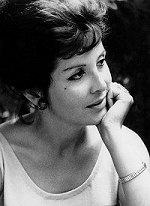
Evelyne Axell from Namur was a prolific pop artist in the 1964–1972 period, contributing a distinctive Belgian voice to the international pop art movement before her early death.
Image source: Evelyne Axell
1970
% complete
After a decade of influential activity that ran parallel to and intersected with pop art, Nouveau réalisme was dissolved in 1970, closing a chapter on one of Europe's key movements engaging everyday objects and mass culture.
Image source: Nouveau réalisme
Jan 1958
% complete
A note about the cover image in the January 1958 issue of Art News pointed out that Jasper Johns' first one-man show marked a significant moment for the young artist whose work bridged Abstract Expressionism and the emerging sensibility that would feed into pop art.
Image source: Jasper Johns
1959 - 1960
% complete
In 1959 and 1960, Claes Oldenburg, Jim Dine, and Tom Wesselmann had early shows at the Judson Gallery in New York, presenting experimental work that helped set the stage for the emergence of American pop art.
Image source: Claes Oldenburg
1960
% complete
Around the same time, Martha Jackson Gallery presented experimental assemblage and installation work in New Media – New Forms (1960), featuring artists such as Hans Arp, Kurt Schwitters, Jasper Johns, Robert Rauschenberg, Oldenburg, and Dine, putting pop art on the map in New York.
1961
% complete
In 1961, Martha Jackson organized Environments, Situations, Spaces, further advancing immersive and object-based art practices that helped set the stage for pop art's embrace of everyday materials and consumer imagery.
Image source: Martha Jackson
Jul 1961
% complete
Apple and Hockney traveled together to New York during the Royal College's 1961 summer break, which is when Apple first made contact with Andy Warhol. Both later moved to the United States, and Apple became involved with the New York pop art scene, quickly becoming an iconic international artist of the 1960s.
Image source: Billy Apple
Dec 1961
% complete
In December 1961, Claes Oldenburg opened The Store on Manhattan's Lower East Side, a month-long installation of handmade sculptures resembling consumer goods, blurring the line between art object and commodity.
Image source: Claes Oldenburg
1962
% complete
Also in 1962, the Sidney Janis Gallery in New York organized the landmark International Exhibition of the New Realists, bringing together American pop artists with European nouveaux réalistes and cementing transatlantic connections between the movements.
Jul 1962
% complete
In July 1962, Andy Warhol held his first solo exhibition at Irving Blum's Ferus Gallery in Los Angeles, exhibiting 32 Campbell's Soup Cans. The show became one of the most iconic moments in the history of pop art.
Image source: Campbell's Soup Cans
Aug 1962
% complete
In an August 1962 review of an exhibition at the Wadsworth Atheneum in Hartford, The New York Times noted the emergence of what was then being called "Pop" or "Environmental" art within a survey of contemporary American work drawn from major Connecticut collections.
Image source: Wadsworth Atheneum
Dec 1962
% complete
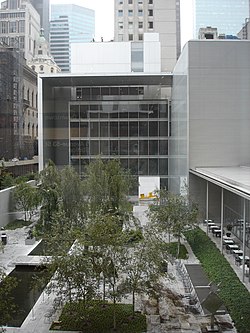
The term "pop art" was officially introduced in December 1962; the occasion was a "Symposium on Pop Art" organized by the Museum of Modern Art, giving the movement formal critical recognition.
Image source: Museum of Modern Art
1963
% complete
Roy Lichtenstein used oil and Magna paint in his best known works, such as Drowning Girl (1963), which was appropriated from the lead story in DC Comics' Secret Hearts #83. His paintings of 1962–64 combined expressive brushwork with silkscreened magazine clippings from Life, Newsweek, and National Geographic.
Image source: Drowning Girl
1964
% complete
Referred to as the "innovator of pop art" by The Observer in 1964, Andy Warhol is widely regarded as the central figure of the movement, transforming celebrity, consumer goods, and media imagery into iconic artworks.
Image source: Andy Warhol
1964
% complete
In 1964, the Bianchini Gallery staged The American Supermarket, transforming the exhibition space into a functioning grocery store stocked with artist-made consumer goods by Warhol, Lichtenstein, Oldenburg, Wesselmann, and others—an immersive demonstration of pop art's fusion of art and commerce.
1963
% complete
By 1963, major New York institutions had embraced the movement, marking pop art's transition from experimental galleries to mainstream institutional recognition and support.
1966
% complete
Alloway clarified these terms in 1966, at which time pop art had already transited from art schools and small galleries to a major force in the artworld, confirming the movement's established status.
1968
% complete
By the mid-1960s, pop artists had secured sustained commercial and institutional support, and by 1968 the São Paulo exhibition Environment U.S.A.: 1957–1967 presented a comprehensive survey of the movement's leading figures, signaling its consolidation as a dominant force in contemporary art.
Or browse the full history timeline directory, with more than 2,000 topics.
This Pop Art timeline was generated with the help of AI, using information found on the internet.
We work hard to keep these timelines accurate, but mistakes do get through. If you spot one, email us at [email protected] and we'll fix it for future visitors.
Generate yours with AI or build it from scratch, for free.
Export your timeline, add your own events, edit or remove AI-generated events, and much more
No credit card required.
Cancel anytime.
Cancel anytime.
You can create an unlimited number of timelines with up to 10 events on each one, customize how they look, export them to PDF, PNG, PowerPoint, CSV, and Excel, and share them with a link. Paid plans raise the event limit and add features like spreadsheet imports and collaborators.
Yes. You can cancel your subscription from your account page at any time, and you will not be charged again. Your subscription stays active for the rest of the period you already paid for.
Yes. We will email you a reminder before the annual renewal, and we will also email you a receipt.
Yes. You can email us within 15 days of any payment, and we will issue you a full refund.
Check out our pricing docs or send us an email anytime: [email protected].