-
Use Cases
-
Resources
-
Pricing
Prehistoric humans refers to the long history of human ancestors before written records began. This era spans millions of years, from the earliest hominids in Africa through the Stone Age, covering major milestones such as bipedalism, tool-making, fire use, art, agriculture, and the rise of early civilizations. More Less
200,000 BC
The Omo remains, excavated between 1967 and 1974 in Omo National Park, Ethiopia, and dated to 200,000 years ago, were long held to be the oldest known fossils of Homo sapiens before older finds at Jebel Irhoud.
Image source: Omo remains

52,000 BC
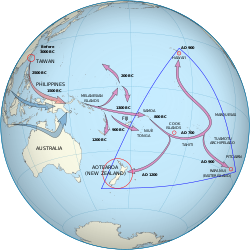
Yang (in 2022) concluded that a distinctive 'Basal-East Asian population' referred to as 'East- and Southeast Asian lineage' (ESEA), ancestral to modern East Asians, Southeast Asians, Polynesians, and Siberians, originated in Mainland Southeast Asia at around 50,000 BC and expanded through multiple migration waves southwards and northwards.
Image source: Early human migrations

40,000 BC
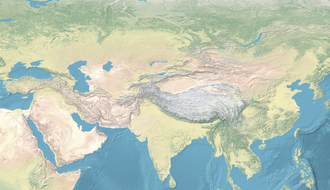
Tianyuan Man is an early modern human from near Beijing. A 2017 study of his ancient DNA found that the individual is related to modern Asian and Native American populations, linking Upper Paleolithic East Asians to later populations across two continents.
Image source: Tianyuan man
40,000 BC
Evidence published in 2014 from genome analysis suggests that modern native Europeans partly descend from 'Western Hunter-Gatherers', a lineage derivative of the Cro-Magnon population of Europe who inhabited the continent after the arrival of modern humans.
Image source: Western hunter-gatherer

30,000 BC
Evidence for the presence of Homo sapiens, based on 2011 excavations at the site of Byzovaya in the Urals (Komi Republic), indicates that modern humans had reached high-latitude northeastern Europe by around 30,000 years ago.
Image source: Komi cuisine

20,000 BC
A 2016 study presented an analysis of the population genetics of the Ainu people of northern Japan as key to the reconstruction of the early peopling of East Asia, tracing their descent from ancient lineages of the Japanese archipelago.
Image source: Ainu people

15000 BC
Ancient North Eurasians expanded to Europe in the context of the Indo-European expansion, contributing the third major lineage identified in 2014 genome analysis as ancestral to modern native populations of Europe.
Image source: Ancient North Eurasian

7000 BC
Early European Farmers were introduced to Europe from the Near East during the Neolithic Revolution, bringing agriculture and forming one of the three distinct lineages that, according to 2014 genome analysis, largely make up modern native European populations.
Image source: Early European Farmers

4000 BC - 3500 BC
The oldest remains in the Caribbean are known from the Greater Antilles (Cuba and Hispaniola) dating between 4000 and 3500 BCE, and comparisons between tool-technologies suggest these peoples moved across the Yucatán Channel from Central America.
Image source: Pre-Columbian era

2000 BC
All evidence suggests that later migrants to the Caribbean from 2000 BCE onwards originated from South America, via the Orinoco region, gradually replacing or absorbing earlier arrivals.
Image source: History of the Caribbean

This Prehistoric Humans timeline was generated with the help of AI, using information found on the internet.
We work hard to keep these timelines accurate, but mistakes do get through. If you spot one, email us at [email protected] and we'll fix it for future visitors.
Generate yours with AI or build it from scratch, for free.