-
Use Cases
-
Resources
-
Pricing
Diana, Princess of Wales (1961–1997), known as 'the People's Princess,' was a beloved member of the British royal family. She married Prince Charles in 1981, became a global icon through her charity work and compassion, championed causes like AIDS awareness and landmine removal, and tragically died in a car accident in Paris in 1997. More Less
Jul 1, 1961
% complete
Diana Frances Spencer was born on July 1, 1961, at Park House on the Sandringham estate in Norfolk, England. She was the fourth of five children born to John Spencer, Viscount Althorp, and his wife Frances. Her birth into the aristocratic Spencer family placed her in close proximity to the British royal family from an early age.
1969
% complete
Diana's parents divorced in 1969 after years of marital difficulties, a painful event that deeply affected her childhood. Her mother left the family home, and Diana and her siblings were raised primarily by their father, who won custody following the contentious separation.
Image source: Diana, Princess of Wales
1974 - 1977
% complete
Diana attended Riddlesworth Hall before moving to West Heath School in Sevenoaks, Kent, in 1974. Though she was not academically distinguished, she showed talent in music, dance, and swimming, and was known for her warm and caring personality among classmates.
1979 - 1981
% complete
After finishing school, Diana moved to London and worked various jobs, including as a nanny and cleaner, before becoming an assistant at the Young England Kindergarten in Pimlico. This period gave her a taste of relative independence before her life changed dramatically with royal engagement.
Feb 24, 1981
% complete
Buckingham Palace announced the engagement of Lady Diana Spencer to Prince Charles, heir to the British throne, in February 1981. The couple had known each other for only a few years, and their engagement captivated the world, making Diana an instant global celebrity.
Image source: Wedding of Prince Charles and Lady Diana Spencer
Jul 29, 1981
% complete
On July 29, 1981, Diana married Prince Charles at St Paul's Cathedral in London in a ceremony watched by an estimated 750 million people worldwide. Wearing an iconic David Emanuel gown with a 25-foot train, she became Princess of Wales and one of the most famous women in the world.
Image source: Wedding of Prince Charles and Lady Diana Spencer
Jun 21, 1982
% complete
Diana gave birth to her first son, Prince William Arthur Philip Louis, on June 21, 1982, at St Mary's Hospital in London. His birth was celebrated nationwide, and Diana was determined to raise him with more personal attention than traditional royal upbringing allowed.
Image source: William, Prince of Wales
Sep 15, 1984
% complete
Diana's second son, Prince Henry Charles Albert David, was born on September 15, 1984, also at St Mary's Hospital. Diana doted on both boys, famously taking them to schools, amusement parks, fast-food restaurants, and homeless shelters to give them a broader view of life.
Image source: Prince Harry, Duke of Sussex
Mar 20, 1983 - Apr 25, 1983
% complete
Diana undertook her first major overseas tour with Prince Charles, visiting Australia and New Zealand in spring 1983, bringing baby William along. Her warmth, beauty, and ease with crowds made the tour a triumph and cemented her status as the 'People's Princess' in the public imagination.
Image source: British royal family
1985
% complete
In 1985, Diana became patron of the Royal Marsden Hospital, reflecting her deep interest in health-related causes. She visited cancer patients regularly, offering comfort and compassion, helping to reduce stigma around illness and demonstrating a hands-on approach to charity work that redefined royal philanthropy.
Image source: Royal Marsden Hospital
Apr 1987
% complete
In April 1987, Diana opened Britain's first dedicated AIDS ward at Middlesex Hospital and shook hands with an HIV-positive patient without wearing gloves. At a time of widespread fear and misinformation about AIDS, this simple gesture had enormous impact, challenging stigma and changing public perceptions of the disease.
1991
% complete
During the early 1990s, Diana grew increasingly involved with humanitarian causes, including work with leprosy patients and children's charities like Centrepoint. Her interest in landmine victims developed during this period, eventually becoming one of her signature causes later in the decade.
Dec 1995
% complete
During a visit to the United States, Diana delivered a speech at Harvard University about eating disorders, drawing on her own experience with bulimia. Her willingness to speak openly about mental health issues helped destigmatize these conditions at a time when such topics were rarely discussed publicly.
Sep 1996 - Aug 1997
% complete
Following her divorce, Diana retained patronages of key organizations including the National AIDS Trust and Centrepoint, and continued championing causes close to her heart. Freed from royal constraints, she adopted a more independent approach to humanitarian work and public appearances.
Jan 15, 1997
% complete
In January 1997, Diana toured Angola with the HALO Trust, walking through an active minefield in protective gear and meeting landmine victims. The dramatic images drew international attention to the landmine crisis and pressured governments toward supporting a global ban, though critics accused her of political meddling.
Image source: HALO Trust
Jun 18, 1997
% complete
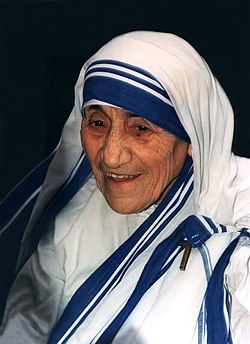
In June 1997, Diana met Mother Teresa in the Bronx, New York, where they spent time together discussing humanitarian issues. The meeting between two of the world's most famous charitable figures attracted global attention, and Mother Teresa later prayed for Diana after her death.
Image source: Mother Teresa
Jun 25, 1997
% complete
In June 1997, Christie's New York auctioned 79 of Diana's iconic gowns, raising approximately $3.25 million for AIDS and cancer charities. The auction symbolized her shedding of her former royal identity while generating substantial funds for the causes she cared about most.
Aug 10, 1997 - Aug 12, 1997
% complete
Just weeks before her death, Diana traveled to Bosnia to meet landmine survivors and support demining efforts. Her final humanitarian mission reaffirmed her commitment to the anti-landmine cause and demonstrated her enduring dedication to the world's most vulnerable people until the very end of her life.
Jun 1992
% complete
Andrew Morton's explosive biography revealed Diana's struggles with bulimia, depression, self-harm, and her unhappy marriage. It was later revealed that Diana had secretly cooperated with Morton through friends, making it an unprecedented act of a senior royal communicating grievances directly to the public via the press.
Image source: Diana: Her True Story (book)
Nov 1992
% complete
In November 1992, transcripts of an intimate 1989 telephone conversation between Charles and Camilla Parker Bowles were published, humiliating Diana publicly. The scandal, coming shortly before the separation announcement, intensified media coverage of the deteriorating marriage and damaged the monarchy's reputation.
Image source: Charles III
Dec 9, 1992
% complete
In December 1992, Prime Minister John Major announced to Parliament that Prince Charles and Diana were formally separating. The marriage had been troubled for years, strained by incompatibility, press scrutiny, and mutual unhappiness, marking the beginning of the end of the royal fairy tale.
Image source: Diana, Princess of Wales
Nov 20, 1995
% complete
Diana gave a landmark television interview to BBC's Panorama on November 20, 1995, watched by over 20 million people. She spoke candidly about the affair, bulimia, and her feelings, famously saying she wanted to be 'a queen of people's hearts.' Years later, it emerged journalist Martin Bashir used deceptive tactics to obtain the interview.
Image source: Panorama (British TV programme)
Aug 28, 1996
% complete
Diana and Charles officially divorced on August 28, 1996, ending nearly 15 years of marriage. She received a settlement reportedly worth around £17 million but lost the style 'Her Royal Highness,' remaining formally styled as 'Diana, Princess of Wales,' a change she found hurtful.
Jul 1997 - Aug 1997
% complete
In summer 1997, Diana vacationed with her sons aboard Mohammed Al-Fayed's yacht Jonikal in the Mediterranean, accompanied by Al-Fayed's son Dodi Fayed. The paparazzi frenzy surrounding the romance and holiday foreshadowed the tragic events to come in Paris weeks later.
Aug 31, 1997
% complete
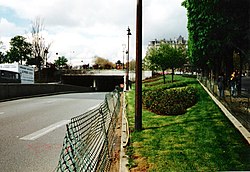
Diana died in the early hours of August 31, 1997, from injuries sustained when her car crashed in the Pont de l'Alma tunnel in Paris while fleeing paparazzi photographers. Driver Henri Paul and companion Dodi Fayed also died; the sole survivor was bodyguard Trevor Rees-Jones. Her death shocked the entire world.
Aug 31, 1997 - Sep 6, 1997
% complete
Following Diana's death, millions mourned publicly, leaving an unprecedented sea of flowers outside Kensington Palace and Buckingham Palace. Criticism mounted against the royals for their initially muted response, forcing Queen Elizabeth II to address the nation and fly flags at half-mast, highlighting tensions between monarchy and public sentiment.
Image source: Death of Diana, Princess of Wales
Sep 6, 1997
% complete
Diana's funeral took place at Westminster Abbey on September 6, 1997, watched by an estimated 2.5 billion people worldwide. Her brother Charles Spencer's emotional eulogy criticized the media and the royal family, while Elton John performed a rewritten version of 'Candle in the Wind' in her honor.
Image source: Funeral of Diana, Princess of Wales
Sep 1999
% complete
In 1999, French investigators concluded that the crash was caused by driver Henri Paul's intoxication and excessive speed, compounded by pursuing paparazzi. Subsequent British inquests in 2004-2008 confirmed accidental death, rejecting conspiracy theories that continued to circulate for decades afterward.
Jul 6, 2004
% complete
Queen Elizabeth II unveiled a memorial fountain in Hyde Park honoring Diana in July 2004, designed by Kathryn Gustafson as a circular stream symbolizing Diana's openness and accessibility. The fountain remains a popular pilgrimage site for admirers remembering the beloved princess.
Image source: Diana, Princess of Wales Memorial Fountain
Jul 1, 2021
% complete
Princes William and Harry reunited to unveil a statue of their mother in Kensington Palace's Sunken Garden on what would have been her 60th birthday. The statue honored Diana's legacy of compassion and marked a rare moment of unity between the estranged brothers in tribute to her memory.
Image source: Statue of Diana, Princess of Wales
Or browse the full history timeline directory, with more than 2,000 topics.
This Princess Diana timeline was generated with the help of AI, using information found on the internet.
We work hard to keep these timelines accurate, but mistakes do get through. If you spot one, email us at [email protected] and we'll fix it for future visitors.
Generate yours with AI or build it from scratch, for free.
Export your timeline, add your own events, edit or remove AI-generated events, and much more
No credit card required.
Cancel anytime.
Cancel anytime.
You can create an unlimited number of timelines with up to 10 events on each one, customize how they look, export them to PDF, PNG, PowerPoint, CSV, and Excel, and share them with a link. Paid plans raise the event limit and add features like spreadsheet imports and collaborators.
Yes. You can cancel your subscription from your account page at any time, and you will not be charged again. Your subscription stays active for the rest of the period you already paid for.
Yes. We will email you a reminder before the annual renewal, and we will also email you a receipt.
Yes. You can email us within 15 days of any payment, and we will issue you a full refund.
Check out our pricing docs or send us an email anytime: [email protected].