-
Use Cases
-
Resources
-
Pricing
Qin Shi Huang (259–210 BCE) was the founder of the Qin dynasty and the first emperor of a unified China. Rising to power as King of the Qin state at age 13, he conquered the rival Warring States by 221 BCE, standardized currency, weights, measures, and writing, and launched massive projects including early Great Wall construction and his famous Terracotta Army mausoleum near modern Xi'an. More Less
400 BC
% complete
Numerous state walls had been built during the previous four centuries, many of them closing gaps between river defences and impassable cliffs. These earlier fortifications later formed the basis for Qin Shi Huang's great wall-building program.
Image source: Qin Shi Huang
246 BC - 208 BC
% complete
Sima Qian, writing a century after the First Emperor's death, wrote that it took 700,000 men to construct the emperor's mausoleum near modern Xi'an.
Image source: Mausoleum of the First Qin Emperor
221 BC
% complete
Qin Shi Huang ordered the Heshibi to be crafted into the Heirloom Seal of the Realm, a physical symbol of the Mandate of Heaven that was passed from emperor to emperor until its loss in the 10th century.
221 BC - 206 BC
% complete
Qin Shi Huang connected and extended existing state walls into a defensive barrier against northern nomads. There are no surviving records specifying the length and course of the Qin walls, which have largely eroded away over the centuries.
Image source: Great Wall of China
221 BC
% complete
Each statue was said to be 5 zhang (11.5 meters) in height and weighing about 1000 dan (about 70 tons). Over 600 years the statues were commented upon and moved from palace to palace until they were destroyed in the 4th century AD, leaving no illustration.
300 AD - 399 AD
% complete
After 600 years during which they were commented upon and moved around from palace to palace, the twelve colossal bronze statues commissioned by Qin Shi Huang were finally destroyed in the 4th century AD. No illustration of them has remained.
Mar 29, 1974
% complete
The terracotta statues guarding the First Emperor's tomb were discovered by a group of farmers digging wells on 29 March 1974, one of the greatest archaeological finds of the 20th century.
Image source: Terracotta Army
1850 - 1949
% complete
The reassessment of Qin Shi Huang was spurred on by the weakness of China in the latter half of the 19th century and early 20th century, prompting scholars to reexamine his policies and reforms.
1941
% complete
Historian Ma Feibai published in 1941 a full-length revisionist biography of the First Emperor entitled Qín Shǐ Huángdì Zhuàn, calling him 'one of the great heroes of Chinese history'.
1949
% complete
With the advent of the Chinese Communist Revolution and the establishment of a new revolutionary regime in 1949, another re-evaluation of the First Emperor emerged as a Marxist critique.
1950
% complete
Since the mid-20th century, scholars have begun questioning the traditional evaluation of Qin Shi Huang as a tyrant, inciting considerable discussion on the actual nature of his policies and reforms.
Sep 1955
% complete
The reassessment of Qin Shi Huang was exemplified in the Complete History of China, compiled in September 1955 as an official survey of Chinese history.
1958
% complete
On hearing he'd been compared to the First Emperor for his persecution of intellectuals, Mao Zedong reportedly boasted in 1958: 'He buried 460 scholars alive; we have buried forty-six thousand scholars alive...'
1972
% complete
Since 1972, a radically different official view of Qin Shi Huang in accordance with Maoist thought has been given prominence throughout China.
1974
% complete
To round out this re-evaluation, Luo Siding put forward a new interpretation of the precipitous collapse of the Qin dynasty in an article entitled 'On the Class Struggle During the Period Between Qin and Han' in a 1974 issue of Red Flag.
Image source: Red Flag (magazine)
1952
% complete
'The Wall and the Books' ('La muralla y los libros'), an acclaimed essay on Qin Shi Huang, was published by Argentine writer Jorge Luis Borges (1899–1986) in the 1952 collection Other Inquisitions (Otras Inquisiciones).
Image source: Inquisition
2006
% complete
Kingdom (2006) is a Japanese manga providing a fictionalized account of the unification of China by Ying Zheng with Li Xin and all who contributed to the conquest of the six Warring States.
Image source: Kingdom (manga)
2015
% complete
Fate/Grand Order (2015), an online free-to-play role-playing mobile game of the Fate franchise developed by Delightworks and published by Aniplex, features Qin Shi Huang as a Ruler class servant.
2016
% complete
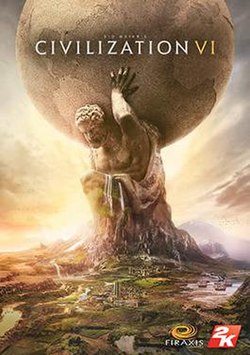
Civilization VI (2016), a turn-based strategy 4X video game developed by Firaxis Games and published by 2K, features Qin Shi Huang as a playable leader of China.
Image source: Civilization VI
1981
% complete
Arthur Cotterell published his work in 1981, contributing to the growing body of scholarship on Qin Shi Huang and ancient Chinese history.
1989
% complete
L., Catherine Pagani and David Miller published a 1989 volume relevant to the study of Chinese history and material culture.
1990
% complete
Aat Emile Vervoorn published his 1990 work, adding to scholarship on early Chinese history and thought.
1998
% complete
Ann Paludan published her 1998 book, which includes discussion of the Great Wall of China and its imperial history.
2000 - 2004
% complete
Michael Loewe published influential volumes in 2000 and 2004 on early Chinese empires, including studies touching on the Qin dynasty.
2006
% complete
Jonathan Clements published his 2006 biography of Qin Shi Huang (ISBN 978-0-7509-3960-7), a popular history of the First Emperor's life.
2007
% complete
Mark Edward Lewis published his 2007 history of the Qin and Han empires, examining the foundations laid by Qin Shi Huang.
Image source: Qin dynasty
2007
% complete
Jane Portal published her 2007 catalogue accompanying the British Museum exhibition on the First Emperor and the terracotta warriors.
2008
% complete
Charles Sanft published an academic article in 2008 contributing to research on Qin Shi Huang and early Chinese governance.
2010
% complete
Ærenlund Sørensen published a 2010 peer-reviewed article with DOI 10.1179/mon.2010.58.1.001 relating to the study of Qin Shi Huang.
2018
% complete
Endymion Wilkinson published his updated 2018 reference work on Chinese history, covering topics including the Qin unification.
May 29, 2021
% complete
Claudius Cornelius Müller published an article on 29 May 2021 continuing academic engagement with the legacy of Qin Shi Huang.
1986
% complete
Rise of the Great Wall (1986) is a 63-episode Hong Kong TV series chronicling the events from the emperor's birth until his death.
Image source: Rise of the Great Wall
1996
% complete
The Emperor's Shadow (1996) focuses on Qin Shi Huang's relationship with the musician Gao Jianli, a friend of the assassin Jing Ke.
1999
% complete
The Emperor and the Assassin (1999) covers much of Ying Zheng's career, recalling his early experiences as a hostage and foreshadowing his dominance over China.
Image source: The Emperor and the Assassin
2001
% complete
A Step into the Past (2001) is a Hong Kong TVB production based on a science fiction novel by Huang Yi.
2002
% complete
Hero (2002) stars Jet Li as a nameless assassin who plans an assassination attempt on the King of Qin, played by Chen Daoming.
Image source: Hero (2002 film)
2002
% complete
Qin Shi Huang (2002) is a mainland Chinese TV semi-fictionalized series starring Zhang Fengyi.
2006
% complete
First Emperor: The Man Who Made China (2006) is a drama-documentary special about Qin Shi Huang. It was shown on Channel 4 in the United Kingdom in 2006.
Image source: Qin Shi Huang
2008
% complete
The Mummy: Tomb of the Dragon Emperor (2008) is the third installment of The Mummy trilogy, featuring a fictionalized Qin Shi Huang as the villainous Dragon Emperor.
Image source: The Mummy: Tomb of the Dragon Emperor
2008
% complete
China's First Emperor (2008) is a special three-hour documentary by The History Channel about the life and legacy of Qin Shi Huang.
Or browse the full history timeline directory, with more than 2,000 topics.
This Qin Shi Huang timeline was generated with the help of AI, using information found on the internet.
We work hard to keep these timelines accurate, but mistakes do get through. If you spot one, email us at [email protected] and we'll fix it for future visitors.
Generate yours with AI or build it from scratch, for free.
Export your timeline, add your own events, edit or remove AI-generated events, and much more
No credit card required.
Cancel anytime.
Cancel anytime.
You can create an unlimited number of timelines with up to 10 events on each one, customize how they look, export them to PDF, PNG, PowerPoint, CSV, and Excel, and share them with a link. Paid plans raise the event limit and add features like spreadsheet imports and collaborators.
Yes. You can cancel your subscription from your account page at any time, and you will not be charged again. Your subscription stays active for the rest of the period you already paid for.
Yes. We will email you a reminder before the annual renewal, and we will also email you a receipt.
Yes. You can email us within 15 days of any payment, and we will issue you a full refund.
Check out our pricing docs or send us an email anytime: [email protected].