-
Use Cases
-
Resources
-
Pricing
Mar 31, 1596
% complete
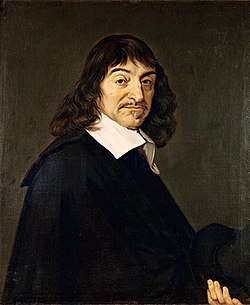
René Descartes was born in La Haye en Touraine, Province of Touraine (now Descartes, Indre-et-Loire), France. He would become a French polymath active across philosophy, mathematics, science, theology, physiology, and medicine.
Image source: René Descartes
May 1597
% complete
In May 1597, Descartes's mother, Jeanne Brochard, died a few days after giving birth to a still-born child.
1607
% complete
Late because of his fragile health, Descartes entered the Jesuit College of La Flèche in 1607, where he was introduced to mathematics and physics.
1614
% complete
Descartes graduated from the Jesuit College of La Flèche in 1614, having gained a strong foundation in mathematics and physics.
1615 - 1616
% complete
After graduating in 1614, Descartes studied for two years (1615–16) at the University of Poitiers, earning a Baccalauréat and Licence in canon and civil law in 1616, in accordance with his father's wishes that he should become a lawyer.
1623
% complete
He arrived in La Haye in 1623, selling all of his property to invest in bonds, which provided a comfortable income for the rest of his life.
Apr 1629
% complete
In April 1629, Descartes joined the University of Franeker, studying under Adriaan Metius, either living with a Catholic family or renting the Sjaerdemaslot.
Image source: University of Franeker
Oct 1630
% complete
In October 1630, Descartes had a falling-out with Beeckman, whom he accused of plagiarizing some of his ideas, ending their early collaboration.
Image source: Isaac Beeckman
1635
% complete
In Amsterdam, Descartes had a relationship with a servant girl, Helena Jans van der Strom, with whom he had a daughter, Francine, who was born in 1635 in Deventer.
Image source: Francine Descartes
1640
% complete
Unlike many moralists of the time, Descartes did not deprecate the passions but instead defended them; he wept upon Francine's death in 1640. He reportedly said that one need not refrain from tears to prove oneself a man. Russell Shorto speculates fatherhood and losing a child changed his work's focus from medicine to universal answers.
1643 - 1649
% complete
Between 1643 and 1649 Descartes lived with his girlfriend at Egmond-Binnen in an inn.
Image source: Egmond-Binnen
1618
% complete
In accordance with his ambition to become a professional military officer, Descartes joined as a mercenary the Protestant Dutch States Army in Breda under Maurice of Nassau, undertaking a formal study of military engineering as established by Simon Stevin.
1618
% complete
Through his military service Descartes became acquainted with Isaac Beeckman, principal of a Dordrecht school, for whom he wrote the Compendium of Music, a treatise on music theory and aesthetics dedicated to Beeckman (written 1618, published 1650). Beeckman sparked his interest in mechanical philosophy and physics.
Image source: Traité de l'harmonie réduite à ses principes naturels
1619
% complete
While in the service of the Catholic Duke Maximilian of Bavaria from 1619, Descartes was present at the Battle of the White Mountain near Prague in November 1620.
Image source: Maximilian I, Elector of Bavaria
Nov 10, 1619
% complete
According to Adrien Baillet, on the night of 10–11 November 1619 Descartes experienced a series of dreams that inspired him to pursue a new philosophical system based on reason.
1620
% complete
In 1620, Descartes left the army, ending his career as a mercenary soldier and turning toward intellectual pursuits.
Nov 1620
% complete
Descartes was present at the Battle of the White Mountain near Prague in November 1620, a decisive battle of the early Thirty Years' War.
Image source: Battle of White Mountain
1627
% complete
Descartes was present at the siege of La Rochelle by Cardinal Richelieu in 1627 as an observer.
Image source: Siege of La Rochelle
1628
% complete
In 1628, Beeckman introduced Descartes to many of Galileo's ideas, further shaping his scientific thought. That same year, Descartes returned to the Dutch Republic.
1628
% complete
Descartes returned to the Dutch Republic in 1628, where he would spend much of the rest of his life working and writing.
1633
% complete
In 1633, Galileo was condemned by the Italian Inquisition, and Descartes abandoned plans to publish Treatise on the World, his work of the previous four years. The manuscript was unpublished; discovered in his Stockholm estate in 1650, it was soaked in the Seine in a shipwreck while being shipped back to Paris, copied by Leibniz in 1676, and lost—Leibniz's copy being rediscovered circa 1860 in Hannover.
Image source: Guinness World Records
1637
% complete
In 1637, Descartes published parts of Treatise on the World in three essays: "Les Météores" (The Meteors), "La Dioptrique" (Dioptrics) and La Géométrie (Geometry), preceded by an introduction, his famous Discours de la méthode (Discourse on the Method), which connected geometry and algebra into analytic geometry.
Image source: Discourse on the Method
1641
% complete
In 1641, Descartes published a metaphysics treatise, Meditationes de Prima Philosophia (Meditations on First Philosophy), written in Latin and thus addressed to the learned.
Image source: Meditations on First Philosophy
1644
% complete
In 1644, Principia Philosophiae (Principles of Philosophy) followed the Meditations; it was dedicated to Sophia of Hanover, a kind of synthesis of the Discourse on the Method and Meditations on First Philosophy. In it Descartes outlined his views on the universe and provided one of the earliest microscopic theories of glass.
Image source: Principles of Philosophy
1647
% complete
A French translation of Principia Philosophiae, prepared by Abbot Claude Picot under Descartes's supervision, appeared in 1647 with a letter-preface to Princess Elisabeth of Bohemia. A French translation of the Meditations by the Duke of Luynes was also published in 1647.
Apr 16, 1648
% complete
Notes survive of a Q&A session between Descartes and Frans Burman on 16 April 1648. They were rediscovered in 1895 and published for the first time in 1896; an annotated bilingual edition edited by Jean-Marie Beyssade was published in 1981.
Image source: Johannes Burman
1649
% complete
By 1649, Descartes had become one of Europe's most famous philosophers and scientists. Connected with his correspondence with Princess Elisabeth, in 1649 he published Les Passions de l'âme (The Passions of the Soul), dedicated to the Princess. It discussed animal spirits and advanced a theory of automatic bodily reactions influencing 19th-century reflex theory.
Image source: Passions of the Soul
1684 - 1701
% complete
Descartes's Rules for the Guidance of Natural Intelligence was first published posthumously in Dutch translation in 1684 and in the original Latin at Amsterdam in 1701. His unfinished dialogue La recherche de la vérité par la lumière naturelle (The Search for Truth by Natural Light) was also published in 1701.
1860
% complete
Leibniz's lost copy of Descartes's Treatise on the World manuscript was rediscovered circa 1860 in Hannover, shedding light on the lost original text.
Image source: Gottfried Wilhelm Leibniz
1895
% complete
Notes on Descartes's Q&A session with Frans Burman were rediscovered in 1895 and published for the first time in 1896.
Jan 2010
% complete
In January 2010, a previously unknown letter from Descartes, dated 27 May 1641, was found by the Dutch philosopher Erik-Jan Bos when browsing through Google.
Image source: Jan-Just Bos
1643
% complete
In 1643, Cartesian philosophy was condemned at the University of Utrecht, where Professor Henricus Regius had been condemned by Rector Gijsbert Voetius for teaching Descartes's physics. Descartes was obliged to flee to The Hague, then eventually north of Amsterdam, ultimately settling in Egmond-Binnen.
1650
% complete
His manuscripts came into the possession of Claude Clerselier, Chanut's brother-in-law, described as a devout Catholic who began the process of turning Descartes into a saint by cutting, adding and publishing his letters selectively. Clerselier also published The Search for Truth by Natural Light materials and Correspondence volumes in 1657, 1659, and 1667, with the third edition of 1667 most complete though omitting mathematical material.
Image source: Claude Clerselier
Jan 15, 1650
% complete
By 15 January 1650 the Queen had actually met with Descartes only four or five times, despite his having traveled to Sweden at her invitation.
Image source: Christina, Queen of Sweden
Feb 11, 1650
% complete
On 1 February 1650, Descartes contracted pneumonia and died on 11 February 1650 at Chanut's home in Stockholm. His Compendium of Music was published posthumously that same year, and Man was later published posthumously in Latin translation in 1662, with The World following in 1664.
1663
% complete
In 1663, the Pope placed Descartes's works on the Index of Prohibited Books, meaning the Catholic Church prohibited his books.
Image source: Index Librorum Prohibitorum
1666
% complete
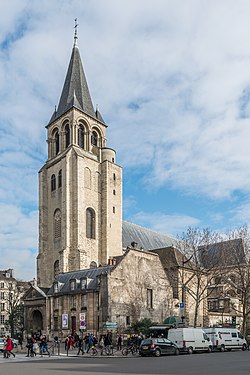
In 1666, sixteen years after his death, his remains were taken to France and buried in Saint-Étienne-du-Mont in Paris.
Image source: Saint-Étienne-du-Mont
1671
% complete
In 1671, Louis XIV prohibited all lectures in Cartesianism, reflecting official French resistance to Descartes's philosophy.
Image source: Louis XIV
1691
% complete
The original skull was probably divided into pieces in Sweden and given to private collectors; one of those pieces arrived at the University of Lund in 1691, where it is still preserved.
1819
% complete
Although the National Convention in 1792 had planned to transfer his remains to the Panthéon, Descartes was reburied in the Abbey of Saint-Germain-des-Prés in 1819, missing a finger and the skull.
Image source: Saint-Germain-des-Prés (abbey)
Or browse the full history timeline directory, with more than 2,000 topics.
This Rene Descartes timeline was generated with the help of AI, using information found on the internet.
We work hard to keep these timelines accurate, but mistakes do get through. If you spot one, email us at [email protected] and we'll fix it for future visitors.
Generate yours with AI or build it from scratch, for free.
Export your timeline, add your own events, edit or remove AI-generated events, and much more
No credit card required.
Cancel anytime.
Cancel anytime.
You can create an unlimited number of timelines with up to 10 events on each one, customize how they look, export them to PDF, PNG, PowerPoint, CSV, and Excel, and share them with a link. Paid plans raise the event limit and add features like spreadsheet imports and collaborators.
Yes. You can cancel your subscription from your account page at any time, and you will not be charged again. Your subscription stays active for the rest of the period you already paid for.
Yes. We will email you a reminder before the annual renewal, and we will also email you a receipt.
Yes. You can email us within 15 days of any payment, and we will issue you a full refund.
Check out our pricing docs or send us an email anytime: [email protected].