-
Use Cases
-
Resources
-
Pricing
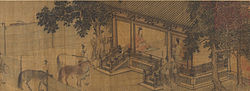
The Spring and Autumn Period was an era in ancient Chinese history, roughly spanning 770 to 476 BCE, during which the Zhou Dynasty's power declined and regional states competed for dominance. Named after the chronicle 'Spring and Autumn Annals' attributed to Confucius, this period witnessed the rise and fall of powerful hegemons, constant warfare among vassal states, and remarkable cultural and intellectual developments that laid the foundation for classical Chinese philosophy, including the teachings of Confucius and Laozi. More Less
770 BC
% complete
After the Sack of Hao by western tribes forced the death of King You, his son King Ping relocated the Zhou capital eastward to Luoyang. This move marked the beginning of the Eastern Zhou dynasty and the start of the Spring and Autumn period, as royal authority over the regional states began to decline dramatically.
Image source: King Ping of Zhou
685 BC - 645 BC
% complete
As chancellor of Qi, Guan Zhong implemented sweeping administrative, economic, and military reforms. He reorganized the state into administrative districts, monopolized salt and iron production, and professionalized the army, creating a model of statecraft that later reformers across China would emulate.
Image source: Guan Zhong
679 BC
% complete
Duke Huan convened a gathering of the feudal lords and was recognized as the first Hegemon (ba) of the Spring and Autumn period. Under the slogan of 'honoring the Zhou king and expelling the barbarians,' he led joint military campaigns and arbitrated disputes between states.
Image source: Hegemony
651 BC
% complete
At a grand interstate meeting at Kuiqiu, Duke Huan's supremacy was formally acknowledged by the assembled lords, who swore covenants pledging not to dam rivers, block grain trade, or change heirs improperly. The covenant represented the peak of Qi hegemony and interstate diplomacy based on sworn agreements.
562 BC - 481 BC
% complete
The three powerful ministerial clans of Lu—the Jisun, Shusun, and Mengsun families—partitioned the ducal lands and reduced the dukes to figureheads. Their domination illustrated how ministerial usurpation of ducal power mirrored the weakening of the Zhou kings themselves.
522 BC
% complete
After his father and brother were executed by the King of Chu, Wu Zixu escaped to the rising southeastern state of Wu. There he helped Prince Guang (King Helü) seize the throne and recommended military strategist Sun Tzu, setting Wu on a path of dramatic expansion against Chu.
Image source: Wu Zixu
481 BC
% complete
Tian Chang murdered Duke Jian of Qi and seized effective control of the state, beginning the process by which the ancient ruling house of Jiang was replaced by the Tian family. This ministerial usurpation foreshadowed the complete partition that would formalize decades later.
473 BC
% complete
After helping Goujian destroy Wu, the astute minister Fan Li recognized that the king could not be trusted and wisely retired. Reinventing himself as the wealthy merchant Tao Zhu Gong, he became a symbol of commercial success and prudent knowing when to withdraw from power.
Image source: Fan Li
453 BC
% complete
The ministerial families of Han, Zhao, and Wei destroyed their rival Zhi and divided the vast state of Jin among themselves, leaving the Jin duke a powerless figurehead. This event is conventionally regarded as marking the transition toward the Warring States period.
707 BC
% complete
Duke Zhuang of Zheng decisively defeated the royal army of King Huan of Zhou at the Battle of Xuge (Buge), even wounding the king. This shocking victory by a vassal state over its sovereign demonstrated the collapse of Zhou royal authority and set a precedent for interstate warfare among the feudal lords.
632 BC
% complete
Duke Wen of Jin defeated the southern superpower Chu at Chengpu in one of the most famous battles of the era. Using feigned retreat tactics, Jin crushed Chu's right and left wings. The victory made Duke Wen the second Hegemon and established Jin as the leading power of the north.
Image source: Battle of Chengpu
597 BC
% complete
King Zhuang of Chu inflicted a devastating defeat on Jin at Bi, reversing the outcome of Chengpu. The battle cemented Chu's position as the dominant power of the age temporarily and intensified the long-running Jin–Chu rivalry that defined the period's geopolitics.
Image source: Battle of Bi
506 BC
% complete
In one of the most dramatic campaigns of the period, Wu forces under Sun Tzu and Wu Zixu penetrated deep into Chu and captured its capital Ying, forcing King Zhao of Chu to flee. It was the first time a great power's capital fell to a rival, though Wu could not hold the conquest permanently.
Image source: Battle of Boju
485 BC
% complete
King Fuchai of Wu, seeking northern supremacy, led a massive expedition including naval forces up the coast to defeat Qi at Ailing. The victory briefly made Wu the preeminent power, but the exhausting campaigns drained the kingdom while its nemesis Yue rebuilt in secret.
Image source: Fuchai of Wu
478 BC
% complete
While Fuchai was engaged in the north, Goujian launched a surprise invasion of Wu, destroying its army and besieging its capital. Two years later Wu surrendered completely; Fuchai committed suicide, and Wu was annexed by Yue, completing one of history's most famous revenge stories.
Image source: Goujian
685 BC
% complete
Duke Huan ascended to the throne of the state of Qi after a succession struggle. With the help of his brilliant chancellor Guan Zhong, he transformed Qi into the most powerful state in China and became the first of the Five Hegemons, using his power nominally to defend the Zhou king.
659 BC - 621 BC
% complete
Duke Mu of Qin turned his ambitions toward the Rong tribes of the west after being blocked from eastern expansion by Jin. He annexed twelve western kingdoms and extended Qin's territory dramatically, laying the groundwork that would eventually enable Qin's future unification of China.
Image source: Duke Mu of Qin
643 BC
% complete
The death of Duke Huan triggered a brutal war of succession among his five sons. His body lay unburied for weeks while rivals fought for the throne, and Qi's power rapidly declined, ending the state's dominance and opening the way for Song and Jin to contend for leadership.
636 BC
% complete
After nineteen years of exile wandering among various states, Chong'er returned to Jin with Qin's military support and became Duke Wen. A seasoned and pragmatic leader surrounded by capable followers, he quickly revitalized Jin and laid the foundation for its century of dominance.
Image source: Duke Wen of Jin
613 BC - 591 BC
% complete
King Zhuang of Chu expanded his kingdom aggressively, defeating the Rong tribes, subduing Song and Zheng, and famously inquiring about the weight of the Zhou cauldrons, a symbolic challenge to royal authority. He is counted as the third of the Five Hegemons despite Chu's nominal status as a southern 'barbarian' state.
Image source: King Zhuang of Chu
514 BC
% complete
Prince Guang had King Liao of Wu assassinated by Zhuan Zhu, who hid a dagger inside a fish, and took the throne as King Helü. With Wu Zixu and Sun Tzu as advisors, he built Wu into a formidable military power aimed at dominating the southeast and striking at Chu.
496 BC
% complete
Goujian ascended the throne of the southern state of Yue and soon clashed with neighboring Wu. After being crushingly defeated and forced into humiliating servitude in Wu, he endured years of hardship—legend says tasting gall daily to remember his humiliation—before plotting his revenge.
403 BC
% complete
King Weilie of Zhou formally granted the titles of marquis to the leaders of Han, Zhao, and Wei, legitimizing their partition of Jin. Many historians take this recognition as the official end of the Spring and Autumn period and the beginning of the Warring States period.
571 BC
% complete
According to tradition, the sage Li Er, called Laozi, wrote the Tao Te Ching before vanishing westward through the Hangu Pass. This short poetic work of Daoist philosophy, teaching harmony with the natural Way and wu wei (non-action), became foundational to Chinese thought alongside Confucianism.
Image source: Tao Te Ching
551 BC
% complete
Kong Qiu, later known as Confucius, was born in Qufu in the state of Lu to an impoverished noble family. Witnessing the disorder of his age, he developed a philosophy centered on ritual propriety, filial piety, benevolent government, and moral cultivation, becoming the most influential thinker in Chinese history.
Image source: Confucius
512 BC
% complete
Sun Tzu, the legendary military strategist, entered the service of King Helü of Wu and reportedly demonstrated his principles by training palace women. His treatise, The Art of War, became one of the most influential works on strategy ever written and reflects the intense warfare of this era.
Image source: Sun Tzu
497 BC - 484 BC
% complete
Disillusioned by court politics in Lu, Confucius spent over a decade traveling among states such as Wei, Chen, Cai, and Song seeking a ruler who would adopt his ideals of virtuous governance. Though he found no patron, he gathered devoted disciples who preserved and spread his teachings.
479 BC
% complete
Confucius died in his home state of Lu at the age of seventy-one, reportedly mourning the death of his beloved disciple Yan Hui. His disciples compiled the Analects from his sayings, ensuring his philosophy would shape Chinese civilization, government, education, and ethics for millennia.
470 BC - 391 BC
% complete
Mo Di, known as Mozi, taught doctrines of universal love, meritocracy, frugality, and opposition to offensive warfare, organizing a disciplined movement of craftsmen and warriors. Mohism rivaled Confucianism as a major school of thought and pioneered logic and defensive military science.
Image source: Mozi
400 BC
% complete
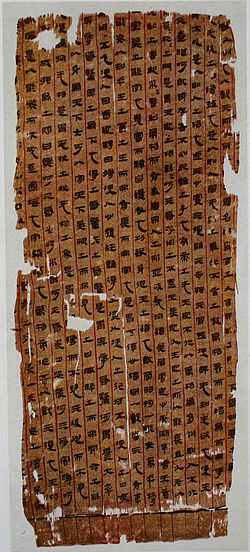
Traditionally attributed to Zuo Qiuming, the Zuo Zhuan provided rich narrative commentary on the Spring and Autumn Annals of Lu. Covering the years 722–468 BC, it remains the most detailed surviving source for the politics, warfare, diplomacy, and culture of the Spring and Autumn period.
Image source: Zuo Zhuan
Or browse the full history timeline directory, with more than 2,000 topics.
This Spring and Autumn Period timeline was generated with the help of AI, using information found on the internet.
We work hard to keep these timelines accurate, but mistakes do get through. If you spot one, email us at [email protected] and we'll fix it for future visitors.
Generate yours with AI or build it from scratch, for free.
Export your timeline, add your own events, edit or remove AI-generated events, and much more
No credit card required.
Cancel anytime.
Cancel anytime.
You can create an unlimited number of timelines with up to 10 events on each one, customize how they look, export them to PDF, PNG, PowerPoint, CSV, and Excel, and share them with a link. Paid plans raise the event limit and add features like spreadsheet imports and collaborators.
Yes. You can cancel your subscription from your account page at any time, and you will not be charged again. Your subscription stays active for the rest of the period you already paid for.
Yes. We will email you a reminder before the annual renewal, and we will also email you a receipt.
Yes. You can email us within 15 days of any payment, and we will issue you a full refund.
Check out our pricing docs or send us an email anytime: [email protected].