-
Use Cases
-
Resources
-
Pricing
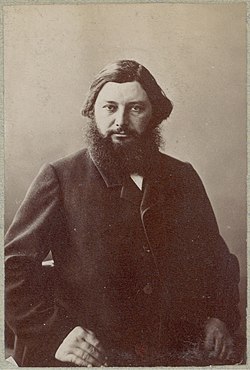
Vercingetorix was a Gallic king and chieftain of the Arverni tribe who led a major uprising against Roman forces under Julius Caesar during the Gallic Wars. He united several Gallic tribes in a coordinated resistance, achieving a victory at Gergovia before being defeated and besieged at Alesia in 52 BCE, where he ultimately surrendered to Caesar. More Less
1500 - 1850
% complete
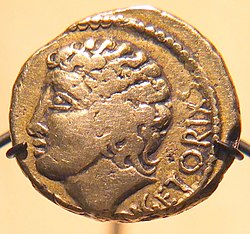
Until the mid-19th century, Vercingetorix was commonly understood as a common noun, and expressions such as "the vercingetorix ('commander-in-chief') of the confederation" were widely used.
Image source: Vercingetorix
1500 - 1600
% complete
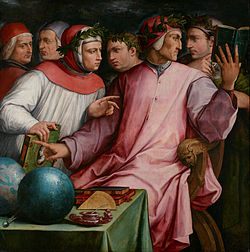
Largely overlooked during the Middle Ages, Vercingetorix was rediscovered in the 16th century through the humanist revival of Caesar's writings, via scholarly editions and vernacular translations of the Gallic Wars.
Image source: Renaissance humanism
1828
% complete
Beginning with Amédée Thierry's Histoire des Gaulois (1828), historians increasingly located the origins of French history in ancient Gaul rather than with the Frankish king Clovis, reshaping French historical consciousness.
Image source: Amédée Thierry
1865 - 1866
% complete
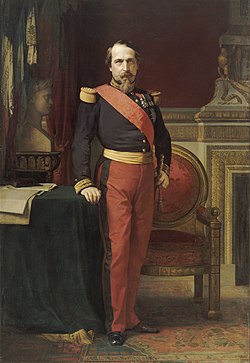
In 1865–1866, emperor Napoleon III authored a two-volume work on Caesar and financed archaeological excavations at Alesia, Gergovia, and Bibracte, deepening scholarly engagement with the Gallic Wars.
Image source: Napoleon III
1892
% complete
Building on Thierry's tradition, Camille Jullian published Gallia (1892), a major monograph that advanced the study of ancient Gaul and its resistance to Rome.
1900
% complete
Camille Jullian published a major monograph on Vercingetorix (1900), portraying him as a capable strategist and innovator of scorched-earth warfare.
1908 - 1926
% complete
Camille Jullian's multi-volume Histoire de la Gaule (1908–1926) portrayed Vercingetorix as a capable strategist and innovator of scorched-earth warfare, cementing his scholarly reputation.
Image source: Camille Jullian
1800 - 1900
% complete
Significant reception of Vercingetorix as a historical and cultural figure emerged only in the 19th century, in the context of rising nationalism and romanticism in France and Europe.
Image source: Nationalism
1871
% complete
After France's defeat in the Franco-Prussian War in 1871, Vercingetorix was increasingly reinterpreted as a national symbol embodying the noble loser who retains moral superiority over the victor.
Image source: Franco-Prussian War
1871 - 1900
% complete
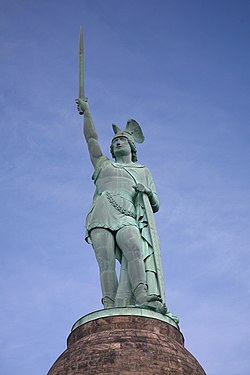
In the later part of the 19th century, Vercingetorix was further appropriated within the context of French rivalry with Germany, and positioned as a counterpart to the German hero Arminius.
Image source: Arminius
1880 - 1890
% complete
Many monumental statues of Vercingetorix were erected in France during the 19th century, including one by Frédéric Bartholdi on the Place de Jaude in Clermont-Ferrand.
Image source: Frédéric Auguste Bartholdi
1900 - 2000
% complete
This reinterpretation permeated historiography, politics, literature, and the arts, and remained influential well into the 20th century.
Image source: Historiography
1829
% complete
Eugène Delacroix depicted Vercingetorix in 1829, marking the beginning of his prominence as a subject of 19th-century history painting.
Image source: Eugène Delacroix
1855
% complete
Théodore Chassériau painted The Defence of the Gauls by Vercingetorix in 1855, making the Gallic leader a recurring subject for historical painters of the era.
Image source: Théodore Chassériau
1864
% complete
In 1864, Gustave Courbet painted the Oak of Vercingetorix in a landscape without featuring the hero himself, an unusual take on the popular subject.
Image source: Gustave Courbet
1878
% complete
Conrad Ferdinand Meyer's ballad Das Geisterross (1878) reflects on the defeated Gallic leader's fate during Caesar's triumph and anticipates his death as a form of redemption.
Image source: Conrad Ferdinand Meyer
1886
% complete
Henri-Paul Motte painted Vercingetorix surrendering to Caesar in 1886, contributing to the enduring tradition of history painting centered on the Gallic leader.
Image source: Henri-Paul Motte
1899
% complete
The most influential work of this period was Lionel Royer's Vercingetorix Throwing His Weapons at the Feet of Caesar (1899), which established an enduring image of the Gaul as noble in defeat.
Image source: Lionel Royer
1944
% complete
During the Second World War, the figure of Vercingetorix was revived in poetry by Louis Aragon in La Diane française (1944).
Image source: Louis Aragon
1984
% complete
Cristina Peri Rossi's experimental novel La nave de los locos (1984) depicted Vercingetorix as an exiled figure and allegory of postmodern complexity; unlike the historical hero, he survives captivity, reflecting modern deheroisation.
Image source: Cristina Peri Rossi
2002
% complete
In Alain Mabanckou's Les petits-fils nègres de Vercingétorix (2002), set in a fictional postcolonial African state, he becomes an ambivalent symbol of ethnic and political conflict.
Image source: Alain Mabanckou
2003
% complete
Norman Spinrad's The Druid King (2003) marked notable international reception of Vercingetorix, continuing his appeal in popular historical fiction from the late 20th century onward.
Image source: Norman Spinrad
1869
% complete
Around 1869, Georges Bizet, fascinated by the personality of Vercingetorix, considered composing a grand opera on the subject based on a play by Émile Délerot, but eventually abandoned the project.
Image source: Georges Bizet
1881
% complete
In 1881, Henri Kowalski's opera Vercingetorix, or Love and Patriotism premiered in Sydney, focusing on a tragic conflict between love and patriotic duty.
Image source: Henri Kowalski
1912
% complete
In 1912, Félix Fourdrain composed a critically-acclaimed Vercingetorix opera (libretto: Arthur Bernède and Paul de Choudens), which premiered successfully in Nice.
1933
% complete
New artistic interpretations included the opera Vercingétorix (1933), with a libretto by Étienne Clémentel and music by Joseph Canteloube, portraying Vercingetorix as a forward-looking figure advocating unity and humanitarian ideals.
Image source: Joseph Canteloube
Or browse the full history timeline directory, with more than 2,000 topics.
This Vercingetorix timeline was generated with the help of AI, using information found on the internet.
We work hard to keep these timelines accurate, but mistakes do get through. If you spot one, email us at [email protected] and we'll fix it for future visitors.
Generate yours with AI or build it from scratch, for free.
Export your timeline, add your own events, edit or remove AI-generated events, and much more
No credit card required.
Cancel anytime.
Cancel anytime.
You can create an unlimited number of timelines with up to 10 events on each one, customize how they look, export them to PDF, PNG, PowerPoint, CSV, and Excel, and share them with a link. Paid plans raise the event limit and add features like spreadsheet imports and collaborators.
Yes. You can cancel your subscription from your account page at any time, and you will not be charged again. Your subscription stays active for the rest of the period you already paid for.
Yes. We will email you a reminder before the annual renewal, and we will also email you a receipt.
Yes. You can email us within 15 days of any payment, and we will issue you a full refund.
Check out our pricing docs or send us an email anytime: [email protected].