-
Use Cases
-
Resources
-
Pricing
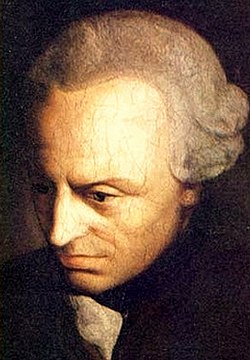
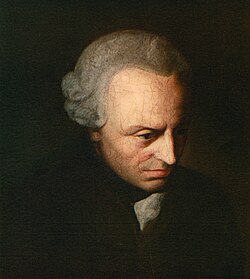
Immanuel Kant (1724–1804) was a German philosopher from Königsberg, Prussia, widely regarded as one of the most influential thinkers in Western philosophy. His 'Critique of Pure Reason' synthesized rationalism and empiricism, and his moral philosophy established deontological ethics centered on duty and the categorical imperative. A central figure of the Enlightenment, Kant's ideas on metaphysics, epistemology, ethics, and aesthetics continue to shape modern thought. More Less
Apr 22, 1724
% complete
Immanuel Kant (born Emanuel Kant) was born on 22 April 1724 into a Prussian German family of Lutheran faith in Königsberg in East Prussia, now Kaliningrad Oblast, Russia. He would spend nearly his entire life in this city, which shaped his intellectual development.
Image source: Immanuel Kant
1730 - Aug 1740
% complete
Kant first attended the Collegium Fridericianum, then directed by Franz Albert Schultz, and graduated at the end of the summer of 1740. The school provided him with a rigorous education that prepared him for university study.
Image source: Collegium Fridericianum
1740
% complete
In 1740, aged 16, Kant enrolled at the University of Königsberg, where he would later remain for the rest of his professional life. The university became the center of his academic career.
Image source: University of Königsberg

1740 - 1751
% complete
Kant studied the philosophy of Gottfried Leibniz and Christian Wolff under Martin Knutzen, an Associate Professor of Logic and Metaphysics from 1734 until he died in 1751. Knutzen was a rationalist familiar with British philosophy and science who introduced Kant to Newton's new mathematical physics and dissuaded him from idealism.
1746
% complete
Kant's father suffered a stroke and subsequently died in 1746, interrupting Kant's studies. This family tragedy forced him to pause his formal university education.
Aug 1748
% complete
Kant left Königsberg shortly after August 1748, likely working as a private tutor in households outside the city. He would not return there until August 1754, marking the longest absence from his native city in his adult life.
1749
% complete
In 1749, Kant published his first philosophical work, Thoughts on the True Estimation of Living Forces, which had been written between 1745 and 1747. The work dealt with problems in natural philosophy concerning the measurement of forces.
Image source: Thoughts on the True Estimation of Living Forces
1754
% complete
While contemplating a prize question posed by the Berlin Academy about the problem of Earth's rotation, Kant argued in 1754 that the Moon's gravity would slow down the Earth's spin, demonstrating his engagement with contemporary scientific questions.
1756
% complete
In 1756, Kant published 'The Use in Natural Philosophy of Metaphysics Combined with Geometry, Part I: Physical Monadology,' a Latin dissertation exploring metaphysical foundations of physical science, combining geometry with metaphysical reasoning.
1756
% complete
In his 1756 essay 'New Remarks toward an Elucidation of the Theory of Winds,' Kant laid out a qualitative insight into what is now called the Coriolis force, anticipating later developments in the physics of moving bodies on a rotating planet.
Image source: Coriolis force
1756
% complete
In 1756, Kant published three papers on the devastating 1755 Lisbon earthquake, offering naturalistic explanations of the seismic phenomenon. These writings contributed to the emerging scientific understanding of earthquakes in Europe.
1762
% complete
The False Subtlety of the Four Syllogistic Figures, a work in logic criticizing traditional Aristotelian syllogistic reasoning, was published by Kant in 1762, reflecting his growing critical engagement with rationalist logic.
1764
% complete
By 1764, Kant had become a notable popular author. He wrote Observations on the Feeling of the Beautiful and Sublime, discussing aesthetic experience, and was second to Moses Mendelssohn in a Berlin Academy prize competition with his Inquiry Concerning the Distinctness of the Principles of Natural Theology and Morality, often called the Prize Essay.
Image source: Observations on the Feeling of the Beautiful and Sublime
1766
% complete
In 1766 Kant wrote Dreams of a Spirit-Seer, a critical piece on Emanuel Swedenborg's mystical claims about communication with spirits. The work displayed Kant's skeptical wit and marked his turn away from speculative metaphysics.
Image source: Emanuel Swedenborg
1770 - 1781
% complete
Following his appointment as professor, Kant entered a period of relative scholarly silence lasting roughly a decade, during which he developed his revolutionary critical philosophy. Hume's Treatise on Human Nature (1739), arguing that people know the mind only through subjective perceptions, had awakened Kant from his dogmatic slumber.
Image source: Critique of Pure Reason
1781
% complete
When Kant emerged from his silence in 1781, the result was the Critique of Pure Reason, printed by Johann Friedrich Hartknoch. In it Kant argued for transcendental idealism: space and time are mere forms of intuition structuring all experience, and we have knowledge only of appearances, not things in themselves. It is often cited as the most significant volume of metaphysics and epistemology in modern philosophy.
1783
% complete
Recognizing the need to clarify the difficult original treatise, Kant wrote the Prolegomena to any Future Metaphysics in 1783 as an accessible summary of the main views of the Critique of Pure Reason.
Image source: Prolegomena to Any Future Metaphysics
1784
% complete
Shortly thereafter, Kant's friend Johann Friedrich Schultz, a professor of mathematics, published Explanations of Professor Kant's Critique of Pure Reason (Königsberg, 1784), a brief but very accurate commentary that helped readers understand Kant's demanding work.
1784
% complete
In his 1784 essay 'Answer to the Question: What is Enlightenment?', Kant famously defined enlightenment as humanity's emergence from self-imposed immaturity, urging individuals to dare to think for themselves. The essay helped spark his rising reputation.
Image source: What Is Enlightenment?
1785
% complete
In 1785, Kant published Groundwork of the Metaphysics of Morals, his first major work on moral philosophy. As its title indicates, the text was nothing more than the search for and establishment of the supreme principle of morality, laying the foundation for his ethical system.
Image source: Groundwork of the Metaphysics of Morals
1786
% complete
Kant's Metaphysical Foundations of Natural Science appeared in 1786, applying critical philosophy to the foundations of physics. Together with the 1784 Enlightenment essay and the Groundwork, it contributed to Kant's steadily rising reputation through the latter portion of the 1780s.
Image source: Metaphysical Foundations of Natural Science
1787
% complete
Kant published a second edition of the Critique of Pure Reason in 1787, heavily revising the first parts of the book, particularly the sections dealing with the deduction of categories and the refutation of idealism.
1788
% complete
Kant continued to develop his moral philosophy in 1788's Critique of Practical Reason, known as the second Critique. It elaborated the moral law and practical reason established in principle in the earlier Groundwork of the Metaphysics of Morals.
Image source: Critique of Practical Reason
1790
% complete
The 1790 Critique of the Power of Judgment, the third Critique, applied the Kantian system to aesthetics and teleology. In it Kant investigated judgments of taste, building one of the first comprehensive philosophical theories of beauty and the sublime since Baumgarten's Aesthetica (1750–58).
Image source: Critique of Judgment
1792
% complete
In 1792, Kant's attempt to publish the second of four pieces of Religion within the Bounds of Bare Reason in the journal Berlinische Monatsschrift met with opposition from the King's censorship commission, which had been established that same year amid fears sparked by the French Revolution.
1794
% complete
When Kant nevertheless published a second edition of Religion within the Bounds of Bare Reason in 1794, the censor was so irate that he arranged for a royal order requiring Kant never again to publish or even speak publicly about religion, a serious constraint on the aging philosopher.
1795
% complete
In Toward Perpetual Peace (1795), Kant argued that lasting peace could not be secured merely through treaties but required republican constitutions, respect for international law, and a voluntary federation of free states. In this work he also ultimately rejected European colonialism, reflecting changed views on race late in his life.
Image source: Perpetual Peace: A Philosophical Sketch
1797 - 1798
% complete
Kant's promised Metaphysics of Morals was much delayed and did not appear until its two parts were published separately: the Doctrine of Right in 1797 and the Doctrine of Virtue in 1798. The Doctrine of Right contains his most mature and systematic contribution to political philosophy, extending his republican theory.
1798
% complete
His Anthropology from a Pragmatic Point of View was published in 1798, drawing on decades of lectures on anthropology. The work examined human beings as free agents and addressed topics including human character, and also contained Kant's views on women, treating them as morally and politically subordinate.
Image source: Anthropology from a Pragmatic Point of View
1798
% complete
Kant responded to the King's reprimand over his religious writings by explaining himself in the preface of The Conflict of the Faculties (1798), carefully asserting his right to scholarly freedom while avoiding direct defiance of royal authority.
1800
% complete
In 1800, a student of Kant named Gottlob Benjamin Jäsche published a manual of logic for teachers called Logik, prepared at Kant's request based on his lecture notes. Charles Sanders Peirce later remarked that Kant's whole philosophy turns upon his logic.
Aug 1754
% complete
After six years away, Kant returned to Königsberg in August 1754, resuming his connection with the University of Königsberg and beginning his ascent in the academic world.
1755
% complete
In 1755, Kant received a license to lecture at the University of Königsberg as a Privatdozent and began lecturing on a variety of topics including mathematics, physics, logic, and metaphysics, launching his long teaching career.
1757
% complete
In 1757, Kant began lecturing on geography, making him one of the first lecturers to explicitly teach geography as its own subject. Geography became one of his most popular lecturing topics over the following decades.
Image source: Physical geography
1758 - 1762
% complete
During the Russian occupation of Königsberg during the Seven Years' War (1758–1762), Kant's financial circumstances improved considerably, as he obtained a number of well-paid tutoring assignments from Russian military officers and civil administrators stationed in the city.
Dec 1758
% complete
In December 1758, after the death of Johann David Kypke, Kant petitioned Empress Elizabeth for appointment to the vacant chair of logic and metaphysics at the University of Königsberg, but the position was awarded to another candidate, delaying his professorial ambitions.
1770
% complete
In 1770, Kant achieved his longstanding ambition when he was appointed Full Professor of Logic and Metaphysics at the University of Königsberg, securing his professional position for the rest of his career.
1770 - 1804
% complete
After becoming a professor in 1770, Kant expanded the topics of his lectures to include natural law, ethics, and anthropology, along with other topics. His lectures drew students from across Europe and informed many of his later publications.
1786
% complete
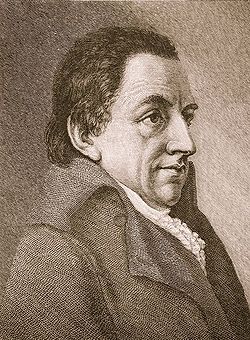
In 1786, Karl Leonhard Reinhold published a series of public letters on Kantian philosophy that greatly popularized Kant's thought among German intellectuals and spread awareness of the critical philosophy beyond Königsberg.
Image source: Karl Leonhard Reinhold
1799
% complete
In one of his final acts expounding a stance on philosophical questions, Kant opposed the developments of post-Kantian German idealism and publicly denounced Fichte in an open letter in 1799, rejecting Fichte's system as incompatible with his own critical philosophy.
Image source: Johann Gottlieb Fichte
Feb 12, 1804
% complete
Kant died in Königsberg on 12 February 1804, uttering 'Es ist gut' ('It is good') before his death. He was originally buried inside the cathedral, leaving behind a body of work that confirmed his preeminent status in eighteenth-century philosophy.
1880
% complete
Originally, Kant was buried inside the cathedral in Königsberg, but in 1880 his remains were moved to a neo-Gothic chapel adjoining the northeast corner of the cathedral, where visitors could more readily honor the philosopher.
1895 - 1938
% complete
Wilhelm Dilthey inaugurated the Academy edition of Kant's collected writings (Gesammelte Schriften, Berlin) in 1895 and served as its first editor. Published by the Royal Prussian Academy of Sciences from 1902–38, the Akademie-Ausgabe remains the standard scholarly edition of Kant's works.
Image source: Wilhelm Dilthey
1924
% complete
A mausoleum honoring Kant was constructed by the architect Friedrich Lahrs and finished in 1924, in time for the bicentenary of Kant's birth. Into the 21st century, many newlyweds bring flowers to the mausoleum as a tribute to the philosopher.
1997
% complete
Transcripts of Kant's lectures on anthropology were published for the first time in 1997 in German, giving scholars new insight into how Kant developed his pragmatic anthropology in the classroom before publishing his 1798 book.
2005
% complete
In 2005, the former University of Königsberg's successor institution in Kaliningrad was renamed Immanuel Kant State University of Russia, formally honoring the city's most famous philosopher more than two centuries after his death.
Image source: Immanuel Kant Baltic Federal University
2010
% complete
In 2010, the university in Kaliningrad was again renamed, becoming Immanuel Kant Baltic Federal University, continuing the institutional legacy connecting the modern Russian exclave to Kant's enduring philosophical heritage.
Or browse the full history timeline directory, with more than 2,000 topics.
This Immanuel Kant timeline was generated with the help of AI, using information found on the internet.
We work hard to keep these timelines accurate, but mistakes do get through. If you spot one, email us at [email protected] and we'll fix it for future visitors.
Generate yours with AI or build it from scratch, for free.
Export your timeline, add your own events, edit or remove AI-generated events, and much more
No credit card required.
Cancel anytime.
Cancel anytime.
You can create an unlimited number of timelines with up to 10 events on each one, customize how they look, export them to PDF, PNG, PowerPoint, CSV, and Excel, and share them with a link. Paid plans raise the event limit and add features like spreadsheet imports and collaborators.
Yes. You can cancel your subscription from your account page at any time, and you will not be charged again. Your subscription stays active for the rest of the period you already paid for.
Yes. We will email you a reminder before the annual renewal, and we will also email you a receipt.
Yes. You can email us within 15 days of any payment, and we will issue you a full refund.
Check out our pricing docs or send us an email anytime: [email protected].