-
Use Cases
-
Resources
-
Pricing
The Washington Monument is an iconic 555-foot obelisk located on the National Mall in Washington, D.C., built to honor George Washington, the first President of the United States. Construction began in 1848 but was halted for over two decades due to funding shortages and the Civil War, before finally being completed in 1884. It remains one of the most recognizable landmarks in the United States and was the tallest structure in the world upon its completion. More Less
1783
% complete
Even before George Washington became president, the Continental Congress proposed erecting an equestrian statue in his honor, but the project was abandoned due to lack of funds, planting the early seed for a future national memorial.
Image source: Washington Monument
1799
% complete
Following Washington's death in December 1799, Congress considered building a marble pyramid mausoleum within the Capitol grounds to house his remains, but the plan was shelved after his family declined and funding proved insufficient.
Sep 23, 1833
% complete
Chief Justice John Marshall and other prominent citizens formed the Washington National Monument Society to raise private donations for a grand tribute to the nation's first president.
Image source: Washington Monument
1836
% complete
Architect Robert Mills won the design competition with plans for a 600-foot Egyptian-style obelisk surrounded by a colonnaded pantheon featuring statues of Revolutionary War heroes.
Image source: Robert Mills (architect)
1837
% complete
A site east of the White House was chosen for the monument, though concerns about unstable soil later led planners to shift the location slightly eastward toward its current position on the Mall.
Image source: National Mall
1848 - 1900
% complete
States, cities, foreign nations, and organizations donated nearly 200 carved commemorative stones embedded in the monument's interior walls as it rose, many placed during the original pre-war construction phase.
1885
% complete
Early electric lighting experiments began shortly after dedication, beginning decades of evolving illumination schemes that would eventually light the obelisk nightly against the Washington skyline.
1885 - 1888
% complete
Between dedication and public opening, the Army Corps of Engineers finished interior work, installed the elevator, and prepared stairways and observation levels for visitors.
Image source: United States Army Corps of Engineers

Feb 21, 1885
% complete
The day before Washington's birthday, President Chester A. Arthur presided over the dedication ceremony, attended by thousands despite cold, rainy weather.
Oct 9, 1888
% complete
After installation of a steam elevator, the monument finally opened to the public, allowing visitors to ride to the observation deck nearly 500 feet above the National Mall.
1910
% complete
The Washington National Monument Society formally transferred ownership and management of the monument to the federal government, placing it under the Office of Public Buildings and Grounds.
Image source: National Park Service
Jul 4, 1848
% complete
In a ceremony attended by President James K. Polk and an estimated 20,000 people, Freemasons laid the monument's 24,500-pound cornerstone, with a speech by Speaker Robert C. Winthrop.
1854
% complete
A block of marble donated by Pope Pius IX was stolen and destroyed by members of the anti-Catholic Know-Nothing Party, an act that contributed to a collapse of public donations and halted construction.
Image source: The Pope's Exorcist
1855 - 1858
% complete
The Know-Nothing Party seized control of the Washington National Monument Society and built only a few courses of substandard masonry before being expelled, leaving work stalled for years.
Image source: Know Nothing
1861 - 1876
% complete
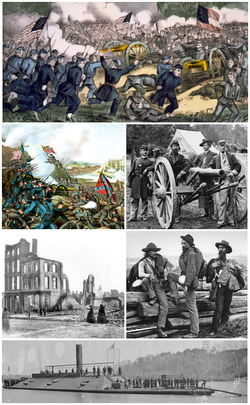
The Civil War and its aftermath brought construction to a standstill for roughly two decades, leaving the unfinished stump of the monument standing about 156 feet tall above the National Mall.
Image source: American Civil War
1876
% complete
On the centennial of American independence, Congress appropriated $200,000 to complete the monument and transferred responsibility for the project to the Army Corps of Engineers.
Image source: United States Congress
1876
% complete
Lt. Col. Thomas Lincoln Casey revised Robert Mills' design, eliminating the costly colonnaded base and simplifying the shaft into a clean, tapering obelisk modeled on classic Egyptian proportions.
1879 - 1880
% complete
Engineers under Casey expanded and reinforced the foundation with massive concrete blocks to ensure it could bear the weight of the completed 555-foot obelisk, then the tallest structure of its kind.
1880
% complete
A steam-powered hoist was installed inside the rising shaft to lift workers, materials, and visitors, dramatically speeding construction of the upper sections of the monument.
Image source: Elevator
1880
% complete
Marble from a new quarry near Cockeysville, Maryland, differed slightly in tone from the original stone used before the halt, creating the distinctive visible line about one-third up the monument that remains today.
Dec 6, 1884
% complete
With the capstone in place, the Washington Monument stood 555 feet, 5⅛ inches tall, making it the tallest structure in the world until the Eiffel Tower was completed five years later.
Dec 6, 1884
% complete
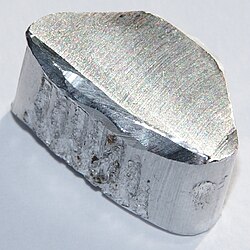
A nine-inch aluminum pyramid, at the time one of the largest pieces of the rare metal ever cast, was placed atop the monument as a lightning rod and crowning finial.
Image source: Aluminium
1929
% complete
New floodlights were installed around the base, dramatically improving nighttime illumination of the monument and making it a glowing centerpiece of the capital city.
1933
% complete
Management of the monument passed to the National Park Service, which has cared for it ever since as part of the National Mall and Memorial Parks unit.
1934
% complete
Repairs were undertaken after minor structural issues emerged, including stabilization work and modernization of the aging elevator systems serving the observation level.
Image source: 1933 Long Beach earthquake
Dec 30, 1960
% complete
The Washington Monument received official recognition as a National Historic Landmark, affirming its significance as a defining symbol of the American republic.
Image source: National Historic Landmark
1969 - 1973
% complete
In preparation for America's 1976 bicentennial celebrations, extensive cleaning, repointing, and structural repairs restored the weathered exterior of the monument.
Image source: United States Bicentennial
1999 - 2000
% complete
During a major restoration ahead of the millennium, security upgrades included replacing observation windows with bulletproof glass following heightened concerns about terrorism.
Aug 23, 2011
% complete
A magnitude 5.8 earthquake centered in Virginia cracked stones and damaged the pyramidion near the top of the monument, forcing an indefinite closure to visitors.
Image source: 2011 Virginia earthquake
2012 - May 12, 2014
% complete
Engineers repaired more than 150 cracks using scaffolding wrapped around the entire shaft, completing repairs in time for the monument to reopen to the public in May 2014.
Aug 19, 2019
% complete
After a three-year closure to modernize the elevator and improve security screening facilities, the monument reopened with faster, safer access to its observation deck.
Or browse the full history timeline directory, with more than 2,000 topics.
This Washington Monument timeline was generated with the help of AI, using information found on the internet.
We work hard to keep these timelines accurate, but mistakes do get through. If you spot one, email us at [email protected] and we'll fix it for future visitors.
Generate yours with AI or build it from scratch, for free.
Export your timeline, add your own events, edit or remove AI-generated events, and much more
No credit card required.
Cancel anytime.
Cancel anytime.
You can create an unlimited number of timelines with up to 10 events on each one, customize how they look, export them to PDF, PNG, PowerPoint, CSV, and Excel, and share them with a link. Paid plans raise the event limit and add features like spreadsheet imports and collaborators.
Yes. You can cancel your subscription from your account page at any time, and you will not be charged again. Your subscription stays active for the rest of the period you already paid for.
Yes. We will email you a reminder before the annual renewal, and we will also email you a receipt.
Yes. You can email us within 15 days of any payment, and we will issue you a full refund.
Check out our pricing docs or send us an email anytime: [email protected].