-
Use Cases
-
Resources
-
Pricing
Westminster Abbey is a historic Gothic church in London, England, serving as the traditional site of coronations for English and British monarchs since 1066. Founded by Benedictine monks around 960 AD and rebuilt under Edward the Confessor and later Henry III, the Abbey has hosted countless royal weddings, funerals, and coronations. It is also the burial place of numerous kings, queens, poets, scientists, and statesmen, making it a UNESCO World Heritage Site and one of the most significant religious and cultural landmarks in the United Kingdom. More Less
1042
% complete
King Edward the Confessor began rebuilding a small Benedictine monastery on Thorney Island beside the River Thames into a grand Romanesque abbey church, choosing it as his burial site. The church was consecrated on 28 December 1065, just days before Edward's death.
Image source: Westminster Abbey
Dec 28, 1065
% complete
The new Norman-Romanesque church built by Edward the Confessor was consecrated on 28 December 1065. Edward, gravely ill, could not attend the ceremony and died a week later; he was buried in the abbey and later canonized in 1161.
1245
% complete
King Henry III demolished much of Edward the Confessor's church and began rebuilding Westminster Abbey in the French Gothic style, intending it as a shrine for the canonized Edward as well as a royal mausoleum. Work continued for centuries.
Image source: Henry III of England
1503 - 1516
% complete
King Henry VII commissioned a magnificent Perpendicular Gothic Lady Chapel at the eastern end of the abbey, begun in 1503 and completed around 1516 under Henry VIII. It is renowned for its fan vaulting and became a burial site for Tudor monarchs.
Image source: Lady chapel
1722 - 1745
% complete
Architects Nicholas Hawksmoor and John James designed and built the abbey's iconic twin Baroque-Gothic western towers between 1722 and 1745, completing the west front that had stood unfinished for centuries.
Image source: Nicholas Hawksmoor
Dec 25, 1066
% complete
William, Duke of Normandy, was crowned King of England at Westminster Abbey on Christmas Day 1066, establishing the tradition that nearly all subsequent English and British monarchs would be crowned at the Abbey.
Image source: Coronations of William the Conqueror and Matilda
Feb 25, 1308
% complete
The coronation of Edward II marked one of the earliest uses of the Coronation Chair, commissioned by Edward I around 1297–1300 to house the Stone of Scone captured from Scotland. The chair has been used at nearly every coronation since.
Image source: Coronation Chair
Jul 25, 1603
% complete
James VI of Scotland was crowned James I of England at Westminster Abbey on 25 July 1603, uniting the crowns of England and Scotland in person and inaugurating the Stuart dynasty's coronations at the abbey.
Image source: James VI and I
Apr 23, 1661
% complete
Charles II was crowned at Westminster Abbey on St George's Day, 23 April 1661, restoring the monarchy after the Interregnum and reviving elaborate coronation ceremonies in the abbey following the Puritan era.
Image source: Charles II of England
Sep 22, 1761
% complete
George III was crowned at Westminster Abbey on 22 September 1761. The long reign that followed saw many additions to the abbey's memorials, including monuments to figures of the Enlightenment and the Napoleonic Wars.
Image source: George III
May 12, 1937
% complete
George VI was crowned at Westminster Abbey on 12 May 1937 in the first coronation ever broadcast live by BBC radio, bringing the ancient ceremony to millions of listeners across the empire.
Image source: Coronation of George VI and Elizabeth
Jun 2, 1953
% complete
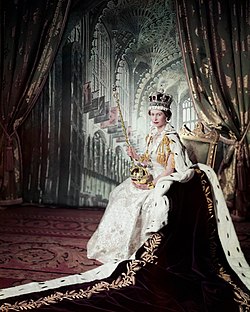
Elizabeth II was crowned at Westminster Abbey on 2 June 1953 before 8,000 guests, with the ceremony televised live by the BBC and watched by an estimated 27 million people in Britain alone — the first major television event of its kind.
Image source: Coronation of Elizabeth II
Oct 13, 1269
% complete
The remains of Saint Edward the Confessor were translated to their magnificent new shrine behind the high altar of Henry III's Gothic abbey on 13 October 1269, an event attended by the king himself.
Image source: Edward the Confessor
Nov 20, 1272
% complete
Henry III died in London in November 1272 and was buried in Westminster Abbey, becoming the first monarch buried there since its Gothic reconstruction, beginning the abbey's role as a principal burial place for English kings.
1603
% complete
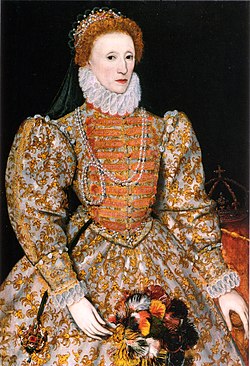
Elizabeth I was buried in the chapel of Henry VII in Westminster Abbey in 1603, sharing a tomb with her half-sister Mary I. Her tomb bears the famous inscription describing her as a 'sister and heir' of Mary.
Image source: Elizabeth I
1612
% complete
Her son James I had Mary, Queen of Scots exhumed and reburied in an elaborate tomb in Westminster Abbey's Henry VII Chapel in 1612, giving her a place of honour among the Tudor and Stuart monarchs.
Image source: Mary, Queen of Scots
Mar 28, 1727
% complete
Sir Isaac Newton was buried with great ceremony in Westminster Abbey in March 1727 in a prominent spot in the nave, establishing the abbey's growing reputation as the resting place of Britain's greatest scientists.
Image source: Isaac Newton
1759
% complete
George Frideric Handel, who composed 'Zadok the Priest' for British coronations, was buried in Poets' Corner in Westminster Abbey in 1759 after a state funeral attended by thousands of mourners.
Image source: George Frideric Handel
Apr 18, 1874
% complete
The explorer and missionary David Livingstone was buried in Westminster Abbey in April 1874 after his body was carried across Africa by his loyal companions. His grave lies near those of Livingstone-era heroes in the nave.
Image source: David Livingstone
Apr 26, 1882
% complete
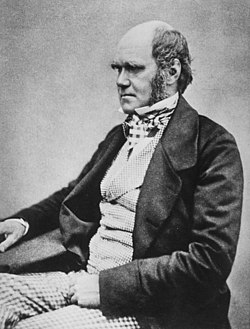
Charles Darwin was buried in the nave of Westminster Abbey in April 1882, close to Isaac Newton and John Herschel, an honour reflecting the scientific establishment's recognition despite earlier controversies over his theories.
Image source: Charles Darwin
May 28, 1898
% complete
William Ewart Gladstone, four-time Prime Minister, was given a state funeral and buried in Westminster Abbey in May 1898. His rival Benjamin Disraeli, by contrast, was buried at Hughenden, though he is memorialized in the abbey.
Image source: William Ewart Gladstone
Nov 11, 1920
% complete
On Armistice Day 1920, the Unknown Warrior — an unidentified British soldier killed in the First World War — was buried at the west end of the nave. The grave, containing soil from France, became the most honoured war memorial in Britain.
Image source: The Unknown Warrior
Jun 15, 2018
% complete
Stephen Hawking's ashes were interred in Scientists' Corner in Westminster Abbey on 15 June 2018, between the graves of Isaac Newton and Charles Darwin, following a thanksgiving service attended by over 1,000 guests.
Image source: Stephen Hawking
Jan 20, 1382
% complete
Richard II married Anne of Bohemia in Westminster Abbey in January 1382, one of several medieval royal weddings held at the church. Anne was later buried in the abbey after her death in 1394.
Image source: Anne of Bohemia
Apr 26, 1923
% complete
Prince Albert, Duke of York (the future George VI), married Lady Elizabeth Bowes-Lyon at Westminster Abbey in April 1923, popularizing the abbey as a venue for modern royal weddings. The bride famously laid her bouquet at the Tomb of the Unknown Warrior.
Image source: Wedding of Prince Albert and Lady Elizabeth Bowes-Lyon
Nov 20, 1947
% complete
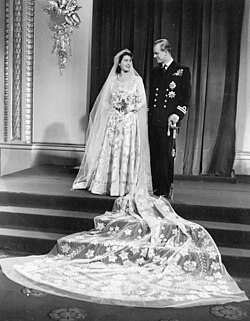
Princess Elizabeth married Lieutenant Philip Mountbatten at Westminster Abbey on 20 November 1947, a joyous national event shortly after the Second World War that helped lift postwar spirits in austerity Britain.
Image source: Wedding of Princess Elizabeth and Philip Mountbatten
Jan 30, 1965
% complete
A state funeral service for Sir Winston Churchill was held at St Paul's Cathedral, but a memorial service took place at Westminster Abbey; Churchill is commemorated within the abbey, where he received the Nobel Prize in Literature in absentia traditions of remembrance continue.
Image source: Death and state funeral of Winston Churchill
1540
% complete
As part of his break with Rome during the Reformation, Henry VIII granted Westminster Abbey cathedral status in 1540, making it the diocesan cathedral of the newly created Diocese of Westminster, with Thomas Thirlby as its only bishop.
Image source: Westminster Cathedral
1556
% complete
Catholic Queen Mary I restored Westminster Abbey to the Benedictine order in 1556, but her successor Elizabeth I re-established it as a Royal Peculiar — a church directly answerable to the sovereign rather than any bishop — a status it retains today.
Image source: Mary I of England
1560
% complete
In 1560 Elizabeth I refounded Westminster Abbey by royal charter as the Collegiate Church of St Peter, Westminster, exempt from diocesan control. She also established Westminster School within the abbey precincts.
Image source: Royal peculiar
Dec 16, 1653
% complete
During the Commonwealth, Oliver Cromwell was installed as Lord Protector in Westminster Hall in December 1653. Cromwell himself was later interred in the abbey in 1658, though his remains were disinterred and posthumously 'executed' after the Restoration.
1940 - 1941
% complete
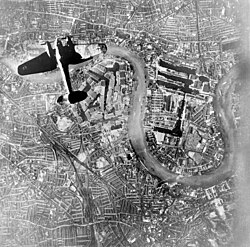
During the London Blitz, Westminster Abbey escaped serious damage despite numerous incendiary bombs falling nearby. In May 1941 a bomb destroyed the roof of the abbey's Lambeth-side buildings, and wartime services continued amid blackout conditions.
Image source: The Blitz
Or browse the full history timeline directory, with more than 2,000 topics.
This Westminster Abbey timeline was generated with the help of AI, using information found on the internet.
We work hard to keep these timelines accurate, but mistakes do get through. If you spot one, email us at [email protected] and we'll fix it for future visitors.
Generate yours with AI or build it from scratch, for free.
Export your timeline, add your own events, edit or remove AI-generated events, and much more
No credit card required.
Cancel anytime.
Cancel anytime.
You can create an unlimited number of timelines with up to 10 events on each one, customize how they look, export them to PDF, PNG, PowerPoint, CSV, and Excel, and share them with a link. Paid plans raise the event limit and add features like spreadsheet imports and collaborators.
Yes. You can cancel your subscription from your account page at any time, and you will not be charged again. Your subscription stays active for the rest of the period you already paid for.
Yes. We will email you a reminder before the annual renewal, and we will also email you a receipt.
Yes. You can email us within 15 days of any payment, and we will issue you a full refund.
Check out our pricing docs or send us an email anytime: [email protected].