-
Use Cases
-
Resources
-
Pricing
The Yom Kippur War was a military conflict fought between Israel and a coalition of Arab states led by Egypt and Syria in October 1973. Launched on the Jewish holy day of Yom Kippur, the surprise attack led to intense fighting, eventual Israeli counteroffensives, and a ceasefire brokered by the United Nations with significant involvement from the United States and the Soviet Union. More Less
Jun 5, 1967 - Jun 10, 1967
% complete
During the Six-Day War of 1967, Israel captured Egypt's Sinai Peninsula, the Egyptian-administered Gaza Strip, roughly half of Syria's Golan Heights, and the West Bank territories held by Jordan since 1948. These occupied territories became the central flashpoints of the later Yom Kippur War.
Image source: Six-Day War
Jun 19, 1967
% complete
On 19 June 1967, shortly after the Six-Day War, the Israeli government voted to return the Sinai to Egypt and the Golan Heights to Syria in exchange for a permanent peace settlement and demilitarization of the returned territories. The Arab states rejected this overture.
Sep 1, 1967
% complete
As it emerged at the September 1967 Khartoum Arab Summit, the Arab position was to reject any peaceful settlement with the State of Israel, closing the door on the Israeli offer to trade territory for peace.
Dec 1, 1970
% complete
In December 1970, Egyptian President Anwar Sadat told The New York Times that in return for a total withdrawal from the Sinai Peninsula he was ready 'to recognize the rights of Israel as an independent state as defined by the Security Council of the United Nations.'
Feb 4, 1971
% complete
On 4 February 1971, Sadat gave a speech to the Egyptian National Assembly outlining a proposal under which Israel would withdraw from the Suez Canal and the Sinai Peninsula along with other occupied Arab territories.
Feb 8, 1971
% complete
Swedish diplomat Gunnar Jarring coincidentally proposed a similar initiative four days after Sadat's speech, on 8 February 1971, seeking an Israeli withdrawal in exchange for peace arrangements.
Feb 26, 1971
% complete
The United States was infuriated by Israel's cool response to Egypt's proposal. Assistant Secretary of State Joseph Sisco informed ambassador Yitzhak Rabin that Israel would be regarded as responsible for rejecting the best opportunity to reach peace since the state's establishment. On 26 February Israel outlined readiness for some withdrawal but declared no intention of returning to the pre-5 June 1967 lines, which Eban told the Knesset 'cannot assure Israel against aggression'.
Oct 24, 1972
% complete
Almost a full year before the war, in a meeting on 24 October 1972 with his Supreme Council of the Armed Forces, Sadat declared his intention to go to war with Israel even without proper Soviet support. War was a desperate option.
Dec 1, 1972 - Oct 6, 1973
% complete
From the end of 1972, Egypt began a concentrated effort to build up its forces, receiving MiG-21 jet fighters, SA-2, SA-3, SA-6 and SA-7 antiaircraft missiles, T-55 and T-62 tanks, RPG-7 antitank weapons, and AT-3 Sagger anti-tank missiles from the Soviet Union, while improving tactics based on Soviet battlefield doctrines. Political generals responsible for the 1967 rout were replaced with competent ones.
Feb 1, 1973
% complete
In February 1973, Sadat made a final peace overture that would have included Israeli withdrawal from the Sinai Peninsula, relayed to Kissinger via his adviser Mohammad Hafez Ismail, who made it known to Prime Minister Meir. It went nowhere.
Image source: Yom Kippur War
May 1, 1973 - Aug 31, 1973
% complete
Between May and August 1973, the Egyptian Army conducted military exercises near the border, and Ashraf Marwan inaccurately warned that Egypt and Syria would launch a surprise attack in the middle of May, contributing to complacency about later warnings.
Image source: Ashraf Marwan
Jun 1, 1973
% complete
In a June 1973 meeting with American President Richard Nixon, Soviet leader Leonid Brezhnev proposed that Israel pull back to its 1967 border, another diplomatic effort that failed to avert war.
Oct 6, 1973
% complete
Planners studied technical characteristics of the Suez Canal—tides, currents, hours of darkness and moonlight, weather, and Mediterranean and Red Sea conditions—and chose Saturday 6 October 1973 (10 Ramadan 1393) as the day for the September–October option, coinciding with Yom Kippur.
Oct 6, 1973
% complete
Prior to the war, Kissinger and Nixon consistently warned Meir that she must not be responsible for initiating a Middle East war. On 6 October 1973, Kissinger sent a further dispatch discouraging a preemptive strike.
Oct 1, 1973 - Oct 25, 1973
% complete
During the Syrian front campaign, Israeli commanders faced a decision whether to stop at the post-1967 border or continue advancing into Syrian territory, a choice that shaped the war's final phase on the Golan front.
Oct 6, 1973 - Oct 25, 1973
% complete
The Yom Kippur War (also known as the 1973 Arab–Israeli War, the fourth Arab–Israeli War, the October War, or the Ramadan War) began on 6 October 1973 when an Arab coalition led by Egypt and Syria launched a surprise attack across their frontiers on the Jewish holy day of Yom Kippur, the 10th day of Ramadan. Most fighting occurred in the Sinai Peninsula and Golan Heights, territories Israel had occupied since 1967.
Oct 15, 1973 - Oct 24, 1973
% complete
Israeli forces crossed the Suez Canal onto its western bank during the war's latter phase, threatening Egyptian forces. However, by the end of the war Egypt maintained significant armored reserves west of the Canal.
Image source: Operation Abirey-Halev
Oct 24, 1973
% complete
According to documents declassified in 2016, the American move to DEFCON 3 was motivated by CIA reports indicating that the Soviet Union had sent a ship to Egypt carrying nuclear weapons along with two other amphibious vessels, heightening superpower tensions at the war's end.
Oct 28, 1973 - Jan 18, 1974
% complete
Though most heavy fighting ended on 28 October, the fighting never stopped until 18 January 1974. The cease-fire existed on paper, but continued firing along the front characterized the situation between 24 October 1973 and 18 January 1974.
Feb 4, 1974
% complete
Hostilities between Israel and Syria continued, and on 4 February 1974, 500 Cubans joined a Syrian tank division at Mount Hermon in an attack against Israeli forces, sparking a War of Attrition in the Bashan Salient.
Oct 17, 1973 - Mar 18, 1974
% complete
Following the war, OAPEC announced a total oil embargo against countries that had supported Israel at any point during the conflict. Saudi Arabia declared an embargo against the United States, later joined by other exporters and extended against the Netherlands and others, causing the 1973 energy crisis.
Image source: 1973 oil crisis
Oct 28, 1973
% complete
Disengagement talks took place on 28 October 1973 at 'Kilometre 101' between Israeli Major General Aharon Yariv and Egyptian Major General Abdel Ghani el-Gamasy—the first direct public discussions between Arab and Israeli officials since the aftermath of the 1948 war.
Image source: 1949 Armistice Agreements
Dec 21, 1973 - Jan 9, 1974
% complete
A summit conference in Geneva followed in December 1973. Nevertheless, the conference was forced to adjourn on 9 January 1974, as Syria refused attendance.
Jan 18, 1974
% complete
The first concrete result of the diplomacy was the initial military disengagement agreement, signed by Israel and Egypt on 18 January 1974, ending hostilities along the Suez Canal front.
Apr 11, 1974
% complete
On 11 April 1974, Golda Meir resigned as Prime Minister of Israel amid public anger over the government's failures before and during the Yom Kippur War.
Image source: Golda Meir
May 31, 1974
% complete
Shuttle diplomacy by Henry Kissinger eventually produced a disengagement agreement on 31 May 1974, based on an exchange of prisoners-of-war, Israeli withdrawal to the Purple Line, and the establishment of a UN buffer zone.
Image source: Agreement on Disengagement between Israel and Syria
Sep 4, 1975
% complete
Another Egyptian–Israeli disengagement agreement, the Sinai Interim Agreement, commonly known as Sinai II, was signed in Geneva on 4 September 1975, further stabilizing the Egyptian-Israeli frontier.
Dec 1, 1973
% complete
In a December 1973 address to the National Assembly, Syrian Defense Minister Mustafa Tlass stated that he had awarded one soldier the Medal of the Republic for killing 28 Israeli prisoners with an axe, decapitating three of them and eating the flesh of one of his victims.
Image source: Mustafa Tlass
Jul 1, 1974
% complete
In July 1974, Israeli Defense Minister Shimon Peres informed the Knesset that high-ranking Soviet officers had been killed on the Syrian front during the war, underscoring direct Soviet involvement.
Jul 7, 1974
% complete
On 7 July 1974, Halawi's remains were removed from a Syrian military hospital and he was interred in Damascus at the 'Cemetery of the Martyrs of the October War' in the presence of many Syrian dignitaries. When his body was returned earlier in 1974, it exhibited signs of torture.
Jan 1, 1976
% complete
DePuy and other US Army leaders saw Israel's strategic and doctrinal conditions between 1967 and 1973 as similar to NATO's position in Europe, undertaking a deep study of Israel's 1973 warfighting. DePuy visited Israel in 1976 to tour battlefields, and TRADOC revised FM 100–5 Operations in 1976, promoting an 'Active Defense' concept emphasizing tactical proficiency with advanced weapons systems like those observed in the war.
Image source: United States Army Training and Doctrine Command
Sep 5, 1978 - Sep 17, 1978
% complete
The Yom Kippur War upset the status quo in the Middle East and served as a direct antecedent of the Camp David Accords. The talks took place from 5–17 September 1978, ultimately succeeding and paving the way for peace between Israel and Egypt.
Image source: Camp David Accords
Mar 26, 1979
% complete
Ultimately, the postwar process succeeded: Israel and Egypt signed the Egypt–Israel Peace Treaty in 1979, the first time an Arab country recognized Israel.
Image source: Egypt–Israel peace treaty
Jan 1, 1982
% complete
TRADOC's 1982 revision of FM 100–5 replaced Active Defense with an offense-oriented operational doctrine known as AirLand Battle, itself rooted in lessons drawn from the Yom Kippur War, forming the basis of the American plan for Operation Desert Storm in 1991.
Image source: AirLand Battle
Apr 26, 1982
% complete
Israel subsequently withdrew its troops and settlers from the Sinai Peninsula in exchange for normal relations with Egypt and a lasting peace, with the last Israeli troops exiting on 26 April 1982.
Jan 1, 1989
% complete
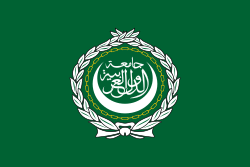
Egypt had been suspended from the Arab League following its peace treaty with Israel, and remained suspended until 1989, reflecting the deep divisions the postwar peace process created in the Arab world.
Image source: Arab League
Or browse the full history timeline directory, with more than 2,000 topics.
This Yom Kippur War timeline was generated with the help of AI, using information found on the internet.
We work hard to keep these timelines accurate, but mistakes do get through. If you spot one, email us at [email protected] and we'll fix it for future visitors.
Generate yours with AI or build it from scratch, for free.
Export your timeline, add your own events, edit or remove AI-generated events, and much more
No credit card required.
Cancel anytime.
Cancel anytime.
You can create an unlimited number of timelines with up to 10 events on each one, customize how they look, export them to PDF, PNG, PowerPoint, CSV, and Excel, and share them with a link. Paid plans raise the event limit and add features like spreadsheet imports and collaborators.
Yes. You can cancel your subscription from your account page at any time, and you will not be charged again. Your subscription stays active for the rest of the period you already paid for.
Yes. We will email you a reminder before the annual renewal, and we will also email you a receipt.
Yes. You can email us within 15 days of any payment, and we will issue you a full refund.
Check out our pricing docs or send us an email anytime: [email protected].