
-
Use Cases
-
Resources
-
Pricing
Abstract Expressionism was an art movement that emerged in New York City in the 1940s and 1950s, characterized by large-scale, spontaneous, and emotionally charged abstract paintings. Often called the New York School, it featured artists like Jackson Pollock, Mark Rothko, Willem de Kooning, and Barnett Newman, who used techniques such as gestural brushwork, drip painting, and color fields to express inner emotion and universal themes, establishing New York as the center of the Western art world. More Less
1919
% complete
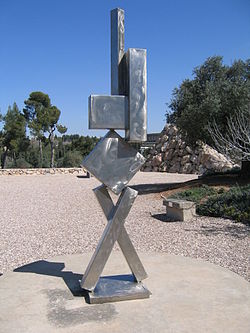
The term "abstract expressionism" is believed to have first been used in Germany in 1919 in the magazine Der Sturm, in reference to German Expressionism, long before it was applied to American art.
Image source: Abstract expressionism
1929
% complete
Alfred Barr used the term "abstract expressionism" in 1929 to describe works by Wassily Kandinsky, whose early 20th-century Russian abstract art shared many stylistic similarities with what would later be called abstract expressionism.
1940
% complete
American artists benefited greatly from the presence in New York of European masters such as Piet Mondrian, Fernand Léger, Max Ernst, and the André Breton surrealist group, as well as Pierre Matisse's gallery and Peggy Guggenheim's The Art of This Century.
1946
% complete
The term "abstract expressionism" was used in the United States in 1946 by Robert Coates in his review of eighteen Hans Hofmann paintings, cementing the term's association with American abstraction.
Image source: Hans Hofmann
1946
% complete
The term was first applied to American art in 1946 by the art critic Robert Coates, marking the official birth of "abstract expressionism" as a label for the new American painting.
1952
% complete
The term "action painting" was coined by American critic Harold Rosenberg in 1952 and signaled a major shift in the aesthetic perspective of New York School painters and critics, emphasizing the act of painting itself.
1940
% complete
Abstract expressionism arose during World War II and began to be showcased during the early forties at galleries in New York such as Peggy Guggenheim's The Art of This Century Gallery, giving the new movement its first public platform.
1940 - 1949
% complete
In the 1940s there were only few galleries (The Art of This Century, Pierre Matisse Gallery, Julien Levy Gallery, and a few others) and few critics willing to follow the work of the New York Vanguard, making the movement's early years a struggle for visibility.
1951
% complete
The Ninth Street Show, a famous exhibition curated by Leo Castelli on East Ninth Street in New York City in 1951, featured many sculptors and painters of the New York School and became a landmark event for the movement.
Image source: 9th Street Art Exhibition
1958
% complete
In 1958, Mark Tobey became the first American painter since Whistler (1895) to win top prize at the Venice Biennale, marking major international recognition for American abstraction.
Image source: Mark Tobey
1941 - 1948
% complete
In his most effective and accomplished paintings between 1941 and 1948, Arshile Gorky consistently used intense stained fields of color, often letting paint run and drip around his organic and biomorphic shapes and delicate lines, prefiguring later stain painting techniques.
Image source: Arshile Gorky
1943
% complete
Robert Motherwell's long essay Totem Art (1943) had considerable influence on such artists as Martha Graham, Isamu Noguchi, Jackson Pollock, Mark Rothko, and Barnett Newman, helping shape the intellectual foundations of the emerging movement.
Image source: Robert Motherwell
1944
% complete
Around 1944 Barnett Newman tried to explain America's newest art movement and included a list of "the men in the new movement", an early attempt to define the group of artists who would become known as abstract expressionists.
Image source: Barnett Newman
1947 - 1950
% complete
Like Picasso's reinventions via Cubism, and drawing on influences as disparate as Navajo sand paintings, surrealism, Jungian analysis, and Mexican mural art, Pollock redefined what it was to produce art during his classic drip painting period of 1947–1950.
Image source: Jackson Pollock
1950 - 1953
% complete
Woman V is one of a series of six paintings made by de Kooning between 1950 and 1953 that depict a three-quarter-length female figure. He may have finished Woman I by the end of June or possibly November 1952, concluding the other pictures around the same time.
Image source: Woman
Jun 1950
% complete
Willem de Kooning began the first of his famous Women paintings, Woman I, in June 1950, repeatedly changing and painting out the image until January or February 1952, when the painting was abandoned unfinished.
Image source: Woman I
1951
% complete
During 1951 Pollock produced a series of semi-figurative black stain paintings, staining fluid oil paint into raw canvas, and in 1952 he produced stain paintings using color, extending his classic drip period innovations.
1952
% complete
During the summer of 1952, spent at East Hampton, de Kooning further explored the theme of women through drawings and pastels, deepening the series that would become central to his reputation.
1952
% complete
Having seen Pollock's 1951 paintings of thinned black oil paint stained into raw canvas, Helen Frankenthaler began to produce stain paintings in varied oil colors on raw canvas in 1952, pioneering a technique that shaped Color Field painting.
Image source: Helen Frankenthaler
1954
% complete
As with Jackson Pollock and other abstract expressionists, Franz Kline was labelled an "action painter" because of his seemingly spontaneous and intense style, focusing on brushstrokes rather than imagery, as demonstrated by his painting Number 2 (1954).
Image source: Franz Kline
Apr 9, 1955
% complete
An example of Mark Rothko's combative stance toward critics is his letter of April 9, 1955, "Letter to Sidney Janis", in which he defended his artistic intentions — it is true that Rothko talks the fighter.
Image source: Mark Rothko
1959 - 1960
% complete
Hans Hofmann's paintings are a symphony of color, as seen in The Gate (1959–1960), one of his celebrated late works exemplifying his push-pull theory of color and composition.
1949
% complete
Canadian painter Jean-Paul Riopelle (1923–2002), a member of the Montreal-based surrealist-inspired group Les Automatistes, helped introduce a related style of abstract impressionism to the Parisian art world from 1949.
Image source: Jean-Paul Riopelle
1950 - 1967
% complete
Frances Stonor Saunders' book The Cultural Cold War details how the CIA financed and organized the promotion of American abstract expressionists as part of cultural imperialism via the Congress for Cultural Freedom from 1950 to 1967.
1951 - 2000
% complete
Throughout the second half of the 20th century, the influence of abstract expressionism can be seen in diverse movements across the United States, from Color Field painting to Minimalism and beyond.
1952
% complete
Michel Tapié's groundbreaking book Un Art Autre (1952) was enormously influential in promoting art informel and related abstraction, connecting European and American avant-garde movements.
1953
% complete
In 1953 Morris Louis and Kenneth Noland were both profoundly influenced by Helen Frankenthaler's stain paintings after visiting her studio in New York City, where they saw Mountains and Sea, a painting that was, in a sense, out of Pollock and out of Gorky.
Image source: Morris Louis
1964
% complete
Clement Greenberg became the voice of Post-painterly abstraction by curating an influential exhibition of new painting that toured important art museums throughout the United States in 1964, defining the movement that followed abstract expressionism.
1983
% complete
Serge Guilbaut's How New York Stole the Idea of Modern Art (University of Chicago Press, 1983) examined how New York displaced Paris as the center of the art world, with abstract expressionism at the heart of that story.
Image source: Voice of Fire
1990
% complete
The scholarly volume Abstract Expressionism (New York & London: Thames & Hudson, 1990) contributed to the historical study and canonization of the movement.
1998
% complete
Improvisation and the Arts in Postwar America (University of Chicago Press, Chicago & London, 1998) explored the culture of improvisation that underpinned postwar American art, including abstract expressionism.
2019
% complete
Enamelist Paul Hultberg (1926–2019), an active contributor to the New York School, gained greater notoriety posthumously when historian and curator Glenn Adamson recognized his use of "chance operations", or "aleatory aesthetics".
Image source: Paul Hultberg
Or browse the full history timeline directory, with more than 2,000 topics.
This Abstract Expressionism timeline was generated with the help of AI, using information found on the internet.
We work hard to keep these timelines accurate, but mistakes do get through. If you spot one, email us at [email protected] and we'll fix it for future visitors.
Generate yours with AI or build it from scratch, for free.
Export your timeline, add your own events, edit or remove AI-generated events, and much more
No credit card required.
Cancel anytime.
Cancel anytime.
You can create an unlimited number of timelines with up to 10 events on each one, customize how they look, export them to PDF, PNG, PowerPoint, CSV, and Excel, and share them with a link. Paid plans raise the event limit and add features like spreadsheet imports and collaborators.
Yes. You can cancel your subscription from your account page at any time, and you will not be charged again. Your subscription stays active for the rest of the period you already paid for.
Yes. We will email you a reminder before the annual renewal, and we will also email you a receipt.
Yes. You can email us within 15 days of any payment, and we will issue you a full refund.
Check out our pricing docs or send us an email anytime: [email protected].