-
Use Cases
-
Resources
-
Pricing
Ada Lovelace (1815–1852) was an English mathematician and writer, best known for her work on Charles Babbage's early mechanical general-purpose computer, the Analytical Engine. Her detailed notes on the engine included what is considered the first algorithm intended to be carried out by a machine, earning her recognition as the first computer programmer. More Less
Dec 10, 1815
% complete
Augusta Ada Byron was born on 10 December 1815, the daughter of the poet Lord Byron and Lady Byron. She would become an English mathematician and writer chiefly known for her work on Charles Babbage's proposed mechanical general-purpose computer, the analytical engine.
Image source: Ada Lovelace
Jan 16, 1816
% complete
At Lord Byron's command, Lady Byron left for her parents' home at Kirkby Mallory, taking their five-week-old daughter Ada with her. Lord Byron never saw his daughter again and died in April 1824 when she was eight years old.
Apr 1824
% complete
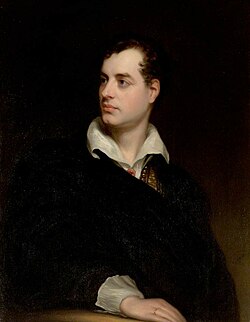
Ada's father, the poet Lord Byron, died in April 1824 when Ada was eight years old. Her half-sister Allegra had died in 1822 at the age of five.
Image source: Lord Byron
Feb 1828
% complete
In February 1828, Ada's first step toward what she called 'flyology' was to construct wings. She showed early signs of inventive ambition and imagination.
Jun 1829
% complete
In June 1829, Ada was paralyzed after a bout of measles. She endured a long recovery and by 1831 was able to walk again with crutches.
1832
% complete
From 1832, when she was seventeen, Ada's mathematical abilities began to emerge, and her interest in mathematics dominated the majority of her adult life. She was privately educated in mathematics and science by William Frend, William King, and Mary Somerville.
Jan 1833
% complete
In early 1833, Ada Byron had an affair with a tutor, an episode that caused a scandal within her family circle.
1834
% complete
By 1834 Ada was a regular at Court and started attending various events, becoming a prominent figure in society.
Feb 24, 1834
% complete
On 24 February 1834, Ada met Hobhouse and made it clear that she did not like him, probably due to her mother's influence, which led her to dislike all of her father's friends.
Jul 8, 1835
% complete
On 8 July 1835, she married William, 8th Baron King, becoming Lady King. They honeymooned at Ashley Combe near Porlock Weir, Somerset, a hunting lodge built in 1799 and improved by King for their honeymoon.
1836 - 1839
% complete
Ada and William had three children: Byron (born 1836), Anne Isabella (called Annabella, born 1837), and Ralph Gordon (born 1839).
1838
% complete
Ada was a descendant of the extinct Barons Lovelace, and in 1838 her husband was made Earl of Lovelace and Viscount Ockham, meaning Ada became the Countess of Lovelace.
Feb 27, 1841
% complete
In 1841, Lovelace and Medora Leigh were told by Ada's mother that Ada's father was also Medora's father. On 27 February 1841, Ada wrote to her mother: 'I am not in the least astonished.'
1843 - 1844
% complete
In 1843–44, Ada's mother assigned William Benjamin Carpenter to teach Ada's children and to act as a 'moral' instructor for Ada herself.
1844 - 1852
% complete
From 1844 onwards, Ada had a shadowy relationship with Andrew Crosse's son John, which continued until her death.
1845
% complete
From 1845, the family's main house was Horsley Towers, built in the Tudorbethan fashion by Charles Barry, architect of the Houses of Parliament, and later greatly enlarged to Lovelace's own designs.
Image source: Horsley Towers
Jun 5, 1833
% complete
Lovelace first met Charles Babbage on 5 June 1833, when she and her mother attended one of Babbage's Saturday night soirées with their mutual friend, and Lovelace's private tutor, Mary Somerville. Somerville introduced them, and they became close friends.
1840
% complete
In 1840, Babbage was invited to give a seminar at the University of Turin about his Analytical Engine. Luigi Menabrea, a young Italian engineer and future Prime Minister of Italy, transcribed the lecture into French; it was published in the Bibliothèque universelle de Genève in October 1842.
Image source: Analytical engine
1842 - 1843
% complete
During a nine-month period in 1842–43, Lovelace translated Menabrea's article on the Analytical Engine, appending extensive notes of her own. The translation and notes were published in the September 1843 edition of Taylor's Scientific Memoirs under her initials AAL. The algorithm in Note G is often called the first published computer program, and her paper marked the fundamental transition from calculation to general-purpose computation.
1844
% complete
In 1844, she commented to her friend Woronzow Greig about her desire to create a mathematical model for how the brain gives rise to thoughts and nerves to feelings — 'a calculus of the nervous system'. As part of this research, she visited the electrical engineer Andrew Crosse in 1844 to learn how to carry out electrical experiments.
1851
% complete
In 1851, the year before her cancer struck, she wrote to her mother mentioning 'certain productions' she was working on regarding the relation of maths and music. The same year, gambling debts led her to form a syndicate with male friends in an ambitious attempt to create a mathematical model for successful large bets.
Aug 12, 1851
% complete
On 12 August 1851, when she was dying of cancer, Lovelace wrote to Babbage asking him to be her executor, though the letter did not give him the necessary legal authority.
Nov 27, 1852
% complete
Lovelace died at the age of 36 on 27 November 1852 from cervical cancer, which contemporary accounts called uterine cancer since a distinction between the two was not made at that time.
1953
% complete
In 1953, more than a century after her death, Ada Lovelace's notes on Babbage's Analytical Engine were republished as an appendix, bringing renewed attention to her pioneering work on computing.
Dec 10, 1980
% complete
The reference manual for the Ada language was approved on 10 December 1980, and the Department of Defense Military Standard MIL-STD-1815 was given the number of the year of her birth, honoring her legacy in computing.
Image source: Ada (programming language)
1981
% complete
In 1981, the Association for Women in Computing inaugurated its Ada Lovelace Award, honoring outstanding women in computing.
Image source: Ada Lovelace Award
1998
% complete
As of 1998, the British Computer Society has awarded the Lovelace Medal, and in 2008 it initiated an annual competition for women students in her honor.
Image source: BCS Lovelace Medal
Oct 2009
% complete
Ada Lovelace Day is an annual event celebrated on the second Tuesday of October, which began in 2009 to celebrate women in science, technology, engineering, and mathematics.
Dec 10, 2012
% complete
In 2012, a Google Doodle and blog post honoured Ada Lovelace on what would have been her 197th birthday.
2013
% complete
In 2013, the University of Deusto in Spain established the Ada Byron Award for women in technology, which was subsequently expanded to several Latin American countries. Also in 2013, Ada Developers Academy was founded and named after her, and the BBC Radio 4 programme Great Lives devoted an episode to Lovelace on 17 September 2013, sponsored by TV presenter Konnie Huq.
Oct 13, 2015 - Oct 14, 2015
% complete
The Ada Lovelace Symposium was held at the University of Oxford on 13–14 October 2015, celebrating her bicentenary and contributions to computing.
Dec 20, 2015 - Jan 31, 2016
% complete
The Ada Lovelace Bicentenary Lectures on Computability took place at the Israel Institute for Advanced Studies from 20 December 2015 to 31 January 2016.
Image source: Israel Institute for Advanced Studies
Dec 2016
% complete
In December 2016, a letter written by Ada Lovelace was forfeited by Martin Shkreli to the New York State Department of Taxation and Finance for unpaid taxes owed by Shkreli.
2017
% complete
The Cardano cryptocurrency platform, launched in 2017, uses Ada as the name for the cryptocurrency and Lovelace as the smallest sub-unit of an Ada, honoring both Ada Lovelace and Gerolamo Cardano.
Image source: Cardano (blockchain platform)
Feb 2, 2018
% complete
On 2 February 2018, Satellogic, a high-resolution Earth observation imaging and analytics company, launched a ÑuSat type micro-satellite named in honour of Ada Lovelace.
Image source: Satellogic
Mar 2018
% complete
In March 2018, The New York Times published a belated obituary for Ada Lovelace as part of its 'Overlooked' series.
Jul 27, 2018
% complete
On 27 July 2018, Senator Ron Wyden submitted, in the United States Senate, the designation of 9 October 2018 as National Ada Lovelace Day, 'To honor the life and contributions of Ada Lovelace as a leading woman in science and mathematics'. On 20 July 2018, a sixth located copy of the 1843 first edition of Sketch of the Analytical Engine with her Notes was sold at auction to an anonymous buyer for £95,000.
Image source: Ron Wyden
Nov 2020
% complete
In November 2020 it was announced that Trinity College Dublin, whose library had previously held forty busts, all of them of men, was commissioning four new busts of women, one of whom was to be Lovelace.
Image source: Trinity College Dublin
Sep 2021 - 2022
% complete
In 2021, Nvidia announced its RTX 4000 series GPU architecture code-named Ada Lovelace, and the 2022 graphics processor microarchitecture from Nvidia bears her name.
Mar 2022
% complete
In March 2022, a statue of Ada Lovelace was installed at the site of the former Ergon House in the City of Westminster, London, honouring its scientific history. The sculpture was unveiled on International Women's Day 2022.
2025
% complete
In 2025, the National Portrait Gallery acquired three images of Lovelace — the only known photographs of her. Two were daguerreotypes by Antoine Claudet taken around 1843.
Image source: National Portrait Gallery, London
Feb 2026
% complete
In February 2026, a statue of Lovelace was unveiled on the Hinckley campus of the North Warwickshire and South Leicestershire College, continuing the commemoration of her legacy.
1977
% complete
Lovelace was portrayed in Romulus Linney's 1977 play Childe Byron, one of many dramatic depictions of her life and relationship with her father.
1990
% complete
In the 1990 steampunk novel The Difference Engine by William Gibson and Bruce Sterling, Lovelace delivers a lecture on the 'punched cards' programme which proves Gödel's incompleteness theorems decades before their actual discovery.
Image source: Difference engine
1993
% complete
In Tom Stoppard's 1993 play Arcadia, the precocious teenage genius Thomasina Coverly — apparently based on Ada Lovelace — comes to understand chaos theory and theorises the second law of thermodynamics before either is officially recognised.
Image source: Arcadia (play)
1997
% complete
In the 1997 film Conceiving Ada, a computer scientist obsessed with Ada finds a way of communicating with her in the past by means of 'undying information waves'.
2005
% complete
Lovelace features in John Crowley's 2005 novel Lord Byron's Novel: The Evening Land as an unseen character whose personality is forcefully depicted in her annotations and anti-heroic efforts to archive her father's lost novel.
Image source: John Crowley (author)
2015
% complete
The 2015 play Ada and the Engine by Lauren Gunderson portrays Lovelace and Charles Babbage in unrequited love, and imagines a post-death meeting between Lovelace and her father.
Image source: Lauren Gunderson
2015
% complete
In the documentary Calculating Ada: The Countess of Computing (2015), Dr Hannah Fry covers the life of Ada Lovelace.
Image source: Ada Lovelace
2015
% complete
'Lovelace' is the name of the operating system designed by the character Cameron Howe in Halt and Catch Fire, which aired on AMC in the US in 2015.
Image source: Halt and Catch Fire (TV series)
Apr 11, 2015
% complete
Ada, a one-woman show about the life and work of Ada Lovelace using an LED dress, premiered at Edinburgh International Science Festival on 11 April 2015, and continued touring internationally to promote diversity in STEM.
2017
% complete
Lovelace and Babbage appear as characters in the second season of the ITV series Victoria (2017), and Lovelace, identified as Ada Augusta Byron, is portrayed by Lily Lesser in the second series of The Frankenstein Chronicles aired on ITV in 2017.
Image source: Victoria (British TV series)
Jan 5, 2020
% complete
Lovelace features as a character in 'Spyfall, Part 2', the second episode of Doctor Who series 12, which first aired on BBC One on 5 January 2020.
Image source: Spyfall (Doctor Who)
2025
% complete
In 2025, the board game Ada's Dream was released, in which players help Ada finish her work on the Analytical Engine, and poet Jessy Randall included a tribute to Lovelace in her 2025 collection of poems about women scientists, The Path of Most Resistance.
Or browse the full history timeline directory, with more than 2,000 topics.
This Ada Lovelace timeline was generated with the help of AI, using information found on the internet.
We work hard to keep these timelines accurate, but mistakes do get through. If you spot one, email us at [email protected] and we'll fix it for future visitors.
Generate yours with AI or build it from scratch, for free.
Export your timeline, add your own events, edit or remove AI-generated events, and much more
No credit card required.
Cancel anytime.
Cancel anytime.
You can create an unlimited number of timelines with up to 10 events on each one, customize how they look, export them to PDF, PNG, PowerPoint, CSV, and Excel, and share them with a link. Paid plans raise the event limit and add features like spreadsheet imports and collaborators.
Yes. You can cancel your subscription from your account page at any time, and you will not be charged again. Your subscription stays active for the rest of the period you already paid for.
Yes. We will email you a reminder before the annual renewal, and we will also email you a receipt.
Yes. You can email us within 15 days of any payment, and we will issue you a full refund.
Check out our pricing docs or send us an email anytime: [email protected].