-
Use Cases
-
Resources
-
Pricing
Borobudur is the largest Buddhist monument in the world, located in Central Java, Indonesia. Built during the Sailendra dynasty around the 8th and 9th centuries CE, this massive step pyramid consists of nine stacked platforms topped by a central dome, decorated with over 2,600 relief panels and more than 500 Buddha statues. Abandoned for centuries, it was rediscovered in the 19th century under British colonial rule and fully restored in the 20th century with UNESCO's assistance, becoming a UNESCO World Heritage Site in 1991. More Less
732 - 882
% complete
Dumarçay says that de Casparis concluded that Sanjaya and Sailendra shared power in central Java for a century and a half, tracing alternating succession from 732 until 882.
Image source: Shailendra dynasty
780 - 840
% complete
Evidence suggests that Borobudur, a 9th-century Mahayana Buddhist temple in Magelang Regency, Central Java, was constructed in the 8th century. The duration of construction has been estimated by comparing carved reliefs on the temple's hidden foot with inscriptions commonly used in royal charters during the 8th and 9th centuries.
Image source: Borobudur
800
% complete
The bas-reliefs in Borobudur depicted many scenes of daily life in 8th-century ancient Java, from courtly palace life to hermits in forests and commoners in villages. The images often served as references for historians researching architecture, weaponry, economy, fashion, and transportation of 8th-century Maritime Southeast Asia.
1920
% complete
The 'three realm' division was first proposed by Willem Frederik Stutterheim in the early 20th century based on then very fragmentary data.
Image source: Rama
1931
% complete
Speculation about a surrounding lake's existence was the subject of intense discussion among archaeologists in the 20th century. Advancing the lake hypothesis in 1931 was Dutch painter W.O.J. Nieuwenkamp.
Image source: W. O. J. Nieuwenkamp
1974 - 1983
% complete
Examining samples from excavations in 1974 and 1977, Ganapathi Thanikaimoni could not find any pollen or spores indicating vegetation endemic to a water environment; Jacques Dumarçay published this work in 1977, as did Thanikaimoni in 1983.
Image source: Ganapathi Thanikaimoni
1977
% complete
A survey conducted in 1977 revealed frequent findings of a ratio of 4:6:9 around the monument.
1985 - 1986
% complete
Nossin made field studies in 1985-86 that confirmed the absence of a lake around Borobudur when it was built. Experts concluded that a lake was not present or never surrounded the temple.
2004
% complete
In 2004, others claimed that Borobudur was built above the floor of a dried-out paleolake, continuing decades of debate about the lake hypothesis.
2018
% complete
In 2018, Titi Surti Nastiti of the National Research and Innovation Agency proposed that the name Borobudur originates from boro meaning 'monastery', as suggested by Poerbatjaraka, and budur, a type of palm tree that named the village of Budur mentioned by Raffles and the Nagarakretagama.
Image source: Poerbatjaraka
928 - 1006
% complete
Sometime between 928 and 1006, King Mpu Sindok moved the capital of the Mataram kingdom to East Java after a series of volcanic eruptions; several sources cite this as the most likely period of Borobudur's abandonment.
1365
% complete
The monument is mentioned vaguely as late as c. 1365 in Mpu Prapanca's Nagarakretagama, written during the Majapahit era, mentioning 'the vihara in Budur'. Moens says the court poet Mpu Prapanca referred to a holy sanctuary at 'Budur' in 1365.
Image source: Nagarakretagama
1400 - 1500
% complete
Raden Soekmono mentioned the assumption of the temple's abandonment after the population converted to Islam in the 15th century. Borobudur lay hidden for centuries under layers of volcanic ash and jungle growth.
1709
% complete
According to the Babad Tanah Jawi (History of Java), the monument was a fatal factor for a rebel who revolted against the king of Mataram in 1709.
Image source: Babad Tanah Jawi
1757
% complete
In the Babad Mataram (History of the Mataram Kingdom), the monument was associated with the misfortune of the crown prince of the Yogyakarta Sultanate in 1757.
Image source: Amangkurat III of Mataram
1811 - 1816
% complete
Jan 1814
% complete
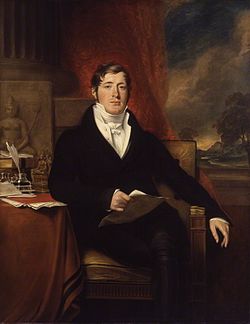
On an inspection tour to Semarang in 1814, Sir Thomas Stamford Raffles was informed about a big monument deep in a jungle near the village of Bumisegoro.
Image source: Stamford Raffles
1814
% complete
Worldwide knowledge of Borobudur's existence was sparked in 1814 by Sir Thomas Stamford Raffles, then the British ruler of Java. He sent Hermann Cornelius, a Dutch engineer who had uncovered the Sewu complex in 1806-07, to investigate.
Image source: Hermann Kessler
1817
% complete
Stamford Raffles mentioned 'Bóro Bódo' and described the temple in his 1817 book on Javan history.
1835
% complete
Christiaan Lodewijk Hartmann, the resident of the Kedu region, continued Cornelius's work, and in 1835 the whole complex was finally unearthed.
1842
% complete
In 1842, Hartmann investigated the main dome, although what he discovered is unknown and the main stupa remains empty.
1859
% complete
Jan Frederik Gerrit Brumund was appointed to make a detailed study of the monument, which was completed in 1859.
Image source: Borobudur
1872
% complete
The first photograph of the monument was taken in 1872 by the Dutch-Flemish engraver Isidore van Kinsbergen.
Image source: Isidore van Kinsbergen
1873
% complete
In 1873, the first monograph of the detailed study of Borobudur was published, followed by its French translation a year later.
1896
% complete
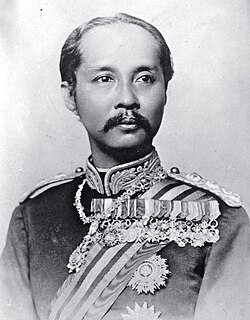
In 1896 King Chulalongkorn of Siam visited Java and requested and was allowed to take home eight cartloads of sculptures taken from Borobudur.
Image source: Chulalongkorn
1882
% complete
In 1882, the chief inspector of cultural artifacts recommended that Borobudur be entirely disassembled with the relocation of reliefs into museums due to the unstable condition of the monument.
1885
% complete
Borobudur attracted attention in 1885 when Dutch engineer Jan Willem IJzerman, chairman of the Archaeological Society in Yogyakarta, discovered that the temple base enclosed a hidden foot. A hidden structure at the base was accidentally discovered in 1885.
1890 - 1891
% complete
Photographs made in 1890-1891 revealed reliefs on the hidden foot; the coverings were then replaced. The encasement base was disassembled to reveal the hidden foot, and the reliefs were photographed by Casijan Chepas between 1890 and 1891.
1900 - 1905
% complete
In 1900, a three-member commission formed to plan protection, and in 1902 the commission submitted a threefold proposal. In 1905 the proposal was approved, with total cost estimated around 48,800 Dutch guilders.
1907 - 1911
% complete
The restoration began in 1907, led by Theodoor van Erp, a Dutch army engineer. Along the way he discovered more improvements; his additional proposal in 1908 was approved with an extra budget of 34,600 guilders. The restoration was completed in 1911 and at first glance Borobudur had been restored to its old glory.
1911
% complete
During the restoration in the early 20th century, Theodoor van Erp discovered that three Buddhist temples in the region — Borobudur, Pawon and Mendut — are positioned along a straight line.
Image source: Pawon
1968
% complete
In 1968, Soekmono, then head of the Archeological Service of Indonesia, launched his 'Save Borobudur' campaign in an effort to organize a massive restoration project.
1973
% complete
In 1973, a master plan to restore Borobudur was created through an Agreement concerning Voluntary Contributions signed in Paris on 29 January 1973, in which Australia, Belgium, Cyprus, France and Germany agreed to contribute to the restoration.
1975 - 1982
% complete
The Indonesian government and UNESCO undertook a complete overhaul of the monument between 1975 and 1982. In 1975 the actual work began, involving around 600 people and costing US$6,901,243.
1983
% complete
The largest restoration project was completed in 1983 by the Indonesian government and UNESCO, followed by the monument's listing as a UNESCO World Heritage Site.
1991
% complete
After the renovation was finished, UNESCO listed Borobudur as a World Heritage Site in 1991.
Jan 2012 - Jun 2012
% complete
In January 2012, two German stone-conservation experts spent ten days at the site analyzing the temples. In June, Germany agreed to contribute US$130,000 to UNESCO for a second phase of rehabilitation involving six experts in stone conservation, microbiology, structural engineering and chemical engineering.
2014
% complete
Germany returned its collection in 2014 and funded their reattachment and further conservation of the site.
Nov 2014
% complete
To avoid further wear of stairs' stones, since November 2014 two main sections of Borobudur stairs — the eastern ascending route and northern descending route — have been covered with wooden structures. In March 2015, the Borobudur Conservation Center proposed further sealing the stairs with rubber covers.
Dec 2017
% complete
In December 2017, the idea to reinstall the chattra on top of Borobudur main stupa's yasthi was revisited, though by early 2018 the chattra restoration had not yet commenced.
Image source: Chatra (umbrella)
Mar 10, 1934
% complete
A Bodhi Tree planting ceremony was held on the southeastern side of Borobudur on 10 March 1934 under the blessing of Narada Thera, a missionary monk from Sri Lanka visiting Indonesia for the first time, and some Upasakas were ordained as monks.
Image source: Narada Maha Thera
Jan 21, 1985
% complete
On 21 January 1985, nine stupas were badly damaged by nine bombs. In 1991, a blind Muslim preacher, Husein Ali Al Habsyie, was sentenced to life imprisonment for masterminding the bombings; two other members were each sentenced to 20 years in 1986, and another man received a 13-year prison term.
Image source: 1985 Borobudur bombing
2003
% complete
In 2003, residents and small businesses around Borobudur organized several meetings and poetry protests, objecting to a provincial government plan to build a three-storey mall complex dubbed 'Java World'.
2004
% complete
One famous rendering of an 8th-century Southeast Asian double outrigger ship is the Borobudur Ship. Today, the actual-size replica that sailed from Indonesia to Africa in 2004 is displayed in the Samudra Raksa Museum, located north of Borobudur.
Image source: Samudra Raksa
May 27, 2006
% complete
On 27 May 2006, an earthquake of 6.2 magnitude struck the south coast of Central Java, affecting the region around Borobudur.
Image source: 2006 Yogyakarta earthquake
Oct 2010 - Nov 2010
% complete
Borobudur was heavily affected by the eruption of Mount Merapi in October and November 2010. UNESCO donated US$3 million towards rehabilitation costs.
Image source: 2010 eruptions of Mount Merapi
Jun 2012
% complete
In June 2012, Borobudur was recorded in the Guinness Book of World Records as the world's largest Buddhist temple.
Image source: Guinness World Records
Feb 14, 2014
% complete
On 14 February 2014, major tourist attractions including Borobudur, Prambanan and Ratu Boko were closed to visitors after being severely affected by volcanic ash from the Kelud volcano eruption in East Java, which erupted on 13 February 2014.
Image source: Kelud
Aug 2014
% complete
In August 2014, Indonesian police and security forces tightened security in and around Borobudur temple compound as a precaution to a threat posted on social media by a self-proclaimed Indonesian branch of ISIS, citing plans to destroy Borobudur and other statues in Indonesia.
2020
% complete
Due to vandalism and graffiti, access to the temple grounds was temporarily blocked in 2020. Since then, a maximum of 1200 visitors are allowed per hour per day accompanied by tourist guides.
2021 - 2022
% complete
According to Statistics Indonesia, the number of domestic tourists rose from 422,930 in 2021 to 1.44 million in 2022.
Or browse the full history timeline directory, with more than 2,000 topics.
This Borobudur timeline was generated with the help of AI, using information found on the internet.
We work hard to keep these timelines accurate, but mistakes do get through. If you spot one, email us at [email protected] and we'll fix it for future visitors.
Generate yours with AI or build it from scratch, for free.
Export your timeline, add your own events, edit or remove AI-generated events, and much more
No credit card required.
Cancel anytime.
Cancel anytime.
You can create an unlimited number of timelines with up to 10 events on each one, customize how they look, export them to PDF, PNG, PowerPoint, CSV, and Excel, and share them with a link. Paid plans raise the event limit and add features like spreadsheet imports and collaborators.
Yes. You can cancel your subscription from your account page at any time, and you will not be charged again. Your subscription stays active for the rest of the period you already paid for.
Yes. We will email you a reminder before the annual renewal, and we will also email you a receipt.
Yes. You can email us within 15 days of any payment, and we will issue you a full refund.
Check out our pricing docs or send us an email anytime: [email protected].