-
Use Cases
-
Resources
-
Pricing
1000 - 1099
% complete
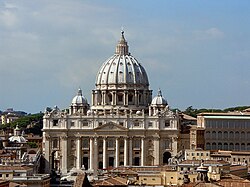
Since the eleventh-century East–West Schism, Orthodox and Catholic Christians have been separated, with each claiming to represent the original pre-schism Church.
Image source: East–West Schism
1054
% complete
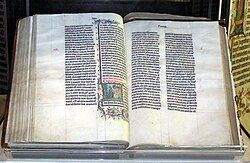
The Eastern and Western Christian groups gradually drifted apart until patriarchs from both traditions excommunicated one another around 1054 in the event known as the Great Schism.
1100 - 1199
% complete
In northern Italy and southeastern France, Peter Waldo founded the Waldensians during the twelfth century.
Image source: Waldensians
1400 - 1499
% complete
The Hussite movement created the Moravian Church, which is described in the source material as a major Protestant denomination.
Image source: Moravian Church
1552
% complete
The Chaldean Catholic Church, the largest Church of the East-derived body since the early twentieth century, formed from groups that entered communion with Rome at different times beginning in 1552.
Image source: Chaldean Catholic Church
1963
% complete
Although Ethiopia had a strong Christian community from the infancy of Christianity, its church gained autocephaly in 1963.
Image source: Ethiopian Orthodox Tewahedo Church
1964
% complete
The Ancient Church of the East has been distinct since 1964 and is headed by Addai II Giwargis, who resides in Baghdad.
Image source: Ancient Church of the East
1976
% complete
Since 1976, the second-largest Church of the East-derived body has officially been called the Assyrian Church of the East. From 1933 to 2015 it was headquartered first in Cyprus and then in the United States.
Image source: Assyrian Church of the East
1994
% complete
The Christian tradition in Eritrea gained autocephaly in 1994 after centuries of belonging to a wider ecclesiastical structure.
Image source: Eritrean Orthodox Tewahedo Church
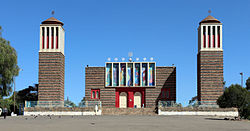
1500 - 1599
% complete
Sixteenth-century Protestants separated from the Catholic Church during the Reformation, a movement opposing doctrines and practices that the Reformers believed violated the Bible.
Image source: Reformation
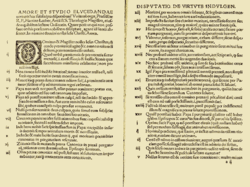
1500 - 1599
% complete
Unitarian churches emerged from the Reformed tradition in Italy, Poland, Lithuania, Transylvania, Hungary, and Romania during the sixteenth century.
Image source: Unitarianism
1500 - 1599
% complete
Protestantism developed into a diverse family that includes Adventists, Anabaptists, Anglicans, Baptists, Congregationalists, Methodists, Moravians, Pentecostals, Presbyterians, Reformed Christians, and, depending on classification, Unitarians.
Image source: Protestantism
1500 - 1599
% complete
Lutherans distinguish themselves from the broader category of Reformed Protestantism because of major differences in sacramental theology and historical approaches to the Reformation. Both traditions understood their work as reforming the Catholic Church rather than wholly rejecting it.
Image source: Lutheranism
1500 - 1599
% complete
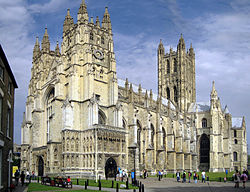
Anglicanism was generally classified as Protestant and originally understood as a via media, or middle way, between Lutheranism and Reformed Christianity.
Image source: Anglicanism
Oct 31, 1517
% complete
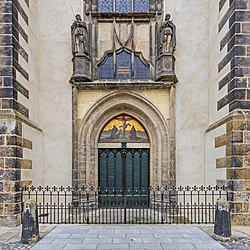
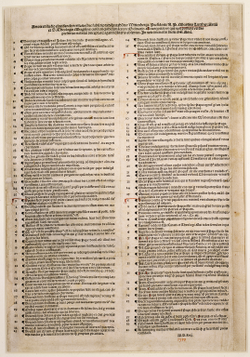
The Protestant Reformation began when Martin Luther posted the Ninety-Five Theses in Saxony on October 31, 1517. The theses presented grievances intended to reform the pre-Reformation Western Church.
Image source: Ninety-five Theses
1534
% complete
In 1534, Henry VIII declared himself supreme head of the Church of England through the Act of Supremacy, founding the Church of England while repressing both Lutheran reformers and those loyal to the pope.
Image source: Acts of Supremacy
1600 - 1699
% complete
Quakerism began as an evangelical Christian movement in seventeenth-century England. It rejected priests and formal Anglican or Catholic sacraments, including water baptism.
Image source: Quakers
1800 - 1899
% complete
Many churches with Restorationist roots reject identification as Protestant or even as denominations. They use the Bible rather than creeds and model their churches on what they understand to be the first-century church; the Churches of Christ are one example.
Image source: Restorationism
1800 - 1899
% complete
Since the Oxford Movement of the nineteenth century, some Anglo-Catholic Anglican writers have emphasized a more Catholic understanding of the church and characterized Anglicanism as both Protestant and Catholic.
Image source: Oxford Movement
1830
% complete
Most Latter Day Saint denominations derive from the Church of Christ (Latter Day Saints), established by Joseph Smith in 1830 and categorized as a Restorationist denomination.
Image source: Latter Day Saint movement
1832
% complete
In 1832, the Stone and Campbell groups joined in fellowship with a handshake. Both promoted a return to the purposes of first-century churches described in the New Testament.
Image source: Restoration Movement
1853
% complete
The term “Old Catholic” was first used in 1853 for members of the See of Utrecht who were not under papal authority.
1869 - 1870
% complete
The First Vatican Council of 1869–1870 promulgated the dogma of papal infallibility, a development that led to a subsequent Old Catholic split.
Image source: First Vatican Council
1870 - 1879
% complete
The Old Catholic Church split from the Catholic Church in the 1870s because of opposition to the promulgation of papal infallibility.
1890
% complete
Several Latter Day Saint denominations broke away over the abandonment of plural marriage after the 1890 Manifesto.
Image source: 1890 Manifesto
1900 - 1999
% complete
African Initiated Churches, including Kimbanguism, mostly fall within Protestantism while displaying varying degrees of syncretism.
Image source: African-initiated church
1900 - 1999
% complete
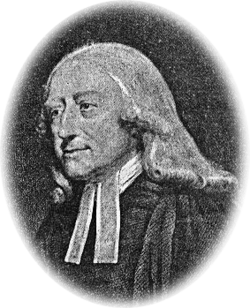
Methodism underwent numerous administrative schisms and mergers with other denominations, particularly groups associated with the holiness movement during the twentieth century.
Image source: Methodism
1916
% complete
The Liberal Catholic Church began in 1916 when an Old Catholic bishop in London, Bishop Matthew, consecrated James Wedgwood to the episcopacy.
1800 - 1899
% complete
Existing records of various societies indicate that at least 250,000 Jews converted to Christianity during the nineteenth century.
Image source: Conversion to Christianity
1900 - 1999
% complete
The measure of mutual acceptance among Christian denominations and movements has grown largely through the twentieth-century ecumenical movement and overarching bodies such as the World Council of Churches.
Image source: Ecumenism
1962 - 1965
% complete
Since reforms surrounding the Second Vatican Council of 1962–1965, the Catholic Church has referred to Protestant bodies as ecclesial communities while reserving “church” for apostolic churches, including Eastern and Oriental Orthodox and Ancient and Assyrian churches.
Image source: Second Vatican Council
1962 - 1965
% complete
Feeneyism is considered a heresy by the Catholic Church and was rejected by the Second Vatican Council of 1962–1965.
2011
% complete
As of 2011, divisions among Christian denominations were becoming less sharp, with increasing cooperation known as ecumenism.
2013
% complete
Pew Research Center data reported that in 2013 about 1.6 million adult American Jews identified themselves as Christians, most of them as Protestants.
2024
% complete
In 2024, the total Protestant population reached approximately 1.047 billion, accounting for about 39.8 percent of all Christians.
Or browse the full history timeline directory, with more than 2,000 topics.
This Christian Denominations timeline was generated with the help of AI, using information found on the internet.
We work hard to keep these timelines accurate, but mistakes do get through. If you spot one, email us at [email protected] and we'll fix it for future visitors.
Generate yours with AI or build it from scratch, for free.
Export your timeline, add your own events, edit or remove AI-generated events, and much more
No credit card required.
Cancel anytime.
Cancel anytime.
You can create an unlimited number of timelines with up to 10 events on each one, customize how they look, export them to PDF, PNG, PowerPoint, CSV, and Excel, and share them with a link. Paid plans raise the event limit and add features like spreadsheet imports and collaborators.
Yes. You can cancel your subscription from your account page at any time, and you will not be charged again. Your subscription stays active for the rest of the period you already paid for.
Yes. We will email you a reminder before the annual renewal, and we will also email you a receipt.
Yes. You can email us within 15 days of any payment, and we will issue you a full refund.
Check out our pricing docs or send us an email anytime: [email protected].