-
Use Cases
-
Resources
-
Pricing
The Environmental Movement is a social and political movement dedicated to protecting the natural environment through advocacy, education, legislation, and grassroots activism. Emerging from 19th-century conservation efforts, it gained momentum in the mid-20th century with growing awareness of pollution, ecological degradation, and later climate change, shaping environmental policy worldwide. More Less
1842
% complete
The Madras Board of Revenue started local conservation efforts in 1842, headed by Alexander Gibson, a professional botanist who systematically adopted a forest conservation programme based on scientific principles.
Image source: Environmental movement
1854
% complete
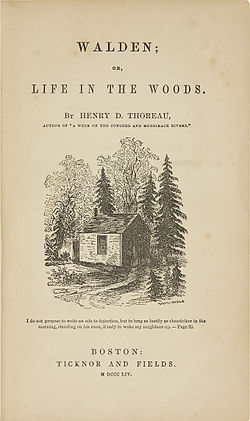
Henry David Thoreau published his experiences in the 1854 book Walden, which argues that people should become intimately close with nature, making key philosophical contributions to the American environmental movement.
Image source: Walden
1855
% complete
The government under Governor-General Lord Dalhousie introduced the first permanent and large-scale forest conservation programme in the world in 1855, a model that soon spread to other colonies as well as the United States.
1856
% complete
Dietrich Brandis joined the British service in 1856 as superintendent of the teak forests of Pegu division in eastern Burma, contributing scientific expertise to colonial forest management.
1860
% complete
In 1860, the Department banned the use of shifting cultivation as part of expanding forest conservation policies in British India.
1865
% complete
Starting with the formation of the Commons Preservation Society in 1865, the British amenity movement championed rural preservation against the encroachments of industrialisation.
Image source: Open Spaces Society
1872 - 1903
% complete
The zoologist Alfred Newton published a series of investigations into the Desirability of establishing a 'Close-time' for the preservation of indigenous animals between 1872 and 1903, advocating legislation to protect animals from hunting during the mating season.
Image source: Alfred Newton
1889
% complete
Alfred Newton's advocacy for legislation to protect animals from hunting during the mating season led to the formation of the Plumage League in 1889, later known as the Royal Society for the Protection of Birds.
Image source: Royal Society for the Protection of Birds
1892
% complete
John Muir successfully lobbied Congress to form Yosemite National Park and went on to set up the Sierra Club in 1892, a key organization in the American environmental movement that began in the late 19th century out of concerns for protecting the natural resources of the West.
Image source: Sierra Club
1894
% complete
In 1893 Hill, Hunter and Rawnsley agreed to set up a national body to coordinate environmental conservation efforts across Britain; the National Trust for Places of Historic Interest or Natural Beauty was formally inaugurated in 1894.
Image source: National Trust
1898
% complete
The Coal Smoke Abatement Society (now Environmental Protection UK) was formed in 1898, making it one of the oldest environmental NGOs. For most of the century from 1850 to 1950, the primary environmental cause was the mitigation of air pollution.
Image source: Industrial Revolution
1869
% complete
The Sea Birds Preservation Act was passed in 1869 as the first nature protection law in the world, influenced by growing support from suburban middle-class conservation societies.
Image source: Sea Birds Preservation Act 1869
1875
% complete
Although there were earlier pieces of legislation, the Public Health Act 1875 required all furnaces and fireplaces to consume their own smoke, addressing severe air pollution in industrial Britain.
Aug 1907
% complete
The organisation obtained secure footing through the 1907 National Trust Bill, which gave the trust the status of a statutory corporation; the bill was passed in August 1907.
1926
% complete
The Public Health Act's provisions were extended in 1926 with the Smoke Abatement Act to include other emissions such as soot, ash, and gritty particles, and to empower local authorities to impose their own regulations.
1933
% complete
In 1933 the German government created a stringent animal-protection law, followed in 1934 by Das Reichsjagdgesetz (The Reich Hunting Law), which limited hunting.
Image source: Animal welfare in Nazi Germany
1935
% complete
In 1935, the Nazi regime enacted the Reich Nature Protection Act (Reichsnaturschutzgesetz), one of several environmental laws passed during this period in Germany.
1992
% complete
Saudi Arabia was the first Arab country to establish environmental law in 1992, followed by Egypt in 1994, marking the beginning of formal environmental regulation in the Arab world.
Image source: Environmental law
2022
% complete
In 2022, a court in South Africa confirmed the constitutional right of the country's citizens to an environment that is not harmful to their health, which includes the right to clean air.
1936
% complete
During the Spanish Revolution in 1936, anarchist-controlled territories undertook several environmental reforms, which were possibly the largest in the world at the time.
Image source: Spanish Revolution of 1936
1964
% complete
The first seed of an environmental movement in India was the foundation in 1964 of Dasholi Gram Swarajya Sangh, a labour cooperative started by Chandi Prasad Bhatt.
Image source: Chipko movement
1972
% complete
After the International Environmental Conference in Stockholm in 1972, Latin American officials returned with high hopes of growth and protection of the fairly untouched natural resources of their region.
1974
% complete
The Chipko movement starting in 1974 followed the foundation of Dasholi Gram Swarajya Sangh, with villagers embracing trees to prevent logging, becoming an iconic example of nonviolent ecoactivism in India.
1986
% complete
Pro-Natura International is a private environmental organization created in 1986, working on conservation issues internationally.
1986
% complete
Funatura was created in 1986 and is a Brazilian wildlife sanctuary program dedicated to protecting the country's biodiversity.
1989
% complete
The Blue Wave Foundation was created in 1989 and has partnered with advertising companies to promote national education campaigns to keep Brazil's beaches clean.
1992
% complete
In 1992, Brazil came under scrutiny with the United Nations Conference on Environment and Development in Rio de Janeiro, a landmark global summit on sustainable development.
Image source: Earth Summit
2008
% complete
In 2008, the Eco Revolution movement was started by Eco Needs Foundation, continuing the growth of grassroots environmental activism.
1962
% complete
The contemporary environmental movement's roots can be traced back to Rachel Carson's 1962 book Silent Spring, along with Murray Bookchin's Our Synthetic Environment published the same year. Carson became one of the most influential individual advocates of the 20th-century movement.
Image source: Silent Spring
1968
% complete
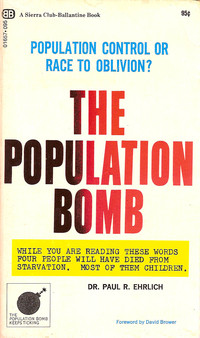
Paul R. Ehrlich's 1968 book The Population Bomb helped shape the contemporary environmental movement, warning of the consequences of unchecked population growth.
Image source: The Population Bomb
1973 - 2099
% complete
From 1973 to the 1990s, and then in the 2000s, indigenous communities and rubber tappers in Latin America carried out blockades that protected much rainforest from destruction.
1979
% complete
In the aftermath of the Three Mile Island accident in 1979, many mass demonstrations took place against nuclear power across the United States.
Image source: Three Mile Island accident
Sep 1979
% complete
The largest post-Three Mile Island demonstration was held in New York City in September 1979 and involved 200,000 people protesting nuclear power.
Image source: Anti-nuclear movement in the United States
Dec 3, 1984
% complete
The most severe single event underpinning the Indian environmental movement was the Bhopal gas leakage on 3 December 1984, a catastrophic industrial disaster that galvanized environmental activism in India.
Image source: Bhopal disaster
2018 - 2021
% complete
Also notable is the Yellow Finch tree sit, which was a 932-day blockade of the Mountain Valley Pipeline from 2018 to 2021, demonstrating sustained direct-action ecoactivism.
Image source: Mountain Valley Pipeline
Or browse the full history timeline directory, with more than 2,000 topics.
This Environmental Movement timeline was generated with the help of AI, using information found on the internet.
We work hard to keep these timelines accurate, but mistakes do get through. If you spot one, email us at [email protected] and we'll fix it for future visitors.
Generate yours with AI or build it from scratch, for free.
Export your timeline, add your own events, edit or remove AI-generated events, and much more
No credit card required.
Cancel anytime.
Cancel anytime.
You can create an unlimited number of timelines with up to 10 events on each one, customize how they look, export them to PDF, PNG, PowerPoint, CSV, and Excel, and share them with a link. Paid plans raise the event limit and add features like spreadsheet imports and collaborators.
Yes. You can cancel your subscription from your account page at any time, and you will not be charged again. Your subscription stays active for the rest of the period you already paid for.
Yes. We will email you a reminder before the annual renewal, and we will also email you a receipt.
Yes. You can email us within 15 days of any payment, and we will issue you a full refund.
Check out our pricing docs or send us an email anytime: [email protected].