-
Use Cases
-
Resources
-
Pricing
The Feminist Movement is a series of social and political campaigns advocating for women's rights, including voting rights, workplace equality, reproductive freedom, and protection from discrimination. Spanning multiple waves from the mid-19th century to the present day, it has transformed laws, culture, and society worldwide. More Less
1785
% complete
The first scientific society for women was founded in Middelburg, a city in the south of the Dutch republic, in 1785, marking an early institutional space for women's intellectual participation.
Aug 1789
% complete
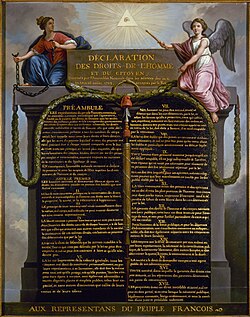
The French Revolution began with the inequality felt by French citizens and came as a reaction from the 'Declaration of the Rights of Man and of the Citizen,' which was signed in August 1789 and excluded women's rights.
Image source: Declaration of the Rights of Man and of the Citizen
Oct 5, 1789
% complete
The first documented gathering of women to form a movement with a common goal occurred on 5 October 1789, during the French Revolution, when women marched in protest over inequality and hardship.
Image source: Women's March on Versailles
1791
% complete
French playwright Olympe de Gouges wrote the 'Declaration of the Rights of Woman' in contrast to the 'Declaration of the Rights of Man and of the Citizen,' famously stating, 'Women are born free and are man's equal in law.' The term 'feminism' was also first transmitted to China in 1791 through her promotion of 'women's liberation.'
Image source: Declaration of the Rights of Woman and of the Female Citizen
1792
% complete
British philosopher Mary Wollstonecraft published what has been seen as the first feminist treatise on the human rights of women, pressing the issue of equality between men and women and stating that 'No society can be either virtuous or moral while half of the population are being subjugated by the other half.' Her early ideas are described as protofeminist.
Image source: A Vindication of the Rights of Woman
1851 - 1864
% complete
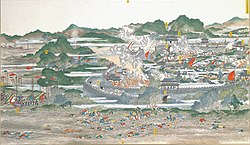
Before the westernization movement and the reform movement, women in China set off a wave of their own strength in the Taiping Heavenly Kingdom (1851-1864), an early expression of female empowerment.
Image source: Taiping Rebellion
1897
% complete
In 1897, male feminist Liang Qichao proposed banning foot-binding and encouraged women to engage in the workforce, political environment and education, marking a key moment in Chinese feminism.
Image source: Liang Qichao
1911
% complete
Feminism in China started in the 20th century with the 1911 Revolution, as prior to that time women in China were considered essentially different from men.
Image source: 1911 Revolution
1949
% complete
After the PRC's founding in 1949, women were granted the same rights that men were entitled to by law, largely because women's liberation was presented as part of the Chinese nation's liberation.
Image source: China
1888
% complete
The International Council of Women was established in 1888 in Washington, DC, US, becoming one of the earliest North American and European international women's organizations.
Image source: International Council of Women
Nov 15, 1895
% complete
On November 15, 1895, Elizabeth Cady Stanton wrote an address describing how at the Seneca Falls Convention 'a declaration was read and signed by most of those present, and a series of radical resolutions adopted.' Her recollection prompted historians since the 1950s to attribute the convention as the earliest North American Feminist Movement.
Image source: Elizabeth Cady Stanton
1899
% complete
The term Feminist Movement was coined in the late nineteenth century to distinguish the Feminist Movement from the Women's Movement, allowing for the inclusion of male feminists.
Image source: Feminist movement
1905
% complete
Russian nationalist feminist activists founded the All-Russian Union for Women's Equality in 1905, advocating for women's suffrage and co-education.
1906
% complete
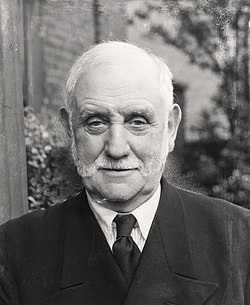
The new movement prompted male feminists like George Lansbury of the British Labour Party to run for political candidacy on the feminist ticket in 1906.
Image source: George Lansbury
Mar 3, 1913
% complete
For the Suffragette's first major display, they held a parade on 3 March 1913 in Washington DC, drawing national attention to the cause of women's suffrage.
Image source: Woman Suffrage Procession
1918
% complete
In 1918 Crystal Eastman wrote an article published in the Birth Control Review contending that birth control is a fundamental right for women and must be available if they are to participate fully in the modern world.
Image source: Crystal Eastman
1931
% complete
In 1931, the All-Asian Women's Conference was held in Lahore in what was then British India, bringing together women from across Asia to discuss shared concerns.
Image source: All-Asian Women's Conference
1920
% complete
Women in the movement had called for moral reform by limiting or prohibiting the sale and consumption of alcohol, beginning the fight toward Prohibition which did not begin until 1920.
Image source: Prohibition in the United States
Apr 5, 1971
% complete
A declaration in which women publicly acknowledged having had abortions was published in two French newspapers, Le Nouvel observateur and Le Monde, on 5 April 1971, challenging France's abortion laws.
1975
% complete
Women in France received the right to abort with the passing of the Veil Law in 1975, a landmark legal victory for reproductive rights.
Image source: Veil Act
1991
% complete
Following the televised sexual harassment case, Congress passed the Civil Rights Act of 1991, which gave legal action against workplace sexual harassment.
Image source: Civil Rights Act of 1991
Oct 11, 1991
% complete
On 11 October 1991, the first televised workplace sexual harassment case was aired. Though the case was dismissed, it encouraged other women to speak out on their own experiences.
Image source: Anita Hill
2004
% complete
The United Nations Human Development Report 2004 estimated that when both paid employment and unpaid household tasks are accounted for, on average women work more than men, highlighting ongoing gender inequality.
Image source: Human Development Report
2026
% complete
The movement's priorities have expanded since its beginning in the 19th century and vary among nations and communities, with feminism remaining an ongoing movement in parts of the Western world since the turn of the century and women's increased entry into the workplace continuing to affect gender roles and the division of labor within households.
1949
% complete
Simone de Beauvoir, a defender of women's rights, wrote The Second Sex in 1949, a foundational text that would be read more widely again during the resurgence of the women's movement in 1968.
Image source: The Second Sex
1963
% complete
It is believed the feminist movement gained attention in 1963 when Betty Friedan published her book The Feminine Mystique, writing of 'the problem that has no name' to describe the depression women felt about their limited choices in life.
Image source: The Feminine Mystique
1968
% complete
In 1968, second wave feminists began founding feminist and lesbian periodicals so they could publish their writings without censorship or denigration from the male press.
Image source: Women in print movement
May 1968
% complete
The women's movement became more popular in May 1968 when women began to read again, more widely, Simone de Beauvoir's The Second Sex, fueling second wave activism.
Sep 7, 1968
% complete
The defining moment in the 1960s was a demonstration held to protest against the Miss America pageant in Atlantic City on 7 September 1968, termed the 'cattle parade,' which drew national media attention.
Image source: Miss America protest
Jan 1971
% complete
In January 1971, over a hundred women illegally occupied an abandoned New York City building, establishing a food co-operative, day care, and lesbian center before being forcibly removed and arrested by police.
Or browse the full history timeline directory, with more than 2,000 topics.
This Feminist Movement timeline was generated with the help of AI, using information found on the internet.
We work hard to keep these timelines accurate, but mistakes do get through. If you spot one, email us at [email protected] and we'll fix it for future visitors.
Generate yours with AI or build it from scratch, for free.
Export your timeline, add your own events, edit or remove AI-generated events, and much more
No credit card required.
Cancel anytime.
Cancel anytime.
You can create an unlimited number of timelines with up to 10 events on each one, customize how they look, export them to PDF, PNG, PowerPoint, CSV, and Excel, and share them with a link. Paid plans raise the event limit and add features like spreadsheet imports and collaborators.
Yes. You can cancel your subscription from your account page at any time, and you will not be charged again. Your subscription stays active for the rest of the period you already paid for.
Yes. We will email you a reminder before the annual renewal, and we will also email you a receipt.
Yes. You can email us within 15 days of any payment, and we will issue you a full refund.
Check out our pricing docs or send us an email anytime: [email protected].