-
Use Cases
-
Resources
-
Pricing
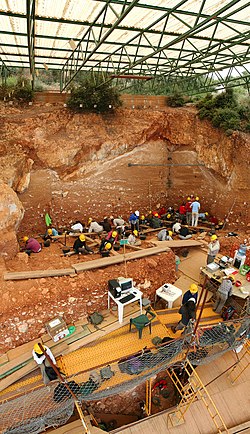
The history of archaeology traces the development of the systematic study of human past through material remains. It evolved from treasure hunting and antiquarianism in the 18th and 19th centuries into a rigorous scientific discipline, shaped by landmark excavations such as Pompeii, Troy, and Tutankhamun's tomb, and by theoretical advances including stratigraphy, radiocarbon dating, and processual and post-processual approaches. More Less
550 BCE
% complete
King Nabonidus of the Neo-Babylonian Empire discovered and analysed a foundation deposit of Akkadian ruler Naram-Sin (ruled c. 2200 BCE), making him known as the first archaeologist. He excavated, surveyed and restored sites built more than a millennium earlier under Naram-sin of Akkad.
Image source: Nabonidus
450 BCE
% complete
The 5th-century-BCE Greek historian Herodotus was the first scholar to systematically study the past and also an early examiner of artifacts, laying groundwork for later historical inquiry.
Image source: Herodotus
960 - 1279
% complete
In the Song Empire (960–1279) of imperial China, Chinese scholar-officials unearthed, studied, and cataloged ancient artifacts, a native practice that continued into the Qing dynasty before adoption of Western methods.
Image source: Song dynasty
1072
% complete
The official, historian, poet, and essayist Ouyang Xiu (1007–1072) compiled an analytical catalogue of ancient rubbings on stone and bronze during the Song dynasty.
Image source: Ouyang Xiu
1088
% complete
The polymath official Shen Kuo (1031–1095) criticized contemporary attitudes toward antiquities in his Dream Pool Essays of 1088, advocating a more scholarly approach to ancient objects.
Image source: Dream Pool Essays
1129
% complete
Zhao Mingcheng (1081–1129) stressed the importance of using ancient inscriptions to correct discrepancies and errors in later historical texts discussing ancient events.
1150
% complete
The 12th century Indian scholar Kalhana recorded local traditions and examined manuscripts, inscriptions, coins and architectures, described as one of the earliest traces of archaeology. His Rajatarangini, completed c. 1150, is one of the first history books of India.
Image source: Kalhana
1202
% complete
A widely reprinted antiquarian work was criticized by Hong Mai (1123–1202) for containing inaccuracies about Han dynasty artifacts, showing critical scrutiny of antiquarian scholarship in Song China.
Image source: Hong Mai
1279 - 1644
% complete
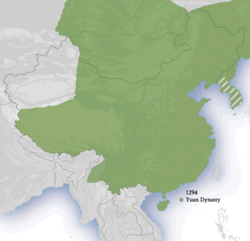
Native Chinese antiquarian studies waned during the Yuan (1279–1368) and Ming (1368–1644) dynasties, were revived during the Qing dynasty (1644–1912), but never developed into a systematic discipline outside Chinese historiography.
Image source: Yuan dynasty
1400
% complete
In Mesoamerica, the Mexica (or Aztecs) performed excavations at Teotihuacan, a city abandoned for several hundred years before the arrival of the Mexica in the Valley of Mexico in the 14th century.
Image source: Teotihuacan
1391 - 1455
% complete
The itinerant scholar Cyriacus of Ancona traveled throughout Greece recording his findings on ancient buildings and objects. He was the most enterprising recorder of Greek and Roman antiquities in the fifteenth century, earning the title founding father of modern classical archaeology.
Image source: Cyriacus of Ancona
1440
% complete
Flavio Biondo, an Italian Renaissance humanist historian, created a systematic guide to the ruins and topography of ancient Rome in the early 15th century, for which he has been called an early founder of archaeology.
Image source: Flavio Biondo
1450 - 1600
% complete
The 15th and 16th centuries saw the rise of antiquarians in Renaissance Europe such as Flavio Biondo who were interested in the collection of artifacts.
Image source: Antiquarian
1550
% complete
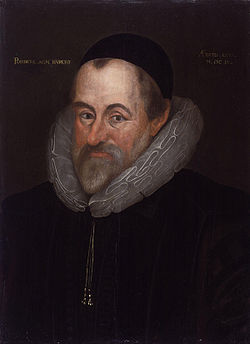
English antiquarians of the 16th century including John Leland and William Camden conducted topographical surveys of England's countryside, drawing, describing and interpreting the monuments that they encountered.
Image source: William Camden
1620
% complete
The first known excavations made at Stonehenge were conducted by William Harvey and Gilbert North in the early 17th century.
Image source: Stonehenge
1680
% complete
John Aubrey wrote Monumenta Britannica in the late 17th century as a survey of early urban and military sites, including Roman towns, hillforts, and castles, and a review of archaeological remains including sepulchral monuments, roads, coins and urns.
Image source: John Aubrey
1700 - 1800
% complete
Tentative steps towards the systematization of archaeology as a science took place during the Enlightenment era in Europe in the 17th and 18th centuries.
Image source: History of archaeology
1720
% complete
William Stukeley was another antiquarian who contributed to the early development of archaeology in the early 18th century, notably through his studies of Stonehenge and Avebury.
Image source: William Stukeley
1738
% complete
Excavations began in 1738 at Herculaneum under the auspices of King Charles VII of Naples, uncovering the buried Roman city destroyed by Vesuvius.
Image source: Herculaneum
1748
% complete
Excavations began in 1748 at Pompeii, revealing remarkable details of daily life in the Roman world preserved beneath volcanic ash.
Image source: Pompeii
1768
% complete
In Herculaneum, the Theatre, the Basilica and the Villa of the Papyri were discovered in 1768, adding major structures to knowledge of Roman architecture.
Image source: Villa of the Papyri
1780
% complete
Antiquarianism focused on empirical evidence for understanding the past, encapsulated in the motto of the 18th-century antiquary Sir Richard Colt Hoare: 'We speak from facts not theory'.
Image source: Sir Richard Hoare, 2nd Baronet
1784
% complete
In America, Thomas Jefferson supervised the systematic excavation of a Native American burial mound on his land in Virginia in 1784, possibly inspired by his experiences in Europe.
Image source: Thomas Jefferson
1790 - 1900
% complete
In the late 18th to 19th century archaeology became a national endeavor as personal cabinets of curios turned into national museums.
Image source: List of national museums
1824
% complete
The OED first cites 'archaeologist' from 1824; this soon took over as the usual term for one major branch of antiquarian activity. 'Archaeology' itself, from 1607 onwards, initially meant ancient history generally, with the narrower modern sense first seen in 1837.
Image source: Archaeology
1870 - 1900
% complete
Archaeology evolved into a much more systematic discipline in the late 19th century, moving beyond amateur pastime status it still held as late as the mid-19th century, and became a widely used tool for historical and anthropological research in the 20th century.
1880
% complete
In 1880, Augustus Pitt Rivers began excavations on lands that came to him in inheritance and which contained a wealth of archaeological material from the Roman and Saxon periods, pioneering systematic, scientific excavation methods.
Image source: Augustus Pitt Rivers
1880 - 1910
% complete
In nineteenth-century Mexico, the expansion of the National Museum of Anthropology and the excavation of major archaeological ruins by Leopoldo Batres were part of the liberal regime of Porfirio Díaz to create a glorious image of Mexico's pre-Hispanic past.
1890
% complete
Flinders Petrie was responsible for mentoring and training a whole generation of Egyptologists, including Howard Carter, who went on to achieve fame with the discovery of the tomb of 14th-century BCE pharaoh Tutankhamun.
Image source: Flinders Petrie
1798 - 1801
% complete
Napoleon's army carried out excavations during its Egyptian campaign in 1798–1801, which was also the first major overseas archaeological expedition.
Image source: French campaign in Egypt and Syria
1798
% complete
William Cunnington (1754–1810), regarded as the father of archaeological excavation, undertook excavations in Wiltshire from around 1798 in collaboration with his regular excavators Stephen and John Parker of Heytesbury.
Image source: William Cunnington
1803
% complete
In 1803, there was widespread criticism of Thomas Bruce, 7th Earl of Elgin for removing the Elgin Marbles from the Parthenon in Athens, sparking early debates on cultural heritage.
Image source: Elgin Marbles
1804
% complete
Richard Colt Hoare, who inherited the Stourhead estate in 1785, turned to antiquarian pursuits and began funding Cunnington's excavations in 1804, becoming his wealthiest patron.
1808
% complete
The first reference to the use of a trowel on an archaeological site was made in a letter from Cunnington to Hoare in 1808, describing John Parker using one in the excavation of Bush Barrow.
Image source: Bush Barrow
1810
% complete
Cunnington's site reports and descriptions were published by Hoare in The Ancient Historie of Wiltshire in 1810, a copy of which is kept at Stourhead.
1836 - 1849
% complete
In the third and fourth decades of the 19th century, archaeologists like Jacques Boucher de Perthes and Christian Jürgensen Thomsen began to put the artifacts they had found in chronological order, developing stratigraphy as a major achievement of 19th century archaeology.
Image source: Christian Jürgensen Thomsen
1847
% complete
Jacques Boucher de Perthes (1788–1868) established a much deeper sense of time in Antiquités celtiques et antédiluviennes (1847), challenging Ussher's biblical chronology that dated creation to 23 October 4004 BCE.
Image source: Jacques Boucher de Crèvecœur de Perthes
Or browse the full history timeline directory, with more than 2,000 topics.
This History of Archaeology timeline was generated with the help of AI, using information found on the internet.
We work hard to keep these timelines accurate, but mistakes do get through. If you spot one, email us at [email protected] and we'll fix it for future visitors.
Generate yours with AI or build it from scratch, for free.
Export your timeline, add your own events, edit or remove AI-generated events, and much more
No credit card required.
Cancel anytime.
Cancel anytime.
You can create an unlimited number of timelines with up to 10 events on each one, customize how they look, export them to PDF, PNG, PowerPoint, CSV, and Excel, and share them with a link. Paid plans raise the event limit and add features like spreadsheet imports and collaborators.
Yes. You can cancel your subscription from your account page at any time, and you will not be charged again. Your subscription stays active for the rest of the period you already paid for.
Yes. We will email you a reminder before the annual renewal, and we will also email you a receipt.
Yes. You can email us within 15 days of any payment, and we will issue you a full refund.
Check out our pricing docs or send us an email anytime: [email protected].