-
Use Cases
-
Resources
-
Pricing
Azerbaijan's history spans thousands of years, from ancient civilizations like Caucasian Albania and the Median Empire, through periods of Persian, Arab, and Turkic influence, to the rise and fall of the Safavids, the khanate era, incorporation into the Russian Empire, a brief period of independence as the first democratic republic in the Muslim East (1918–1920), seven decades of Soviet rule, and finally its restoration of independence in 1991, followed by the Nagorno-Karabakh conflict and modern nation-building. More Less
200 BC
% complete
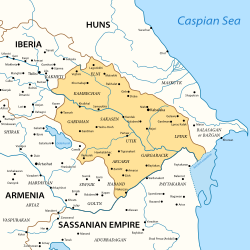
Caucasian Albania was an ancient kingdom in the eastern Caucasus, covering much of present-day Azerbaijan. It developed its own distinct culture and Christian church tradition, surviving as a political entity until it was gradually absorbed by Arab and later medieval powers.
Image source: Caucasian Albania
639 AD
% complete
Arab armies conquered the Caucasus region in the 7th century, bringing Islam to the lands of modern Azerbaijan. The gradual conversion of the population reshaped the region's religious and cultural identity, laying foundations for its later Turkic-Islamic character.
Image source: Muslim conquest of Armenia
861 AD - 1538
% complete
The Shirvanshahs ruled the Shirvan region of Azerbaijan for nearly seven centuries. They presided over a flourishing court culture, patronized poets such as Nizami Ganjavi, and built architectural landmarks including the Palace of the Shirvanshahs in Baku.
Image source: Shirvanshahs
Aug 26, 1071
% complete
The Seljuk Turks' decisive victory over the Byzantine Empire opened Anatolia and the Caucasus to Turkic migration. This marked the beginning of the Oghuz Turkic dominance in Azerbaijan that shaped its language and ethnic composition.
Image source: Battle of Manzikert
1175 - 1200
% complete
The great poet Nizami Ganjavi, writing in the Azerbaijani city of Ganja, composed his five-poem collection known as the Khamsa. His romantic epics became classics of Persian literature and enduring symbols of Azerbaijani cultural heritage.
Image source: Nizami Ganjavi
1220 - 1235
% complete
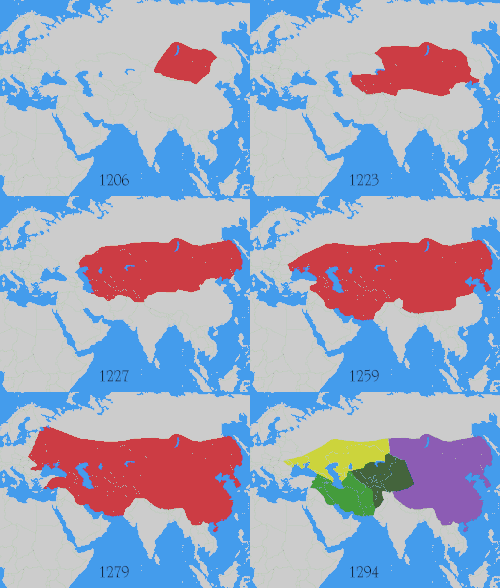
Mongol forces swept through Transcaucasia in the 13th century, destroying cities and subjugating local rulers across Azerbaijan. The invasions brought decades of turmoil before the region was incorporated into Mongol successor states.
Image source: Mongol invasions and conquests
1386 - 1402
% complete
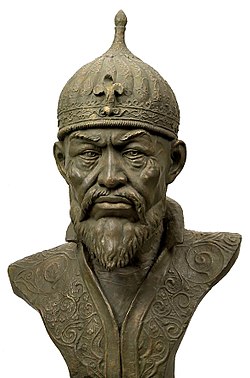
Tamerlane launched repeated campaigns into the South Caucasus during his wars against Tokhtamysh and the Jalayirids. His armies devastated Azerbaijani cities, though he also briefly made Tabriz a seat of power before his death.
Image source: Timur
1501
% complete
Shah Ismail I, born in Ardabil with deep roots among the Turkic Qizilbash tribes, founded the Safavid dynasty and declared Twelver Shiism the state religion. The Safavids ruled much of historic Azerbaijan for over two centuries.
Image source: Ismail I
1722 - 1723
% complete
Peter the Great's campaign along the Caspian Sea forced Persia to cede Baku and Derbent by the Treaty of Saint Petersburg. Although most gains were returned shortly after, this marked the start of Russian expansion toward the South Caucasus.
Image source: Russo-Persian War (1722–1723)
Oct 24, 1813
% complete
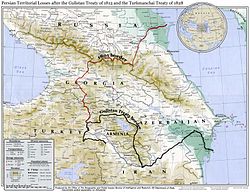
After Russia's victory in the Russo-Persian War of 1804–1813, Persia formally ceded most of the khanates of the eastern South Caucasus, including Karabakh, Shirvan and Baku, marking the incorporation of northern Azerbaijan into the Russian Empire.
Image source: Treaty of Gulistan
Feb 10, 1828
% complete
The Treaty of Turkmenchay ended the second Russo-Persian War and fixed the Aras River as the border between Russian and Persian spheres. It divided historical Azerbaijan between the Russian Empire and Qajar Persia, splitting the Azerbaijani people into two states.
Image source: Treaty of Turkmenchay
1848
% complete
Following the drilling of one of the world's first modern oil wells at Bibi-Heybat near Baku, Azerbaijan became a global center of petroleum production. By the early 1900s Baku produced roughly half of the world's oil, attracting foreign capital and workers from across the empire.
Image source: Petroleum industry in Azerbaijan
1859
% complete
Akhundzadeh published his comedies and literary criticism, founding modern Azerbaijani literature and theater. His advocacy for alphabet reform and secular enlightenment influenced generations of intellectuals in the Russian-ruled Caucasus.
Image source: Mirza Fatali Akhundov
Feb 1, 1905
% complete
Amid the turmoil of the 1905 Russian Revolution, bloody clashes erupted between Armenians and Muslim Tatars (Azerbaijanis) across the South Caucasus, particularly in Baku, Nakhchivan and Shusha, foreshadowing later ethnic conflicts.
Image source: Armenian–Tatar massacres of 1905–1906
Apr 27, 1920 - Apr 28, 1920
% complete
Soviet Russian troops crossed into Azerbaijan and, aided by local Bolsheviks, overthrew the Azerbaijan Democratic Republic within days. The Azerbaijan SSR was proclaimed, ending less than two years of independence.
Image source: Soviet invasion of Azerbaijan
Mar 12, 1922 - Dec 5, 1936
% complete
Azerbaijan, Georgia and Armenia were merged into the Transcaucasian SFSR, which joined the USSR as a founding member in December 1922. The federation dissolved in 1936 when each republic became a separate union republic.
Image source: Transcaucasian Socialist Federative Soviet Republic
1941 - 1945
% complete
Baku supplied the vast majority of Soviet fuel during World War II, making it a strategic prize Hitler coveted. Hundreds of thousands of Azerbaijanis served in the Red Army, and the republic received Lend-Lease aid via the Persian Corridor.
Image source: Azerbaijan in World War II
Jul 1969 - Oct 1982
% complete
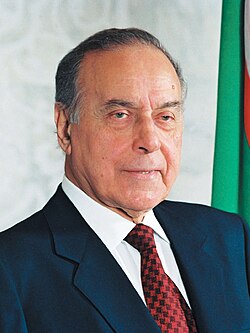
Heydar Aliyev became First Secretary of the Communist Party of Azerbaijan in 1969, overseeing rapid economic growth and stability. He later rose to the Politburo in Moscow, becoming one of the most powerful figures in the late Soviet leadership.
Image source: Heydar Aliyev
Mar 30, 1918 - Apr 2, 1918
% complete
Violence in Baku pitted Bolshevik-Dashnak forces against Azerbaijani Muslims, resulting in thousands of Azerbaijani deaths. The massacre left lasting trauma in intercommunal relations and is commemorated annually in modern Azerbaijan.
Image source: March Days
Jun 1918 - Sep 15, 1918
% complete
Ottoman-Azerbaijani forces under Nuri Pasha captured Baku from the Centrocaspian Dictatorship and British-led defenders, securing the young republic's capital and ending a brief episode of British intervention in the Caspian region.
Image source: Battle of Baku
Feb 25, 1992 - Feb 26, 1992
% complete
Armenian forces attacked the Azerbaijani town of Khojaly, killing hundreds of civilians fleeing the assault. The massacre became the deadliest single incident of the first Nagorno-Karabakh war and remains a central grievance in Azerbaijani memory.
Image source: Khojaly massacre
May 8, 1992
% complete
Armenian forces seized Shusha, the historic cultural capital of Karabakh, dealing Azerbaijan a major strategic and symbolic loss. The town remained under Armenian control until its recapture by Azerbaijan in 2020.
May 12, 1994
% complete
The Bishkek Protocol led to a Russian-brokered ceasefire halting the first Nagorno-Karabakh war. Armenian forces held about 14 percent of internationally recognized Azerbaijani territory, and OSCE Minsk Group mediation sought a lasting settlement for decades.
Sep 27, 2020 - Nov 10, 2020
% complete
Azerbaijan launched a large-scale offensive to retake occupied territories around Nagorno-Karabakh. After 44 days of fighting featuring extensive drone warfare, a Russian-brokered truce returned significant territory to Azerbaijani control.
Image source: Second Nagorno-Karabakh War
Nov 8, 2020
% complete
Azerbaijani forces retook the strategically vital city of Shusha after three days of intense combat, a decisive blow preceding the ceasefire. November 8 is now celebrated in Azerbaijan as Victory Day.
Image source: Battle of Shusha (2020)
Sep 19, 2023 - Sep 20, 2023
% complete
A swift one-day military operation forced the self-declared Republic of Artsakh to disarm and dissolve itself, ending three decades of separatist rule and restoring full Azerbaijani sovereignty over Nagorno-Karabakh.
Image source: 2023 Azerbaijani offensive in Nagorno-Karabakh
May 28, 1918
% complete
In Tiflis, the Azerbaijani National Council declared independence, creating the first democratic republic in the Muslim East. The ADR granted universal suffrage, established Baku as capital, and adopted the tricolor flag still used today.
Image source: Azerbaijan Democratic Republic
Jan 19, 1990 - Jan 20, 1990
% complete
Soviet troops stormed Baku to suppress the nationalist Popular Front movement, killing over 130 civilians. The crackdown accelerated the republic's drift away from Moscow and is now commemorated as Martyrs' Day.
Image source: Black January
Aug 30, 1991
% complete
Following the failed August coup in Moscow, the Supreme Council of Azerbaijan adopted a declaration restoring the country's independence, reaffirming continuity with the 1918 Azerbaijan Democratic Republic.
Image source: Declaration of Independence of Azerbaijan
Sep 20, 1994
% complete
Azerbaijan signed a landmark production-sharing agreement with a consortium of major Western oil companies to develop Azeri-Chirag-Guneshli fields. The deal anchored post-Soviet Azerbaijan's economy and drew massive foreign investment.
May 25, 2005
% complete
The BTC pipeline began delivering Caspian crude from Baku through Georgia to Turkey's Mediterranean coast, bypassing Russia and Iran. It transformed Azerbaijan into a significant energy supplier to Europe.
Image source: Baku–Tbilisi–Ceyhan pipeline
May 22, 2012 - May 26, 2012
% complete
After Eldar Gasimov and Nigar Jamal won Eurovision in 2011, Azerbaijan hosted the contest at the newly built Baku Crystal Hall. The event showcased the country on a global stage and symbolized its post-Soviet modernization ambitions.
Image source: Eurovision Song Contest 2012
Or browse the full history timeline directory, with more than 2,000 topics.
This History of Azerbaijan timeline was generated with the help of AI, using information found on the internet.
We work hard to keep these timelines accurate, but mistakes do get through. If you spot one, email us at [email protected] and we'll fix it for future visitors.
Generate yours with AI or build it from scratch, for free.
Export your timeline, add your own events, edit or remove AI-generated events, and much more
No credit card required.
Cancel anytime.
Cancel anytime.
You can create an unlimited number of timelines with up to 10 events on each one, customize how they look, export them to PDF, PNG, PowerPoint, CSV, and Excel, and share them with a link. Paid plans raise the event limit and add features like spreadsheet imports and collaborators.
Yes. You can cancel your subscription from your account page at any time, and you will not be charged again. Your subscription stays active for the rest of the period you already paid for.
Yes. We will email you a reminder before the annual renewal, and we will also email you a receipt.
Yes. You can email us within 15 days of any payment, and we will issue you a full refund.
Check out our pricing docs or send us an email anytime: [email protected].