-
Use Cases
-
Resources
-
Pricing
Kyrgyzstan's history spans ancient Scythian and Turkic nomadic cultures, the Mongol invasions, its role on the Silk Road, incorporation into the Russian Empire in the 19th century, Soviet rule as the Kirghiz SSR, and its independence following the collapse of the USSR in 1991. Since then, it has experienced political upheaval, including two revolutions, while maintaining a distinct nomadic heritage. More Less
201
% complete
Chinese chronicles first recorded the Kyrgyz (Xiajiasi) people, who lived along the Yenisei River in Siberia. Over subsequent centuries, they migrated southward into the Tien Shan mountains, becoming ancestors of today's Kyrgyz nation.
Image source: History of Kyrgyzstan
500 AD
% complete
Sogdian traders established caravan settlements along the Silk Road routes through the Chuy Valley in present-day Kyrgyzstan, including at sites like Ak-Beshim and Krasnaya Rechka, facilitating trade between China, Central Asia, Persia, and Byzantium.
Image source: Silk Road
751
% complete
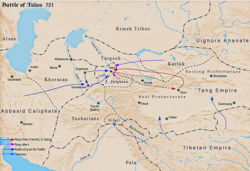
The Battle of Talas, fought near the Talas River in present-day Kyrgyzstan, saw the Abbasid Caliphate defeat Tang Chinese forces. The battle marked a turning point limiting Chinese influence westward and accelerated the Islamization of Central Asia.
Image source: Battle of Talas
840
% complete
The Yenisei Kyrgyz destroyed the Uyghur Khaganate in 840, establishing a powerful khaganate in southern Siberia. This victory is celebrated as a golden age in early Kyrgyz history and is referenced in the Manas epic.
Image source: Kyrgyz Khaganate
940 - 1212
% complete
The Turkic Muslim Karahanids ruled much of present-day Kyrgyzstan, with Balasagun as a major capital. The era brought Islam to the region and produced Yusuf of Balasagun's 'Kutadgu Bilig,' a landmark work of Turkic literature.
Image source: Kara-Khanid Khanate
1207 - 1219
% complete
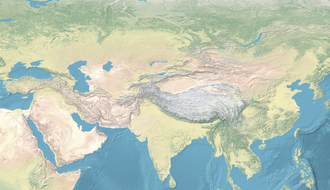
Mongol forces under Genghis Khan conquered the lands of modern Kyrgyzstan, incorporating them into the Mongol Empire. The conquest devastated local populations but also integrated the region into vast Eurasian trade networks.
1380 - 1394
% complete
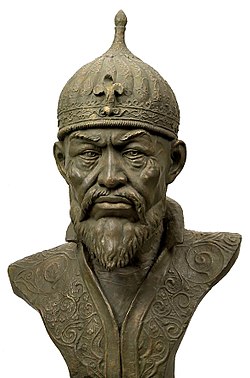
Timur (Tamerlane) launched repeated military expeditions against Moghulistan through the Issyk-Kul and Tien Shan regions, disrupting nomadic confederations and reshaping power structures in what is now Kyrgyzstan.
Image source: Timur
1500
% complete
By the early 16th century, Kyrgyz tribes had firmly settled the Tien Shan and Alai mountain ranges after migrating from the Yenisei region, developing their distinctive nomadic culture and clan-based social organization.
Image source: Kyrgyz people
1600
% complete
The Epic of Manas, recounting the heroism of the legendary warrior Manas uniting the Kyrgyz tribes, was transmitted by generations of manaschi reciters. It remains one of the longest epics in world literature and the cornerstone of Kyrgyz identity.
Image source: Epic of Manas
1825
% complete
The Uzbek-ruled Khanate of Kokand extended control over northern Kyrgyz territories, building fortresses such as Pishpek (Bishkek). Heavy taxation and forced labor fueled Kyrgyz revolts against Kokandian rule.
Image source: Khanate of Kokand
1855 - 1868
% complete
Facing Kokandian oppression, many Kyrgyz tribal leaders sought Russian protection. Between 1855 and 1868, northern Kyrgyz lands were incorporated into the Russian Empire, beginning nearly 140 years of Russian and Soviet domination.
Image source: Russian conquest of Central Asia
1876
% complete
Russian troops captured Kokand and abolished the khanate, bringing southern Kyrgyzstan under full imperial control and unifying the entire territory of modern Kyrgyzstan within Russian Turkestan.
Image source: Russo–Kokand War
1898
% complete
An armed revolt led by the Sufi Dukchi Ishan broke out near Andijan against Russian rule, drawing support among Kyrgyz and Uzbek peasants. The rebellion was crushed, highlighting growing anti-colonial sentiment in Ferghana.
Image source: Andijan uprising of 1898
Jul 1916
% complete
Widespread uprisings erupted across Russian Turkestan, including Kyrgyzstan, in response to wartime labor conscription for World War I. The brutal Russian suppression killed tens of thousands and drove many Kyrgyz refugees into Chinese Xinjiang.
Image source: Basmachi movement
Oct 14, 1924
% complete
Following Soviet national delimitation of Central Asia, the Kara-Kirghiz Autonomous Oblast was established within the Russian SFSR, creating for the first time an administrative entity corresponding to Kyrgyz national territory.
Image source: Kirghiz Soviet Socialist Republic
Feb 1, 1926
% complete
The autonomous oblast was elevated to the Kirghiz Autonomous Soviet Socialist Republic, still within the Russian Federation. Pishpek was designated the capital and later renamed Frunze in honor of the Bolshevik commander Mikhail Frunze.
1928 - 1939
% complete
Forced collectivization of nomadic herders and rapid industrialization transformed Kyrgyz society. Massive livestock losses and famine followed, while mining, hydroelectric projects, and urban development created new economic foundations.
Image source: Collectivization in the Soviet Union
Dec 5, 1936
% complete
Under the 1936 Soviet Constitution, the Kirghiz SSR was upgraded to a full Union republic of the USSR, granting nominal sovereignty and marking a milestone in Kyrgyz statehood.
1937 - 1938
% complete
The Great Terror swept through Soviet Central Asia, executing leading Kyrgyz writers, politicians, and intellectuals, including figures associated with early national development. The purges left deep scars on Kyrgyz society.
Image source: Great Purge
1941 - 1945
% complete
During World War II, factories, institutions, and hundreds of thousands of evacuees were relocated to Kyrgyzstan from the European USSR. The war effort accelerated industrialization and brought diverse peoples to the republic.
Image source: Eastern Front (World War II)
1958
% complete
Chinghiz Aitmatov's novella 'Jamila' won international acclaim, launching the career of Kyrgyzstan's most celebrated writer. His works brought Kyrgyz literature to world audiences and became symbols of national culture.
Image source: Chinghiz Aitmatov
1960
% complete
The Soviet government developed Lake Issyk-Kul into one of the USSR's premier vacation destinations, building sanatoriums and resorts that made tourism a notable part of the Kyrgyz economy.
Image source: Issyk-Kul
Apr 26, 1966
% complete
After the devastating Tashkent earthquake, reconstruction resources flowed across Central Asia, and Frunze expanded rapidly with Soviet apartment blocks, cementing its role as the administrative heart of the Kirghiz SSR.
Image source: 1966 Tashkent earthquake
1970 - 1980
% complete
Major hydroelectric dams, including the Toktogul reservoir, were completed on the Naryn River during the 1970s, making energy generation a pillar of the Kyrgyz economy and a lasting legacy of Soviet infrastructure.
Image source: Naryn (river)
1985
% complete
Gorbachev's policies of glasnost and perestroika opened space for political debate in the Kirghiz SSR. National movements grew stronger, and criticism of past injustices, including the 1990 Osh tensions' roots, entered public discourse.
Image source: Perestroika
Jun 4, 1990 - Jun 10, 1990
% complete
Deadly ethnic clashes between Kyrgyz and Uzbeks erupted in the southern city of Osh over land disputes amid rising nationalism. Hundreds died, exposing interethnic fault lines that would challenge the young state.
Oct 27, 1990
% complete
Reform-minded physicist Askar Akayev was elected president by the republic's parliament, replacing hardline communist leadership and setting the stage for independence and market-oriented reform.
Image source: Askar Akayev
Aug 31, 1991
% complete
The parliament of the Kirghiz SSR proclaimed the sovereignty of the Republic of Kyrgyzstan following the failed August coup in Moscow. Independence was confirmed by referendum in December 1991, founding a new Central Asian state.
Image source: Independence Day (Kyrgyzstan)
May 5, 1993
% complete
A new constitution formally established the sovereign Republic of Kyrgyzstan with separation of powers and democratic institutions, laying the legal foundation of the independent state.
Image source: Constitution of Kyrgyzstan
May 10, 1993
% complete
Kyrgyzstan became the first former Soviet republic in Central Asia to introduce its own currency, the som, asserting monetary independence during the post-Soviet economic transition.
Image source: Kyrgyz som
Dec 20, 1998
% complete
Kyrgyzstan became the first CIS country admitted to the World Trade Organization, underscoring its commitment to free-market reforms despite a difficult transition economy.
Image source: World Trade Organization
Aug 1999 - Nov 1999
% complete
Armed incursions by the Islamic Movement of Uzbekistan into the Batken region triggered fighting with Kyrgyz forces. The crisis prompted military reform and international cooperation against regional extremism.
Image source: Batken conflict
Mar 2005 - Mar 24, 2005
% complete
Mass protests over disputed parliamentary elections toppled Askar Akayev's fifteen-year rule. Kurmanbek Bakiyev emerged as leader, in one of the first popular revolutions of the post-Soviet color revolutions wave.
Feb 3, 2009
% complete
President Bakiyev announced the closure of the US Manas air base supporting operations in Afghanistan, though it was renegotiated as a transit center before finally closing in 2014.
Image source: Transit Center at Manas
Apr 7, 2010 - Apr 15, 2010
% complete
Violent protests in Bishkek over corruption and energy prices ousted Kurmanbek Bakiyev, who fled the country. A provisional government led by Roza Otunbayeva took charge and initiated constitutional reform.
Image source: 2010 Kyrgyz Revolution
Jun 10, 2010 - Jun 14, 2010
% complete
Clashes between Kyrgyz and Uzbek communities in Osh and Jalal-Abad killed hundreds and displaced hundreds of thousands. The violence prompted humanitarian relief efforts and long-term reconciliation challenges.
Image source: 2010 South Kyrgyzstan ethnic clashes
Jun 27, 2010
% complete
Kyrgyzstan approved a constitution establishing a parliamentary system with a prime minister holding executive power — unique among Central Asian states — and Roza Otunbayeva served as interim president.
Dec 1, 2011
% complete
Almazbek Atambayev won presidential elections held under the new parliamentary system, becoming the first president to serve a single six-year term under the reformed constitution.
Image source: Almazbek Atambayev
Aug 12, 2015
% complete
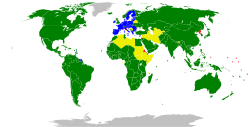
Kyrgyzstan acceded to the Russia-led Eurasian Economic Union, integrating its economy more closely with Russia, Kazakhstan, Belarus, Armenia, and Kazakhstan's neighbors despite earlier trade diversification efforts.
Image source: Eurasian Economic Union
Nov 15, 2017
% complete
Sooronbay Jeenbekov defeated Omurbek Babanov to succeed Atambayev, marking the first peaceful democratic transfer of presidential power in Kyrgyzstan's post-Soviet history.
Image source: Sooronbay Jeenbekov
Oct 5, 2020 - Oct 16, 2020
% complete
Protests over alleged vote-buying in parliamentary elections escalated into the occupation of government buildings, forcing election annulment and the resignation of President Jeenbekov, with Sadyr Japarov rising to power.
Image source: 2020 Kyrgyz Revolution
Jan 10, 2021 - Jan 28, 2021
% complete
Sadyr Japarov won a decisive presidential election victory and, via a referendum, voters endorsed reverting to a presidential system of government, reshaping Kyrgyzstan's political trajectory once again.
Image source: 2021 Kyrgyz presidential election
Or browse the full history timeline directory, with more than 2,000 topics.
This History of Kyrgyzstan timeline was generated with the help of AI, using information found on the internet.
We work hard to keep these timelines accurate, but mistakes do get through. If you spot one, email us at [email protected] and we'll fix it for future visitors.
Generate yours with AI or build it from scratch, for free.
Export your timeline, add your own events, edit or remove AI-generated events, and much more
No credit card required.
Cancel anytime.
Cancel anytime.
You can create an unlimited number of timelines with up to 10 events on each one, customize how they look, export them to PDF, PNG, PowerPoint, CSV, and Excel, and share them with a link. Paid plans raise the event limit and add features like spreadsheet imports and collaborators.
Yes. You can cancel your subscription from your account page at any time, and you will not be charged again. Your subscription stays active for the rest of the period you already paid for.
Yes. We will email you a reminder before the annual renewal, and we will also email you a receipt.
Yes. You can email us within 15 days of any payment, and we will issue you a full refund.
Check out our pricing docs or send us an email anytime: [email protected].