-
Use Cases
-
Resources
-
Pricing
The history of Slovenia spans from prehistoric times, including the ancient Ljubljana Marshes pile dwellers and Roman province of Noricum, through Slavic settlement in the 6th century, centuries under Frankish, Austrian, and Habsburg rule, incorporation into Yugoslavia after World War I, to its peaceful independence in 1991 and membership in the EU and NATO. More Less
16 BC
% complete
The Roman Empire conquered the Alpine region that includes modern-day Slovenia, incorporating it into the province of Noricum. Roman rule brought urbanization, roads, trade, and cities such as Emona (modern Ljubljana), Celeia (Celje), and Poetovio (Ptuj).
Image source: Noricum
14 AD
% complete
The Romans founded the colony of Emona at the site of present-day Ljubljana, making it one of the most important Roman settlements in the area and the historical nucleus of Slovenia's capital.
Image source: Emona
590 - 600
% complete
Slavic tribes migrated into the Eastern Alps following the collapse of Roman authority, settling the territory of modern Slovenia and forming the demographic foundation of the Slovene people.
Image source: Slavic settlement of the Eastern Alps
620
% complete
Carantania, considered the first proto-Slovene state, emerged as a Slavic principality in the Eastern Alps. It is remembered for its ancient ritual of installing dukes on the Prince's Stone, a symbol of early Slovene political tradition.
Image source: Carantania
972 - 1039
% complete
The Freising manuscripts, the oldest known documents written in Slovene and the first Slavic-language manuscript in Latin script, were produced in the Bishopric of Freising, marking a milestone in Slovene literary history.
Image source: Freising manuscripts
1335
% complete
After the extinction of the Bohemian Přemyslid dynasty's influence, the Habsburgs acquired Carniola, integrating most Slovene lands into their realm, where they would remain for over six centuries.
Image source: Duchy of Carniola
1473 - 1590
% complete
Repeated Ottoman raids devastated Slovene villages and countryside for more than a century, leaving lasting marks in folklore, architecture such as fortified churches, and regional memory.
Image source: Ottoman wars in Europe
Apr 14, 1511
% complete
A powerful earthquake destroyed much of Ljubljana, prompting extensive rebuilding in Renaissance style and reshaping the architectural character of Slovenia's capital.
Image source: 1511 Idrija earthquake
1550
% complete
Protestant reformer Primož Trubar published 'Catechismus' and 'Abecedarium', the first books ever printed in Slovene, laying the foundation for standardized Slovene literature during the Protestant Reformation.
Image source: Primož Trubar
1584
% complete
Jurij Dalmatin published the complete translation of the Bible into Slovene, a landmark achievement for Slovene language and culture completed with Adam Bohorič's grammar published the same year.
Image source: Jurij Dalmatin
Oct 12, 1809 - 1813
% complete
Napoleon created the Illyrian Provinces from annexed Habsburg territories including Carniola, introducing civil administration reforms, the Slovene language in schools, and awakening Slovene national consciousness.
Image source: Illyrian Provinces
1830 - 1848
% complete
Romantic-era intellectuals led a cultural and linguistic revival, standardizing the Slovene language, publishing newspapers like Novice, and promoting the idea of a unified Slovenia (Zedinjena Slovenija) during the Revolutions of 1848.
Image source: Slovene Lands
Mar 1848
% complete
Slovene intellectuals issued the United Slovenia political programme demanding the unification of all Slovene-inhabited lands into a single entity with official use of Slovene, becoming a guiding ideal for generations.
Image source: United Slovenia
Jul 1857
% complete
Completion of the Austrian Southern Railway through Slovene territory connected Vienna to Trieste, transforming the economy of the Slovene lands and integrating them into Central European trade networks.
Image source: Austrian Southern Railway
Apr 1895
% complete
A major earthquake struck Ljubljana, destroying or damaging many buildings; the subsequent reconstruction modernized the city and gave it much of its Secessionist character.
Image source: 1895 Ljubljana earthquake
Oct 29, 1918
% complete
With the collapse of Austria-Hungary after World War I, Slovenes declared independence and joined the new State of Slovenes, Croats and Serbs, which soon merged with Serbia to form Yugoslavia.
Image source: State of Slovenes, Croats and Serbs
Dec 1, 1918
% complete
The Kingdom of Serbs, Croats and Slovenes was proclaimed under King Peter I, uniting South Slavic peoples; Slovenia became part of this kingdom, later renamed Yugoslavia in 1929, though centralist tensions persisted.
Image source: Kingdom of Yugoslavia
Nov 12, 1920
% complete
The Treaty of Rapallo assigned the Julian March, home to hundreds of thousands of Slovenes, to Italy, where Fascism later enforced forced Italianization of the Slovene minority.
Image source: Treaty of Rapallo (1920)
Apr 6, 1941
% complete
Axis forces invaded Yugoslavia and partitioned Slovenia among Nazi Germany, Fascist Italy, and Hungary, beginning a brutal occupation marked by deportations and repression.
Image source: Invasion of Yugoslavia
Apr 26, 1941
% complete
Anti-occupation resistance groups formed the Liberation Front in Ljubljana, organizing partisan warfare against Axis occupiers and internal collaborators throughout World War II.
Image source: Liberation Front of the Slovene Nation
Nov 29, 1945
% complete
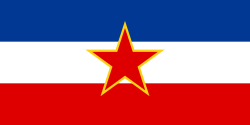
After World War II, Slovenia became a constituent republic of the Socialist Federal Republic of Yugoslavia under Josip Broz Tito, adopting a socialist economic model while retaining its distinct language and identity.
Image source: Socialist Federal Republic of Yugoslavia
Sep 1, 1961
% complete
Yugoslavia, including Slovenia, helped found the Non-Aligned Movement at the Belgrade conference, allowing Slovenia greater openness to both Western and developing-world markets than other communist states.
Image source: Non-Aligned Movement
1974
% complete
Yugoslavia's 1974 constitution devolved substantial powers to the republics, giving Slovenia broad autonomy over its economy and institutions, which strengthened republican self-governance and national confidence.
Image source: 1974 Yugoslav Constitution
May 1989
% complete
Opposition parties and civil society issued the May Declaration demanding a sovereign and democratic Slovenia within a Yugoslav confederation, galvanizing public support for independence amid democratization.
Apr 8, 1990
% complete
Slovenia held its first free multi-party elections since World War II; the DEMOS coalition defeated the communists, and Milan Kučan was elected president, setting Slovenia on the path to independence.
Image source: 1990 Slovenian parliamentary election
Dec 23, 1990
% complete
Nearly 89% of Slovenian voters voted for independence from Yugoslavia in a referendum, providing an overwhelming democratic mandate for secession within six months.
Jun 25, 1991
% complete
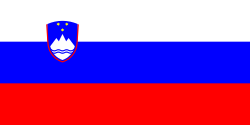
Slovenia formally declared independence from Yugoslavia based on the referendum results, marking the beginning of its existence as a sovereign state after centuries under larger empires.
Image source: Slovenia
Jun 27, 1991 - Jul 7, 1991
% complete
The Yugoslav People's Army attacked newly independent Slovenia, but Slovenian territorial defense forces resisted effectively; the brief conflict ended with the Brioni Agreement and minimal casualties compared to other Yugoslav wars.
Image source: Ten-Day War
Oct 8, 1991
% complete
Slovenia replaced the Yugoslav dinar with its own currency, the tolar, symbolizing economic sovereignty and helping stabilize the young nation's transition to a market economy.
Image source: Slovenian tolar
Dec 23, 1991
% complete
Independent Slovenia adopted its constitution establishing a parliamentary democracy, guaranteeing human rights and the rights of national minorities, and defining Slovenia as a sovereign state.
Image source: Constitution of Slovenia
May 22, 1992
% complete
Slovenia was admitted to the United Nations shortly after independence, gaining international recognition and beginning its active role in global diplomacy.
Mar 29, 2004
% complete
Slovenia joined NATO alongside six other countries, anchoring its security in the Western alliance and completing a key foreign policy goal after independence.
Image source: Montenegro–NATO relations
May 1, 2004
% complete
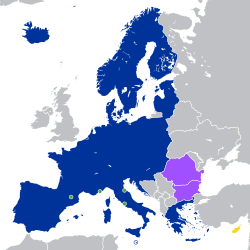
Slovenia acceded to the European Union as part of the largest EU enlargement, becoming the first post-communist country to hold the EU presidency later in 2008.
Image source: 2004 enlargement of the European Union
Jan 1, 2007
% complete
Slovenia became the first new EU member state from the 2004 enlargement to adopt the euro, replacing the tolar and cementing its integration into the European economy.
Dec 21, 2007
% complete
Slovenia implemented the Schengen agreement, abolishing border controls with neighboring EU states and strengthening its position as a crossroads of Central Europe.
Image source: Schengen Area
Feb 10, 2012 - Mar 20, 2013
% complete
Janez Janša returned to power amid austerity measures that triggered mass anti-corruption protests across Slovenia, and his government fell in early 2013 after corruption allegations, reflecting growing public demand for transparency.
Image source: Janez Janša
Or browse the full history timeline directory, with more than 2,000 topics.
This History of Slovenia timeline was generated with the help of AI, using information found on the internet.
We work hard to keep these timelines accurate, but mistakes do get through. If you spot one, email us at [email protected] and we'll fix it for future visitors.
Generate yours with AI or build it from scratch, for free.
Export your timeline, add your own events, edit or remove AI-generated events, and much more
No credit card required.
Cancel anytime.
Cancel anytime.
You can create an unlimited number of timelines with up to 10 events on each one, customize how they look, export them to PDF, PNG, PowerPoint, CSV, and Excel, and share them with a link. Paid plans raise the event limit and add features like spreadsheet imports and collaborators.
Yes. You can cancel your subscription from your account page at any time, and you will not be charged again. Your subscription stays active for the rest of the period you already paid for.
Yes. We will email you a reminder before the annual renewal, and we will also email you a receipt.
Yes. You can email us within 15 days of any payment, and we will issue you a full refund.
Check out our pricing docs or send us an email anytime: [email protected].