-
Use Cases
-
Resources
-
Pricing
This timeline traces Slovakia's rich historical journey, covering its origins as part of Great Moravia, centuries within the Kingdom of Hungary and later Czechoslovakia, the establishment of the independent Slovak Republic in 1993, and its development into a modern democratic member of NATO and the European Union. More Less
623 - 658
% complete
The Frankish merchant Samo united Slavic tribes in the region of present-day Slovakia and neighboring lands into the first known Slavic political entity, successfully resisting Avar and Frankish incursions until his death in 658.
Image source: Samo
800
% complete
The Principality of Nitra arose as an early Slavic state centered in western Slovakia, becoming one of the foundational political units of the region before merging with Moravia.
Image source: Principality of Nitra
833
% complete
Prince Mojmír I unified the Principality of Nitra with Moravia, founding Great Moravia, a powerful Slavic state that encompassed much of present-day Slovakia and became a major cultural and political center of Central Europe.
Image source: Great Moravia
863
% complete
The Byzantine missionaries Cyril and Methodius arrived in Great Moravia at Prince Rastislav's request, introducing Old Church Slavonic liturgy and beginning the Christianization of the Slavic peoples in their own language.
Image source: Cyril and Methodius
907
% complete
Following Magyar victories including the Battle of Pressburg (Bratislava) in 907, Great Moravia disintegrated, and the territory of modern Slovakia was gradually absorbed by the emerging Hungarian state.
Image source: Battle of Pressburg
1000
% complete
Under King Stephen I, the lands of present-day Slovakia were fully integrated into the Christian Kingdom of Hungary, where they remained for nearly a thousand years, shaping Slovakia's long association with Hungarian rule.
Image source: Kingdom of Hungary
1241 - 1242
% complete
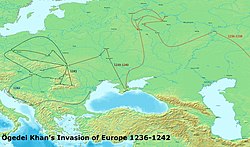
The Mongol invasion swept through the Kingdom of Hungary, devastating settlements across Slovakia. Stone castles like Spiš Castle were subsequently built to defend against future attacks, transforming the region's fortifications.
Image source: Mongol invasion of Europe
1458
% complete
Matthias Corvinus was elected King of Hungary, ushering in a golden age during which towns in Slovakia such as Košice and Bratislava flourished culturally and economically, benefiting from royal patronage and Renaissance influence.
Image source: Matthias Corvinus
Aug 29, 1526
% complete
The catastrophic defeat at Mohács led to Ottoman occupation of central Hungary and the division of the kingdom, with Habsburg Ferdinand I crowned king; Bratislava (Pressburg) became the capital of Royal Hungary.
Image source: Battle of Mohács
1536
% complete
With Buda under Ottoman control, Bratislava served as the seat of Hungarian kings and parliaments for over two centuries, hosting coronations that included Maria Theresa in 1741.
1703 - 1711
% complete
Ferenc Rákóczi II led an anti-Habsburg uprising that drew significant support from Slovaks in northern Hungary, though it ultimately ended with the Peace of Szatmár and continued Habsburg rule.
Image source: Rákóczi's War of Independence
1740 - 1780
% complete
Maria Theresa's reign brought administrative, educational, and economic reforms across the Habsburg lands, improving conditions in Slovak territories while consolidating centralized authority from Vienna.
Image source: Maria Theresa
1790
% complete
Catholic priest Anton Bernolák published the first codification of the Slovak language based on Western Slovak dialects, laying groundwork for the Slovak National Revival despite limited adoption.
Image source: Anton Bernolák
1843
% complete
Ľudovít Štúr and his generation codified a new literary Slovak based on Central Slovak dialects, which became the foundation of today's Slovak language and fueled growing national consciousness.
Image source: Ľudovít Štúr
1848 - 1849
% complete
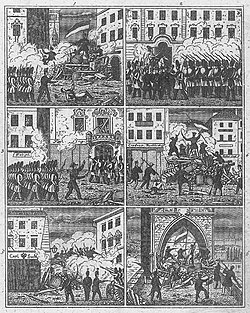
Slovak national activists, including Štúr, demanded recognition of Slovak rights within revolutionary Hungary. After Hungarian authorities rejected their petitions, many Slovaks sided with Vienna, but the revolution failed to secure Slovak autonomy.
Image source: Revolutions of 1848 in the Austrian Empire
1863
% complete
The Matica slovenská cultural institution was founded in Martin to promote Slovak literature, science, and national identity, serving as a cornerstone of Slovak cultural life despite later suppression by Hungarian authorities.
Image source: Matica slovenská
1867
% complete
The creation of Austria-Hungary placed Slovakia firmly within the Hungarian half of the Dual Monarchy, leading to intensified Magyarization policies that suppressed Slovak-language education and institutions.
Image source: Austro-Hungarian Compromise of 1867
Oct 1915
% complete
Czech and Slovak émigré leaders, including Tomáš Masaryk and Milan Rastislav Štefánik, agreed in Cleveland to pursue a common independent state of Czechs and Slovaks after World War I.
Image source: Cleveland Agreement
May 30, 1918
% complete
American Slovaks and Czech representatives signed the Pittsburgh Agreement, pledging to form a joint Czechoslovak state in which Slovakia would have its own administration, parliament, and courts.
Image source: Pittsburgh Agreement
Oct 28, 1918
% complete
Czechoslovakia declared independence in Prague as the Austro-Hungarian Empire collapsed, uniting Czech lands and Slovakia into a democratic state recognized internationally after World War I.
Image source: First Czechoslovak Republic
Sep 30, 1938
% complete
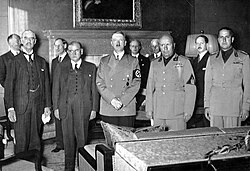
Britain, France, Italy, and Germany allowed Nazi Germany to annex the Sudetenland, fatally weakening Czechoslovakia and emboldening separatist movements in autonomous Slovakia.
Image source: Munich Agreement
Mar 14, 1939 - May 8, 1945
% complete
Under pressure from Hitler, Slovakia declared independence as a nominally sovereign but German-dependent state led by Jozef Tiso, participating in the Axis war effort and deporting most of its Jewish population during the Holocaust.
Image source: Slovak Republic (1939–1945)
Aug 29, 1944 - Oct 28, 1944
% complete
Slovak resistance forces launched a major armed uprising centered in Banská Bystrica against the collaborationist regime and German occupation. Though suppressed by German troops, it became a powerful symbol of Slovak anti-fascist resistance.
Image source: Slovak National Uprising
May 1945
% complete
Liberated largely by Soviet forces, Czechoslovakia was re-established as a united state, with Slovakia granted formal equality through national bodies, though real power soon shifted toward the Communist Party.
Image source: Third Czechoslovak Republic
Feb 25, 1948
% complete
The Communist Party seized complete power in Prague, ending democratic rule and beginning four decades of Stalinist and later normalized communist government affecting both Czech and Slovak lands.
Image source: 1948 Czechoslovak coup d'état
Aug 21, 1968
% complete
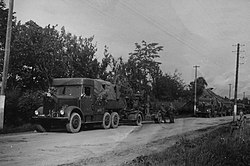
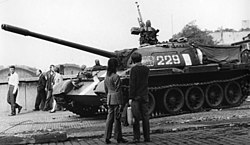
Soviet-led Warsaw Pact troops invaded Czechoslovakia to halt Alexander Dubček's reform movement, ending hopes of 'socialism with a human face' and initiating the period of 'normalization.'
Image source: Warsaw Pact invasion of Czechoslovakia
Jan 1977
% complete
A human rights manifesto co-signed by citizens across Czechoslovakia, including Slovaks, challenged communist repression and kept dissent alive until the Velvet Revolution a decade later.
Image source: Charter 77
Nov 17, 1989 - Dec 1989
% complete
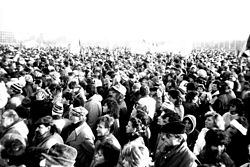
Peaceful mass demonstrations toppled the communist regime across Czechoslovakia, restoring democracy and setting the stage for market reforms and eventual debates over the country's federal structure.
Image source: Velvet Revolution
Jan 1, 1993
% complete
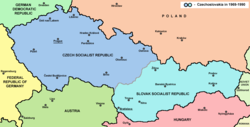
After negotiated agreement between Czech and Slovak leaders, Czechoslovakia peacefully split into two independent states; Slovakia emerged as an independent republic with Michal Kováč as its first president.
Image source: Dissolution of Czechoslovakia
Mar 29, 2004
% complete
Slovakia became a full member of NATO, cementing its integration into Euro-Atlantic security structures alongside its parallel efforts toward European Union membership achieved weeks later.
Image source: North Macedonia–NATO relations
May 1, 2004
% complete
Slovakia acceded to the EU in its largest single enlargement, opening borders, markets, and funding streams that accelerated economic growth and anchored the young state in Western institutions.
Image source: 2004 enlargement of the European Union
Or browse the full history timeline directory, with more than 2,000 topics.
This History of Slovakia timeline was generated with the help of AI, using information found on the internet.
We work hard to keep these timelines accurate, but mistakes do get through. If you spot one, email us at [email protected] and we'll fix it for future visitors.
Generate yours with AI or build it from scratch, for free.
Export your timeline, add your own events, edit or remove AI-generated events, and much more
No credit card required.
Cancel anytime.
Cancel anytime.
You can create an unlimited number of timelines with up to 10 events on each one, customize how they look, export them to PDF, PNG, PowerPoint, CSV, and Excel, and share them with a link. Paid plans raise the event limit and add features like spreadsheet imports and collaborators.
Yes. You can cancel your subscription from your account page at any time, and you will not be charged again. Your subscription stays active for the rest of the period you already paid for.
Yes. We will email you a reminder before the annual renewal, and we will also email you a receipt.
Yes. You can email us within 15 days of any payment, and we will issue you a full refund.
Check out our pricing docs or send us an email anytime: [email protected].