-
Use Cases
-
Resources
-
Pricing
The history of Mozambique spans from ancient Bantu settlements and Arab-Swahili coastal trade to nearly five centuries of Portuguese colonization. After a decade-long liberation struggle led by FRELIMO, Mozambique gained independence in 1975, but was soon engulfed in a devastating civil war that ended in 1992. Since then, the country has rebuilt itself and developed into one of Africa's growing economies. More Less
Jan 1, 100
% complete
The region lay at the southernmost end of a traditional trading world encompassing the Red Sea, the Hadhramaut coast of Arabia and the Indian coast, as described in the 1st-century coasting guide known as the Periplus of the Erythraean Sea.
Image source: Periplus of the Erythraean Sea
Jan 1, 800
% complete
By the time Vasco da Gama arrived in 1498, Arab trading settlements had existed along the coast and outlying islands for several centuries, and political control of the coast was in the hands of a string of local sultans.
Image source: History of Mozambique
Mar 1, 1498
% complete
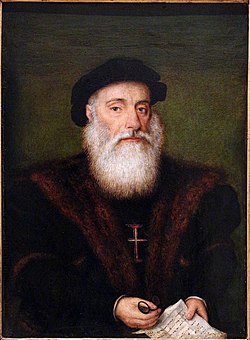
When Vasco da Gama, exploring for Portugal, reached the coast of Mozambique in 1498, he encountered long-established Arab trading settlements governed by local sultans. His voyage around the Cape of Good Hope marked the Portuguese entry into the trade, politics, and society of the region.
Image source: Vasco da Gama
Jan 1, 1500
% complete
From about 1500, Portuguese trading posts and forts displaced the Arabic commercial and military hegemony, becoming regular ports of call on the new European sea route to the east.
Jan 1, 1500 - Dec 31, 1700
% complete
Between 1500 and 1700, the Portuguese were able to wrest much of the coastal trade from Arab Muslims, dominating commerce along the East African coast.
Jan 1, 1505
% complete
The Portuguese gained control of the Island of Mozambique and the port city of Sofala in the early 16th century, establishing their presence on the East African coast.
Image source: Island of Mozambique
Jan 1, 1530
% complete
By the 1530s, small groups of Portuguese traders and prospectors seeking gold penetrated the interior regions, setting up garrisons and trading posts at Sena and Tete on the River Zambezi and attempting to gain exclusive control over the gold trade.
Image source: Tete, Mozambique
Jan 1, 1698
% complete
With the Arab Muslim seizure of Portugal's key foothold at Fort Jesus on Mombasa Island (now in Kenya) in 1698, the pendulum began to swing in the other direction against Portuguese dominance.
Image source: Fort Jesus
Jan 1, 1800 - Dec 31, 1899
% complete
During the 19th century other European powers, particularly the British (British South Africa Company) and the French (Madagascar), became increasingly involved in the trade and politics of the region around the Portuguese East African territories.
Image source: British South Africa Company
Jul 1, 1850
% complete
Many prazos, the large colonial agricultural estates along the Zambezi, had declined by the mid-19th century, but several of them survived.
Jan 1, 1890 - Dec 31, 1909
% complete
Although slavery had been legally abolished in Mozambique, at the end of the 19th century the Chartered companies enacted a forced labor policy and supplied cheap—often forced—African labour to the mines and plantations of nearby British colonies and South Africa.
Image source: Mozambique Company
Jan 1, 1900 - Dec 31, 1920
% complete
By the early 20th century the Portuguese had shifted the administration of much of Mozambique to large private companies, like the Mozambique Company, the Zambezia Company and the Niassa Company, controlled and financed mostly by the British, which established railroad lines to neighbouring colonies such as South Africa and Rhodesia.
Image source: Niassa Company
Jan 1, 1929
% complete
The Niassa Company's concession was terminated in 1929, ending its administrative role in northern Mozambique as part of a broader shift back toward direct colonial administration.
Jan 1, 1942
% complete
In 1942 the Mozambique Company's charter came to an end; it nevertheless continued to operate in the agricultural and commercial sectors as a corporation.
Jan 1, 1951
% complete
In 1951, the Portuguese overseas colonies in Africa were rebranded as Overseas Provinces of Portugal, formally integrating them into the Portuguese state while denying self-determination.
Jan 1, 1961 - Apr 25, 1974
% complete
The conflict in Mozambique—along with those already initiated in Angola and Portuguese Guinea—became part of the so-called Portuguese Colonial War (1961–1974), draining Portugal militarily and politically.
Image source: Portuguese Colonial War
Sep 25, 1964
% complete
The Front for the Liberation of Mozambique (FRELIMO) initiated a guerrilla campaign against Portuguese rule in September 1964, beginning the armed struggle for independence.
Image source: FRELIMO
Apr 25, 1974
% complete
After Portugal's return to democracy through a leftist military coup in Lisbon—the Carnation Revolution of April 1974—which replaced the Estado Novo regime with a military junta, FRELIMO took control of the territory following ten years of sporadic warfare.
Image source: Carnation Revolution
Jun 25, 1975
% complete
Within a year of independence being agreed, most of the 250,000 Portuguese in Mozambique had left—some expelled, some fleeing in fear—and Mozambique became independent from Portugal on 25 June 1975.
Image source: Mozambican War of Independence
Jan 1, 1975
% complete
Formed in 1975, Mozambican National Resistance (RENAMO), an anti-communist group sponsored by the Rhodesian Intelligence Service and the apartheid government in South Africa, launched a series of attacks on transport routes, schools and health clinics, and the country descended into civil war (1977–1992).
Image source: RENAMO
Mar 16, 1984
% complete
In 1984, Mozambique negotiated the Nkomati Accord with P.W. Botha's South Africa, aiming to end support for RENAMO and reduce regional tensions during the civil war.
Oct 19, 1986
% complete
In 1986, Mozambican President Samora Machel died in an air crash in South African territory, a loss that shocked the nation during the ongoing civil war.
Image source: Samora Machel
Jan 1, 1990
% complete
With support for RENAMO from South Africa drying up after apartheid's end neared, the first direct talks between the FRELIMO government and RENAMO were held in 1990.
Image source: Mozambican Civil War
Nov 30, 1990
% complete
In November 1990 a new constitution was adopted, introducing multiparty democracy and market reforms as peace negotiations progressed.
Image source: Politics of Mozambique
Oct 4, 1992
% complete
On 4 October 1992, the Rome General Peace Accords, negotiated by the Community of Sant'Egidio with UN support, were signed in Rome between President Chissano and RENAMO leader Afonso Dhlakama, taking formal effect on October 15, 1992 and ending the civil war.
Jan 1, 1993
% complete
Much of the economic recovery which has followed the end of the Mozambican Civil War is being led by investors and tourists from neighbour South Africa and from East Asia, fueling rapid growth.
Oct 27, 1994
% complete
Mozambique held elections in 1994, which were accepted by most parties as free and fair while still contested by many nationals and observers alike, consolidating the post-war democratic transition.
Image source: 1994 Mozambican general election
Jan 1, 1995
% complete
The last ONUMOZ contingents departed in early 1995, concluding the United Nations' peacekeeping mission that had supervised the peace process.
Image source: United Nations Operation in Mozambique
Jun 1, 1995
% complete
By mid-1995, over 1.7 million refugees who had sought asylum in neighboring countries had returned to Mozambique, part of the largest repatriation witnessed in sub-Saharan Africa.
Nov 13, 1995
% complete
In 1995, Mozambique joined the Commonwealth of Nations, becoming, at the time, the only member nation that had never been part of the British Empire.
Image source: Commonwealth of Nations
Dec 3, 1999
% complete
In December 1999, Mozambique held elections for a second time since the civil war, which were again won by FRELIMO.
Image source: 1999 Mozambican general election
Feb 1, 2000
% complete
In early 2000 a cyclone caused widespread flooding in the country, killing hundreds and devastating the already precarious infrastructure.
Image source: 2000 Mozambique flood
Jan 1, 2001
% complete
Indicating in 2001 that he would not run for a third term, Chissano criticized leaders who stayed on longer than he had—a reference widely seen as aimed at Zambia's Frederick Chiluba and Zimbabwe's Robert Mugabe—and helped set a precedent for peaceful transitions of power.
Image source: Joaquim Chissano
Dec 1, 2004 - Dec 2, 2004
% complete
Presidential and National Assembly elections took place on December 1–2, 2004, resulting in victory for FRELIMO candidate Armando Guebuza.
Image source: 2004 Mozambican general election
Feb 2, 2005
% complete
Armando Guebuza was inaugurated as the President of Mozambique on February 2, 2005, succeeding Joaquim Chissano and continuing FRELIMO rule.
Image source: Armando Guebuza
Oct 15, 2014
% complete
The candidate of the ruling FRELIMO party, Filipe Nyusi, has been the President of Mozambique since January 2015 after winning the election in October 2014.
Image source: 2014 Mozambican general election
Jan 1, 2015
% complete
Mozambique was declared to be free of land mines in 2015, following a 22-year effort to remove explosive devices planted during the War of Independence and Civil War.
Image source: Demining
Oct 15, 2019
% complete
President Filipe Nyusi was re-elected after a landslide victory in the 2019 general elections, though the vote drew controversy over its fairness.
Image source: 2019 Mozambican general election
Oct 9, 2024
% complete
In October 2024 the ruling FRELIMO party, increasingly marked by growing concerns of authoritarianism and impunity amid controversies surrounding the 2023 local elections and the 2019 general election, faced another contested national vote.
Image source: 2024 Mozambican general election
Oct 24, 2024
% complete
The FRELIMO party was also declared the winner of the 2024 general election, with its leader, Daniel Chapo, proclaimed as president-elect amid opposition protests over the results.
Jan 15, 2025
% complete
On 15 January 2025, Daniel Chapo was sworn in as Mozambique's fifth president, continuing FRELIMO's decades-long hold on power.
Image source: Daniel Chapo
Or browse the full history timeline directory, with more than 2,000 topics.
This History of Mozambique timeline was generated with the help of AI, using information found on the internet.
We work hard to keep these timelines accurate, but mistakes do get through. If you spot one, email us at [email protected] and we'll fix it for future visitors.
Generate yours with AI or build it from scratch, for free.
Export your timeline, add your own events, edit or remove AI-generated events, and much more
No credit card required.
Cancel anytime.
Cancel anytime.
You can create an unlimited number of timelines with up to 10 events on each one, customize how they look, export them to PDF, PNG, PowerPoint, CSV, and Excel, and share them with a link. Paid plans raise the event limit and add features like spreadsheet imports and collaborators.
Yes. You can cancel your subscription from your account page at any time, and you will not be charged again. Your subscription stays active for the rest of the period you already paid for.
Yes. We will email you a reminder before the annual renewal, and we will also email you a receipt.
Yes. You can email us within 15 days of any payment, and we will issue you a full refund.
Check out our pricing docs or send us an email anytime: [email protected].