-
Use Cases
-
Resources
-
Pricing
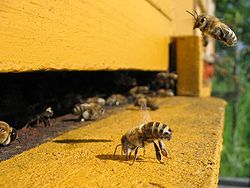
The history of beekeeping traces humanity's relationship with honeybees, evolving from primitive honey hunting to sophisticated hive management. Ancient Egyptians kept bees in hives over 4,500 years ago, while later innovations like movable-frame hives revolutionized the practice into modern commercial apiculture. More Less
Jan 1, 1669
% complete
The oldest documentary evidence of woven skep hives dates to 1669, although it is probable that their use is more than 3,000 years old. Skeps were traditional domed baskets used to house bee colonies for honey production.
Image source: Beekeeping
Jan 1, 1744
% complete
In 1744, John Thorley described a hive placed in a bell jar that was screwed onto a wicker basket, one of the innovative intermediate designs between destructive skep-based methods and modern hives.
Jan 1, 1768
% complete
In 1768, Thomas Wildman recorded intermediate stages in the transition from older methods of beekeeping, describing advances over the destructive, skep-based method so bees no longer had to be killed to harvest their honey.
Jan 1, 1980 - Dec 31, 1999
% complete
In some Scandinavian countries and in Russia, the traditional trough hive persisted until late in the 20th century and is still kept in some areas, preserving an ancient style of beekeeping.
Image source: Beehive
Jan 1, 1701 - Dec 31, 1800
% complete
In the 18th century, European natural philosophers began to scientifically study bee colonies. Their work deepened understanding of colony biology and laid the groundwork for major advances in hive design and bee management.
Jan 1, 1750 - Dec 31, 1800
% complete
Improved European understanding of the colonies and biology of bees allowed the construction of the movable comb hive in the 18th century, so that honey could be harvested without destroying the entire colony.
Jan 1, 1850 - Dec 31, 1899
% complete
Throughout the 19th century, improvements were made in the design and production of beehives, systems of management and husbandry, stock improvement by selective breeding, honey extraction, and marketing.
Jan 1, 1851 - Dec 31, 1899
% complete
In the 19th century, changes in beekeeping practice were completed through the development of the movable comb hive by American Lorenzo Lorraine Langstroth, who first made practical use of Huber's discovery of the 'bee space', a specific distance between combs that bees keep as a free passage.
Image source: Langstroth hive
Jan 1, 1914
% complete
The ability of bee colonies to regulate their internal environment, known as social homeostasis, was first described by Gates in 1914, advancing the scientific understanding of colony thermoregulation.
Jan 1, 2015
% complete
In 2015, the Flow Hive system was invented in Australia by Cedar Anderson and his father Stuart Anderson. Its design allows honey to be extracted directly from the hive without cumbersome centrifuge equipment.
Image source: Flow Hive
Jan 1, 2015
% complete
In 2015, MIT's Synthetic Apiary project simulated springtime inside a closed environment for several hives throughout the winter, exploring how controlled environments might support bee colonies and pollination research.
Jan 1, 1853
% complete
Lorenzo Lorraine Langstroth's book The Hive and Honey-bee, published in 1853, describes his rediscovery of the bee space and the development of his patented movable comb hive, which revolutionized beekeeping worldwide.
Jan 1, 1865
% complete
Franz Hruschka, an Austrian/Italian military officer, invented in 1865 a simple machine for extracting honey from the comb by means of centrifugal force, allowing honey to be harvested without destroying the comb.
Image source: Honey extractor
Jan 1, 1873
% complete
Moses Quinby, author of Mysteries of Bee-Keeping Explained, invented the bee smoker in 1873. The smoker calms bees during hive inspections and remains an essential tool for beekeepers today.
Image source: Bee smoker
Jan 1, 1876
% complete
In 1876, Cook, author of The Bee-Keepers' Guide; or Manual of the Apiary, contributed to the growing body of practical beekeeping literature that helped standardize apiary management practices.
Jan 1, 1878
% complete
By 1878, Dr. C.C. Miller made beekeeping his sole business activity. His book Fifty Years Among the Bees remains a classic, and his influence on bee management persists into the 21st century.
Jan 1, 1883
% complete
Fifty Years Among the Bees by C.C. Miller remains a classic text of practical beekeeping, and his influence on bee management persists into the 21st century.
Jan 1, 1915 - Dec 31, 1959
% complete
Kelley was an American pioneer of modern beekeeping in the early- and mid-20th century, contributing to the industrialization and expansion of apiculture in the United States.
Jan 1, 1919
% complete
Ahmed Zaky Abushady, an Egyptian poet, medical doctor, bacteriologist, and bee scientist active in England and Egypt, patented a removable, standardized aluminum honeycomb in 1919.
Image source: Ahmed Zaki Abu Shadi
Jan 1, 1919 - Dec 31, 1950
% complete
In the UK, practical beekeeping in the early 20th century was led by a few men, pre-eminently Brother Adam and his Buckfast bee, along with R.O.B. Manley, shaping British bee breeding and management.
Image source: Buckfast bee
Jan 1, 1920 - Dec 31, 1955
% complete
Ahmed Zaky Abushady (1892–1955) was an Egyptian poet, medical doctor, bacteriologist, and bee scientist who was active in England and Egypt in the early twentieth century, promoting beekeeping in both countries.
Jan 1, 1921
% complete
Hartman (1859–1947), lecturer, well-known beekeeping enthusiast, and honey promoter, was elected President of the California State Beekeepers' Association in 1921.
Jan 1, 1961 - Dec 31, 2014
% complete
According to Food and Agriculture Organization data, the world's beehive stock rose from around 50 million in 1961 to around 83 million in 2014, representing an annual average growth of 1.3%.
Jan 1, 1980 - Dec 31, 1999
% complete
With the 20th-century advent of mite pests such as Varroa, hive floors began to be replaced, either temporarily or permanently, with wire mesh and a removable tray to help control parasite populations.
Image source: Varroa destructor
Jan 1, 2006
% complete
Since 2006, colony losses from colony collapse disorder (CCD) have been increasing across the world, although the causes of the syndrome remain unknown.
Image source: Colony collapse disorder
Jan 1, 2007
% complete
A vertical top-bar hive is the Warré hive, based on a design by French priest Abbé Émile Warré (1867–1951) and popularized by David Heaf's English translation of Warré's book L'Apiculture pour Tous as Beekeeping For All.
Image source: Beehive
Jan 1, 2007
% complete
Philip Chandler's 2007 book The Barefoot Beekeeper challenged many aspects of modern beekeeping and offered the horizontal top-bar hive as a viable alternative to the ubiquitous Langstroth-style movable-frame hive.
Image source: Horizontal top-bar hive
Jan 1, 2007
% complete
The widespread adoption of natural beekeeping methods in recent years can be partly attributed to Ross Conrad's 2007 publication Natural Beekeeping, which challenges many aspects of modern chemical-intensive beekeeping.
Image source: Beekeeping
Jan 1, 2009
% complete
Average annual growth in the world's beehive stock has accelerated to 1.9% since 2009, reflecting expanding global interest and investment in apiculture.
Jan 1, 2016
% complete
As beekeeping technology has advanced, beekeeping has become more accessible, and urban beekeeping was described as a growing trend as of 2016, with hives appearing on rooftops and in city gardens worldwide.
Image source: Urban beekeeping
Jan 1, 2022
% complete
A 2022 study by researchers at University of Maryland, College Park observed that the lifespan of caged worker bees is half as long as that observed 50 years ago, hypothesizing that decreased worker-bee lifespans correlate with decreased honey production.
Image source: Worker bee
Jan 1, 2023
% complete
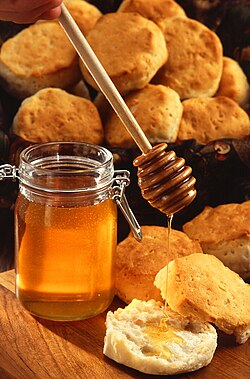
In 2023, the European Commission released a report on honey fraud in 17 European countries determining that 46% of samples were suspicious of being non-compliant with EU standards for honey purity, a significant increase from a 2015 study following improved detection of sugar additives.
Image source: Honey
Jan 1, 2024
% complete
Shortly after the EU report, the US Food and Drug Administration released a report finding that for 2021–2023, three to ten percent of imported honey violated purity criteria, underscoring global concerns about honey adulteration.
Or browse the full history timeline directory, with more than 2,000 topics.
This History of Beekeeping timeline was generated with the help of AI, using information found on the internet.
We work hard to keep these timelines accurate, but mistakes do get through. If you spot one, email us at [email protected] and we'll fix it for future visitors.
Generate yours with AI or build it from scratch, for free.
Export your timeline, add your own events, edit or remove AI-generated events, and much more
No credit card required.
Cancel anytime.
Cancel anytime.
You can create an unlimited number of timelines with up to 10 events on each one, customize how they look, export them to PDF, PNG, PowerPoint, CSV, and Excel, and share them with a link. Paid plans raise the event limit and add features like spreadsheet imports and collaborators.
Yes. You can cancel your subscription from your account page at any time, and you will not be charged again. Your subscription stays active for the rest of the period you already paid for.
Yes. We will email you a reminder before the annual renewal, and we will also email you a receipt.
Yes. You can email us within 15 days of any payment, and we will issue you a full refund.
Check out our pricing docs or send us an email anytime: [email protected].