
-
Use Cases
-
Resources
-
Pricing
Falconry, also known as hawking, is the ancient art of hunting wild quarry using trained birds of prey such as falcons, hawks, and eagles. Practiced for thousands of years across Asia, the Middle East, Europe, and beyond, falconry has evolved from a vital means of acquiring food into a prestigious sport and a symbol of nobility. Today it survives as a living heritage, protected by international organizations and celebrated worldwide. More Less
2000 BC
% complete
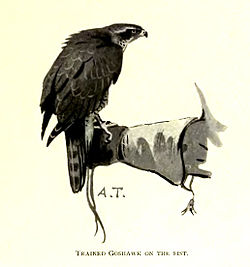
Some of the earliest possible depictions of falconry appear in Mesopotamian art and texts, including a Hittite bas-relief showing a figure with a bird of prey on the arm. While scholars debate whether these images represent true falconry, they suggest that humans in the ancient Near East may have begun hunting with trained raptors as early as 2000 BC.
Image source: Falconry
1000 BC
% complete
Many historians believe falconry originated on the steppes of Central Asia, where nomadic horsemen hunted with golden eagles and other raptors. This tradition of eagle hunting among Kazakh and Mongolian peoples continues today and is considered one of the oldest surviving forms of the sport.
Image source: Falconry
680 BC
% complete
Falconry became well established in China during the Tang dynasty and earlier, with goshawks used to hunt cranes and hares. Chinese art and poetry from this era frequently depict falconers with their birds, and the practice spread from China to Korea and Japan.
700
% complete
Falconry arrived in Japan around the fourth century and was formalized as takagari. It became a privilege of the imperial court and later a symbol of samurai status, with shoguns such as Tokugawa Ieyasu promoting it as a martial discipline.
500 - 1500
% complete
During the Middle Ages, falconry became a prestigious pursuit across Europe, known as the 'sport of kings.' Strict social hierarchies governed which species could be flown: emperors flew eagles, kings gyrfalcons, earls peregrines, yeomen goshawks, and servants kestrels.
750
% complete
In the Abbasid Caliphate and wider Arab world, falconry (al-baz) became deeply embedded in elite culture. Poets praised the hunt, and Arabic treatises on falconry circulated widely. Today Gulf nations remain global centers of the sport, especially hunting with sakers and peregrines.
1206 - 1368
% complete
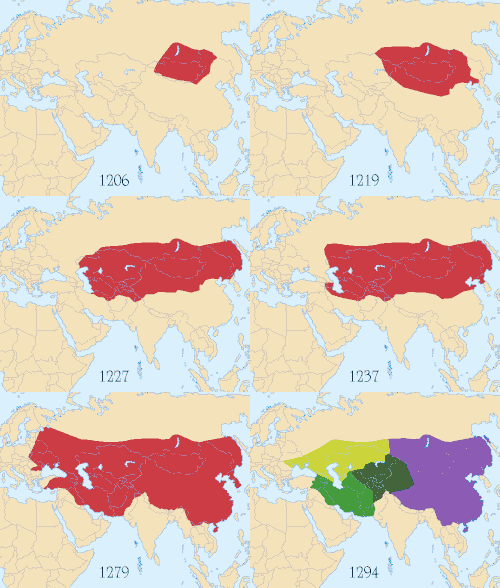
The Mongols were passionate falconers who helped spread the practice throughout their vast empire. Genghis Khan and his descendants maintained elaborate falconry establishments, and Marco Polo described Kublai Khan's grand hunts involving thousands of falconers with gerfalcons and sakers.
Image source: Mongol Empire
1241
% complete
Holy Roman Emperor Frederick II wrote De Arte Venandi cum Avibus (The Art of Hunting with Birds), the most comprehensive medieval work on falconry. The treatise covered ornithology, training methods, and anatomy, and reflected Frederick's deep scientific curiosity about birds of prey.
Image source: De arte venandi cum avibus
1486
% complete
Dame Juliana Berners' Book of St. Albans included a famous list assigning different birds of prey to different social ranks, from an eagle for an emperor to a kestrel for a knave. Though likely partly fanciful, it became a defining text of English falconry.
Image source: Book of Saint Albans
1565
% complete
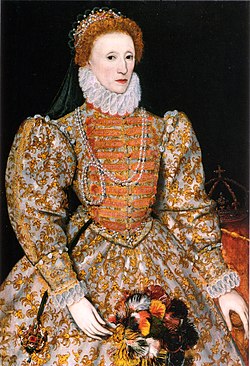
English laws restricted ownership of birds of prey by social class, reflecting the sport's aristocratic associations. As firearms improved and land enclosure expanded in the 17th century, falconry declined sharply among all classes except dedicated practitioners.
Image source: Elizabeth I
1600 - 1800
% complete
As shotguns made hunting more efficient, falconry fell out of favor across much of Europe. By the 18th century it survived mainly at royal courts such as those of France and Austria, practiced by small groups of enthusiasts keeping older traditions alive.
1864
% complete
The Old Hawking Club was established in England to revive traditional long-winged hawking with peregrines over game. Its members helped preserve practical falconry knowledge during the Victorian revival of the sport.
1927
% complete
The British Falconers' Club was founded to promote and protect the practice of falconry in Britain. It became one of the world's leading falconry organizations, publishing journals and setting standards for the ethical treatment of hawks.
Image source: Lorant de Bastyai
1938
% complete
Gerald Lascelles published The Lure of the Falcon, a popular account of modern falconry that introduced the sport to a wide audience and inspired new generations of falconers between the wars.
Image source: Gerald William Lascelles
1945 - 1960
% complete
Inspired by European traditions and books such as The Art of Falconry, American falconers organized rapidly after World War II. Figures like Frank Beebe in Canada and early US clubs laid the groundwork for regulated falconry in North America.
1975
% complete
Advances in artificial insemination and captive propagation allowed falconers to fly captive-bred birds rather than wild-taken ones. Today the vast majority of falconry birds in Europe and North America are captive bred, reducing pressure on wild populations.
Image source: Captive breeding
2000 - 2020
% complete
Over recent decades, most European countries formalized legal frameworks for falconry, balancing access to birds with welfare standards and wildlife protections. National associations worked to harmonize regulations while preserving traditional practices.
1961
% complete
Falconry literature and scholarship expanded in the mid-20th century, culminating in dedicated archives and publications. The Archives of Falconry, now housed at The Peregrine Fund in Idaho, preserves historic books, equipment, and correspondence from falconers worldwide.
Sep 1962
% complete
Rachel Carson's Silent Spring drew attention to DDT's devastating effects on birds of prey. Peregrine and bald eagle populations collapsed across North America and Europe, threatening both wild raptors and the raw material of falconry itself.
Image source: Silent Spring
1968
% complete
Founded in 1968, the International Association for Falconry grew into a global federation representing falconry clubs on every inhabited continent, coordinating conservation advocacy and defending sustainable use of raptors.
1970
% complete
Following the peregrine population crash, conservationists including falconers began breeding peregrines in captivity. Techniques pioneered by falconers, such as artificial insemination and imprinting, proved essential to restoring wild populations.
Image source: Peregrine falcon
1970
% complete
Founded by Cornell professor Tom Cade, The Peregrine Fund launched captive breeding programs that released thousands of peregrines across North America. The organization demonstrated how falconry expertise could drive large-scale raptor conservation.
1972
% complete
Amendments and regulations under the Migratory Bird Treaty Act formally permitted falconry in the United States under strict permitting. Apprenticeship systems, inspections, and reporting requirements created one of the world's most regulated falconry frameworks.
1999
% complete
After decades of recovery driven by pesticide bans and captive breeding, the American peregrine falcon was delisted from the US Endangered Species Act. The success is celebrated as one of conservation's great achievements, with falconers playing a key role.
Nov 16, 2010
% complete
UNESCO inscribed falconry on its Representative List of the Intangible Cultural Heritage of Humanity, recognizing it as a living tradition shared by many nations. The multinational nomination was led by the UAE along with several European and Asian countries.
Dec 2010
% complete
The art of eagle hunting among Kazakh and Kyrgyz communities received UNESCO recognition, honoring the ancient Central Asian practice of hunting with golden eagles from horseback. Festivals like the Golden Eagle Festival in Mongolia showcase this heritage.
Image source: Golden Eagle Festival
2011
% complete
The Festival of Falconry, first held in England and later hosted in the UAE, brought together falconers from dozens of nations. Abu Dhabi became a major hub, hosting events celebrating the sport's heritage alongside modern conservation initiatives.
2015
% complete
Growing demand for sakers in Gulf falconry prompted international action against illegal trapping and trade. Under the Convention on Migratory Species, range states adopted a global action plan combining sustainable-use quotas with anti-poaching measures.
Image source: Saker falcon
2020
% complete
Saudi Arabia established the Saudi Falcons Club to promote falconry heritage, host international auctions and competitions, and support conservation programs. The club runs the annual King Abdulaziz Falconry Festival, one of the largest falconry events in the world.
Image source: Team Falcons
2021
% complete
Today falconry is practiced on six continents by tens of thousands of licensed falconers. From Kazakh eagle hunters to Emirati saker specialists and American apprentices, the sport blends ancient tradition with modern science and remains a powerful force for raptor conservation.
Or browse the full history timeline directory, with more than 2,000 topics.
This History of Falconry timeline was generated with the help of AI, using information found on the internet.
We work hard to keep these timelines accurate, but mistakes do get through. If you spot one, email us at [email protected] and we'll fix it for future visitors.
Generate yours with AI or build it from scratch, for free.
Export your timeline, add your own events, edit or remove AI-generated events, and much more
No credit card required.
Cancel anytime.
Cancel anytime.
You can create an unlimited number of timelines with up to 10 events on each one, customize how they look, export them to PDF, PNG, PowerPoint, CSV, and Excel, and share them with a link. Paid plans raise the event limit and add features like spreadsheet imports and collaborators.
Yes. You can cancel your subscription from your account page at any time, and you will not be charged again. Your subscription stays active for the rest of the period you already paid for.
Yes. We will email you a reminder before the annual renewal, and we will also email you a receipt.
Yes. You can email us within 15 days of any payment, and we will issue you a full refund.
Check out our pricing docs or send us an email anytime: [email protected].