-
Use Cases
-
Resources
-
Pricing
Charleston, South Carolina, is one of America's most historically significant cities. Founded in 1670 as Charles Town, it grew into a wealthy colonial port city built largely on plantation agriculture and the labor of enslaved Africans. Charleston played a central role in the American Revolution and was where the first shots of the Civil War were fired at Fort Sumter in 1861. Today, it is celebrated for its preserved architecture, historic districts, and vibrant Lowcountry culture. More Less
1663
% complete
Restored to the throne following Oliver Cromwell's Protectorate, King Charles II granted the chartered Carolina territory to eight of his loyal friends, known as the Lords Proprietors.
Image source: History of Charleston, South Carolina
1670
% complete
The community was established in 1670 by English colonists from Bermuda under governor William Sayle on the west bank of the Ashley River a few miles northwest of the present city, beginning a major establishment of African slavery in North America.
1670 - 1715
% complete
Carolinians transformed the Indian slave trade during the late 17th and early 18th centuries by treating slaves as a trade commodity exported mainly to the West Indies. Between 1670 and 1715, an estimated 24,000 to 51,000 Native Americans were captured and sold from South Carolina.
1680
% complete
A 1680 plan for the new settlement, the Grand Modell, laid out 'the model of an exact regular town,' shaping the future for the growing community.
1681
% complete
By 1681, the settlement had grown, joined by settlers from England, Barbados, and Virginia; it was moved to its current peninsular location. As capital of the Carolina colony, Charles Town became a base for colonial expansion.
1682
% complete
Philip's Episcopal Church was built in 1682, although later destroyed by fire and relocated to its current location; it remains Charleston's oldest and most noted church.
Image source: St. Philip's Church (Charleston, South Carolina)
1706
% complete
An example of an assault on the colony was the failed expedition of 1706 during Queen Anne's War, which attempted to seize the town but was repelled.
May 1718
% complete
In late May 1718, Charles Town was besieged for nearly a week by the pirate Edward Teach, commonly known as Blackbeard.
1736
% complete
The first theater building in America, the Dock Street Theatre, was built in Charleston in 1736, later replaced by the Planter's Hotel; today's Dock Street Theatre is one of the oldest active theaters built for stage performance in the United States.
Image source: Dock Street Theatre
1737
% complete
Benevolent societies formed by ethnic groups included the South Carolina Society, founded by French Huguenots in 1737, followed by the German Friendly Society in 1766 and the Hibernian Society in 1801.
1748
% complete
The Charleston Library Society was established in 1748 by wealthy Charlestonians who wished to keep up with the scientific and philosophical issues of the day; the group also helped establish the College of Charleston.
Image source: Charleston Library Society
1750
% complete
By 1750, Charleston had become a bustling trade center, the hub of the Atlantic trade for the Southern Colonies, and the wealthiest and largest city south of Philadelphia.
1752
% complete
Philips Episcopal Church, Charleston's oldest and most noted church, was built on the southeast corner of Church Street and Meeting Street in 1752.
May 4, 1761
% complete
On Monday, May 4, 1761, a large tornado temporarily emptied the Ashley River and sank five warships lying offshore.
1762
% complete
Sephardic Jews migrated to the city in such numbers that Charleston was home to the largest and wealthiest Jewish community in North America by the early 19th century until about 1830; the Jewish Coming Street Cemetery, first established in 1762, attests to their long-standing presence.
1770
% complete
By 1770, Charleston was the fourth largest port in the colonies after Boston, New York, and Philadelphia, with a population of 11,000, slightly more than half enslaved.
1770
% complete
Founded in 1770 with help from the Charleston Library Society, the College of Charleston is the oldest college in South Carolina, the oldest municipal college in the United States, and the 13th oldest college in the nation.
Image source: College of Charleston
Jan 12, 1773
% complete
The first American museum opened to the public on January 12, 1773 in Charleston, marking the city as a cultural pioneer in the colonies.
Image source: Charleston Museum
1773
% complete
In protest of the Tea Act of 1773, which embodied taxation without representation, Charlestonians confiscated tea and stored it in the Exchange and Custom House.
Image source: Boston Tea Party
1774
% complete
Representatives from all over the colony came to the Exchange in 1774 to elect delegates to the Continental Congress, and South Carolina declared its independence from the crown on the steps of the Exchange.
Image source: Exchange and Provost
Jun 28, 1776
% complete
On June 28, 1776, Admiral Peter Parker and General Henry Clinton failed to capture a partially constructed palmetto palisade defended by Colonel William Moultrie's militia. The spongy palmetto-and-sand defenses neutralized British bombardment and gave the Royal Navy its first defeat in a century.
Image source: Battle of Sullivan's Island
Apr 1779
% complete
Following the capture of Savannah in late 1778, British forces under Prevost sent 2500 men towards South Carolina in April 1779, forcing Moultrie's militia to fall back towards Charlestown.
Image source: Siege of Charleston
1780 - 1782
% complete
Clinton left Charles Cornwallis with thousands of men to rally Loyalists, build forts across the state, and demand oaths of allegiance. South Carolinians lost faith in the restored royal administration long before the British departure in late 1782.
Apr 1, 1780 - May 12, 1780
% complete
Clinton returned with about 14,000 troops and 90 ships, approaching via James Island. General Benjamin Lincoln surrendered his entire 5400-man force, making the Siege of Charleston the greatest American defeat of the war.
1783
% complete
With the British and Loyalist leaders gone, the city officially changed its name from Charles Town to Charleston in 1783.
1788
% complete
By 1788, Carolinians met at the Capitol building for the Constitutional Ratification Convention, where support for the Federal Government was tempered by division over the location of the new state capitol.
Image source: Constitution of South Carolina
1793
% complete
The invention of the cotton gin in 1793 revolutionized cotton production, making it quickly become South Carolina's major export and reshaping Charleston's economy.
Image source: Cotton gin
1797
% complete
Free black Charlestonians and slaves helped establish the Old Bethel United Methodist Church in 1797, and the Emanuel A.M.E. congregation stems from a religious group organized solely by free and enslaved African Americans in 1791.
Image source: Emanuel African Methodist Episcopal Church
1798
% complete
The Bank of South Carolina, the second oldest building constructed as a bank in the nation, was established in 1798; branches of the First and Second Bank of the United States were also located in Charleston in 1800 and 1817.
Image source: Citizens & Southern National Bank
1801
% complete
Benevolent societies formed by different ethnic groups included the Hibernian Society, founded by Irish immigrants in Charleston in 1801.
Image source: Hibernian Hall (Charleston, South Carolina)
1807
% complete
In 1807, the Charleston Market was founded; by 1840 the Market Hall and Sheds, where fresh meat and produce were brought daily, had become the commercial hub of the city.
Image source: City Market (Charleston, South Carolina)
1818
% complete
While the First Bank branch was converted to City Hall by 1818, the Second Bank proved vital as the only bank equipped to handle international transactions crucial to the export trade.
Image source: Charleston City Hall
1822
% complete
When a massive slave revolt planned by Denmark Vesey, a free black man, was discovered in 1822, hysteria among white Charlestonians led to severe restrictions on the activities of free blacks and slaves.
Image source: Denmark Vesey
1832
% complete
Reflecting growing devotion to states' rights, South Carolina passed an ordinance of nullification in 1832, effectively attempting to repeal Federal tariff laws.
Image source: Nullification crisis
1849
% complete
In 1849, the Charleston Workhouse Slave Rebellion, in which 37 enslaved people escaped jail, intensified policing of the Black population.
Image source: Charleston Workhouse Slave Rebellion
Apr 1860 - May 1860
% complete
Prior to the 1860 election, the National Democratic Convention convened in Charleston, a gathering marked by deep sectional divisions over slavery.
Image source: 1860 Democratic National Conventions
Dec 24, 1860
% complete
On December 24, 1860, the South Carolina General Assembly voted to secede from the Union, making it the first state to do so.
Image source: South Carolina in the American Civil War
Jan 9, 1861
% complete
On January 9, 1861, Citadel cadets fired on the merchant ship Star of the West as it entered Charleston's harbor with supplies for Fort Sumter.
Image source: Star of the West
Apr 12, 1861
% complete
On April 12, 1861, Confederate shore batteries under General Pierre G. T. Beauregard opened fire on Fort Sumter, beginning the American Civil War.
Image source: Battle of Fort Sumter
Dec 11, 1861
% complete
A massive fire burned 164 acres of Charleston, destroying the Cathedral of St John and St Finbar, South Carolina Institute Hall, the Circular Congregational Church, and many of the city's finest homes.
Image source: Battle of Fort Sumter
Feb 17, 1864
% complete
Charleston was the site of the first successful submarine attack when the H.L. Hunley sank the USS Housatonic off the coast on February 17, 1864.
Image source: H. L. Hunley
Feb 1865
% complete
Union troops moved into the city in 1865, taking control of sites such as the United States Arsenal; the Citadel grounds were confiscated and used as a federal garrison for over 17 years before reopening as a military college in 1882.
Apr 14, 1865
% complete
Thousands travelled to Charleston to watch Brevet Major General Anderson raise at Fort Sumter the same flag he had lowered four years earlier on April 13, 1861.
1867
% complete
In 1867, Charleston's first free secondary school for blacks was established, the Avery Institute, advancing education during Reconstruction.
Image source: Avery Research Center for African American History and Culture
Aug 31, 1886
% complete
On August 31, 1886, Charleston was nearly destroyed by an earthquake that damaged 2,000 buildings and caused $6 million worth of damage, enormous relative to the city's total building value of approximately $24 million.
Image source: 1886 Charleston earthquake
1889
% complete
The William Enston Homes, a planned community for the city's aged and infirmed, was built in 1889.
Image source: William Enston Home
1896
% complete
An elaborate public building, the United States Post Office and Courthouse, was completed in 1896 and signaled renewed life in the heart of the city.
Image source: United States Post Office and Courthouse (Charleston, South Carolina)
1900 - 1940
% complete
In the early 20th century strong political machines emerged in the city, reflecting economic, class, racial, and ethnic tensions; upstate politicians routinely attacked Charleston's aristocratic tone.
May 10, 1919
% complete
The Charleston riot of 1919, violence of whites against blacks, was the worst violence in Charleston since the Civil War, part of a broader wave of racial unrest across America.
Image source: Charleston riot of 1919
1920 - 1940
% complete
From 1920 to 1940 the city became a national leader in the historic preservation movement, culminating in the introduction of the nation's first historic district zoning laws by the city council in 1931.
Image source: Historic preservation
Jul 1943
% complete
Peak employment of 26,000 workers was reached in July 1943 at the Charleston Naval Shipyard during World War II; naval presence, shipyards, medical industry, and tourism helped the city grow economically through the 20th century.
Image source: Charleston Naval Shipyard
1975
% complete
Since his election as mayor in 1975, Joe Riley was a major proponent of reviving Charleston's economic and cultural heritage, presiding over major reinvestment and municipal improvements during the last thirty years of the 20th century.
Image source: Joseph P. Riley Jr.
Sep 1989
% complete
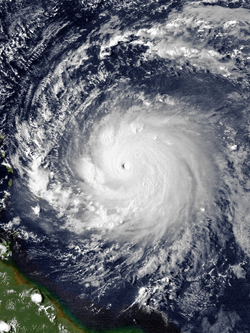
Hurricane Hugo hit Charleston in 1989; though the worst damage was in nearby McClellanville, the storm damaged three-quarters of the homes in Charleston's historic district.
Image source: Hurricane Hugo
Jun 17, 2015
% complete
A mass shooting took place at Emanuel African Methodist Episcopal Church in downtown Charleston on the evening of June 17, 2015, killing nine worshippers and shocking the nation.
Image source: Charleston church shooting
2016
% complete
Joe Riley did not run for reelection in 2016, ending his decades-long tenure as mayor of Charleston.
Or browse the full history timeline directory, with more than 2,000 topics.
This History of Charleston timeline was generated with the help of AI, using information found on the internet.
We work hard to keep these timelines accurate, but mistakes do get through. If you spot one, email us at [email protected] and we'll fix it for future visitors.
Generate yours with AI or build it from scratch, for free.
Export your timeline, add your own events, edit or remove AI-generated events, and much more
No credit card required.
Cancel anytime.
Cancel anytime.
You can create an unlimited number of timelines with up to 10 events on each one, customize how they look, export them to PDF, PNG, PowerPoint, CSV, and Excel, and share them with a link. Paid plans raise the event limit and add features like spreadsheet imports and collaborators.
Yes. You can cancel your subscription from your account page at any time, and you will not be charged again. Your subscription stays active for the rest of the period you already paid for.
Yes. We will email you a reminder before the annual renewal, and we will also email you a receipt.
Yes. You can email us within 15 days of any payment, and we will issue you a full refund.
Check out our pricing docs or send us an email anytime: [email protected].