-
Use Cases
-
Resources
-
Pricing
Damascus is one of the world's oldest continuously inhabited cities and the capital of Syria. Founded in the 3rd millennium BC, it served as the capital of the Aramaean kingdom, flourished under Roman rule, became the seat of the Umayyad Caliphate from 661–750 AD, and remains a major political and cultural center of the Middle East. More Less
1500 BC
% complete
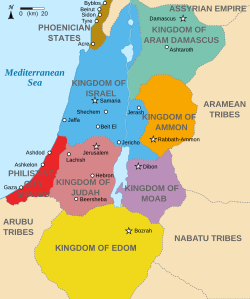
Damascus became a major center of the Aramaeans, who made it the capital of the powerful kingdom of Aram-Damascus. The city grew wealthy as a hub on trade routes connecting Mesopotamia, Egypt, and the Mediterranean.
Image source: Aram-Damascus
732 BC
% complete
The Neo-Assyrian king Tiglath-Pileser III captured Damascus, ending the independence of Aram-Damascus and incorporating it into the Assyrian Empire after a prolonged siege.
333 BC
% complete
Following Alexander the Great's victory over Persia at Issus in 333 BC, Damascus fell into Greek hands, beginning the Hellenistic era during which the city flourished under the Seleucid dynasty.
Image source: List of sieges
64 BC
% complete
Pompey's conquest of Syria brought Damascus into the Roman Republic. Under Roman rule the city prospered as part of the Decapolis league, with temples, colonnaded streets, and a famous school of rhetoric.
Image source: Roman Syria
36 AD
% complete
According to the New Testament, Saul of Tarsus experienced a vision of Jesus while traveling to Damascus to persecute Christians. His conversion in the city made Damascus a landmark of early Christianity.
Image source: Conversion of Paul the Apostle
395 AD
% complete
After the division of the Roman Empire, Damascus became part of Byzantium. It remained an important provincial city and a center of Christianity until the Arab conquest three centuries later.
Image source: Damascus
Aug 15, 636 - Aug 20, 636
% complete
The decisive defeat of the Byzantine army at the Yarmouk River permanently ended Roman rule in Syria, consolidating Muslim control over Damascus and the surrounding region.
Image source: Battle of the Yarmuk
661
% complete
Mu'awiya I established the Umayyad Caliphate with Damascus as its capital. For nearly a century the city served as the political heart of an empire stretching from Spain to Central Asia.
Image source: Umayyad Caliphate
706 - 715
% complete
Caliph al-Walid I transformed the site of the former Cathedral of St. John the Baptist into the magnificent Great Umayyad Mosque, one of the earliest and most influential mosques in Islamic architecture.
Image source: Umayyad Mosque
750
% complete
The Abbasid Revolution overthrew the Umayyads, massacred their leadership, and moved the caliphal capital to Baghdad, demoting Damascus to a provincial town for centuries.
Image source: Abbasid Revolution
970 - 1076
% complete
The Isma'ili Fatimids of Egypt took control of Damascus in 970 and held it for about a century, a period marked by turbulence, famine, Bedouin raids, and rivalry with regional powers.
Image source: Fatimid Caliphate
1076
% complete
Turkish Seljuk forces under Tutush I seized Damascus, integrating it into the Sunni Seljuk realm and beginning a new phase of Turkish dominance in Syria.
Image source: Seljuk Empire
1143
% complete
Nur ad-Din, son of Zengi, unified Syria around Damascus, making it a base for jihad against the Crusader states and laying groundwork for later victories by Saladin.
Image source: Nur al-Din Zengi
Jul 24, 1148 - Jul 28, 1148
% complete
Crusaders of the Second Crusade besieged Damascus for four days but withdrew after fierce resistance, a failure that discredited the Crusade in Europe and strengthened Muslim resolve.
Image source: Siege of Damascus (1148)
1174
% complete
Saladin entered Damascus unopposed in 1174, establishing Ayyubid rule and using the city as a key power center for his campaigns against the Crusaders, culminating at Hattin in 1187.
Image source: Saladin
Feb 1260
% complete
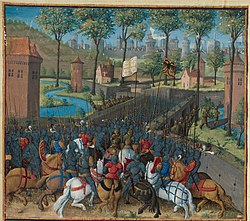
A Mongol army under Kitbuqa stormed Damascus, sacking the city and destroying much of it before being defeated by the Mamluks at Ain Jalut later that year.
Image source: Mongol invasion of Syria
Mar 1401
% complete
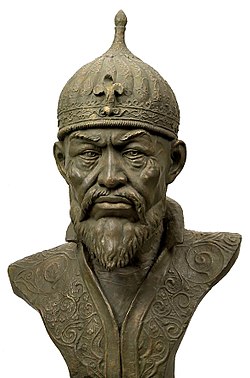
Tamerlane's forces captured and brutally sacked Damascus, massacring inhabitants, looting artisans, and leaving the city devastated; the Umayyad Mosque itself was badly damaged by fire.
Image source: Timur
1516
% complete
Sultan Selim I defeated the Mamluks at Marj Dabiq and took Damascus without a fight, incorporating Syria into the Ottoman Empire for the next four centuries.
Image source: Ottoman claim to Roman succession
1544 - 1550
% complete
Ottoman governor Sinan Pasha commissioned the celebrated architect Mimar Sinan to build the Tekkiye Mosque and hospice along the Barada River, an architectural gem of the Ottoman period.
Image source: Sulaymaniyya Takiyya
Jul 9, 1860 - Jul 11, 1860
% complete
Sectarian violence between Muslims and Christians erupted in Damascus, killing thousands of Christians and destroying churches in the old city, prompting French intervention and Ottoman reforms.
Image source: 1860 civil conflict in Mount Lebanon and Damascus
1908
% complete
The Ottoman Hejaz Railway reached Medina, with Damascus as its northern terminus, easing pilgrimage travel and boosting the city's commercial importance.
Image source: Hejaz railway
Oct 1, 1918
% complete
Allied forces and Sharifian Arab troops led by Emir Faisal liberated Damascus from Ottoman rule at the end of World War I, paving the way for an independent Arab government in the city.
Image source: Capture of Damascus (1918)
1920 - 1946
% complete
France ruled Syria from Damascus under a League of Nations mandate, dividing the region and suppressing nationalist movements while modernizing parts of the city.
Image source: Mandate for Syria and the Lebanon
Mar 8, 1920 - Jul 24, 1920
% complete
Emir Faisal proclaimed himself king in Damascus, founding the first modern Arab state, but French forces crushed the kingdom at the Battle of Maysalun within months.
Image source: Arab Kingdom of Syria
1925 - 1927
% complete
A nationwide uprising against French colonial rule began in Jabal Druze and spread to Damascus, where French bombardment of the old city caused widespread destruction and civilian casualties.
Image source: Great Syrian Revolt
Apr 17, 1946
% complete
The last French troops evacuated Damascus, and Syria became fully independent with Damascus as its capital, celebrated annually as Evacuation Day.
Image source: Independence Day (Syria)
Mar 8, 1963
% complete
Officers loyal to the Ba'ath Party seized power in Damascus, beginning decades of Ba'athist dominance that would shape Syrian politics through authoritarian rule.
Image source: 1963 Syrian coup d'état
Nov 16, 1970
% complete
Air Force commander Hafez al-Assad staged a bloodless coup in Damascus known as the Corrective Movement, ruling Syria with an iron grip until his death in 2000.
Image source: 1970 Syrian coup d'etat
Jun 17, 2000
% complete
Following Hafez al-Assad's death, his son Bashar inherited the presidency, initially raising hopes for reform that were soon dashed as authoritarian governance continued.
Image source: Bashar al-Assad
2012
% complete
Fighting between government forces and rebels spread to Damascus and its suburbs in 2012, including the long battle over eastern Ghouta, devastating neighborhoods and displacing hundreds of thousands.
Image source: Syrian civil war
Or browse the full history timeline directory, with more than 2,000 topics.
This History of Damascus timeline was generated with the help of AI, using information found on the internet.
We work hard to keep these timelines accurate, but mistakes do get through. If you spot one, email us at [email protected] and we'll fix it for future visitors.
Generate yours with AI or build it from scratch, for free.

Export your timeline, add your own events, edit or remove AI-generated events, and much more
No credit card required.
Cancel anytime.
Cancel anytime.
You can create an unlimited number of timelines with up to 10 events on each one, customize how they look, export them to PDF, PNG, PowerPoint, CSV, and Excel, and share them with a link. Paid plans raise the event limit and add features like spreadsheet imports and collaborators.
Yes. You can cancel your subscription from your account page at any time, and you will not be charged again. Your subscription stays active for the rest of the period you already paid for.
Yes. We will email you a reminder before the annual renewal, and we will also email you a receipt.
Yes. You can email us within 15 days of any payment, and we will issue you a full refund.
Check out our pricing docs or send us an email anytime: [email protected].