-
Use Cases
-
Resources
-
Pricing
The history of dentistry traces the evolution of oral health care from ancient civilizations, where toothaches were treated with primitive tools and herbal remedies, through the Middle Ages with barber-surgeons, to the establishment of dentistry as a formal profession in the 18th century and the remarkable technological advancements of the modern era. More Less
49000 BC
% complete
A 2026 paper reported on a tooth that had been subjected to drilling by Neanderthals at least 49,000 years ago, demonstrating surprisingly advanced prehistoric dental intervention.
Image source: Dentistry
14000 BC - 13820 BC
% complete
In 2015, researchers reported about an infected tooth from Italy partially cleaned with flint tools, between 13,820 and 14,160 years old.
13000 BC
% complete
Evidence dated to the Paleolithic, around 13,000 years ago, points to bitumen being used to fill a tooth, one of the earliest known examples of restorative dental treatment.
7000 BC
% complete
The Indus Valley has yielded evidence of dentistry being practised as far back as 7000 BC, during the Stone Age, marking one of the earliest documented instances of dental care in civilization.
4500 BC
% complete
In Neolithic Slovenia, 6500 years ago, beeswax was used to close a fracture in a tooth. This earliest dental filling made of beeswax was discovered in Slovenia.
2500 BC
% complete
Dentistry was practised in prehistoric Malta, as evidenced by a skull which had a dental abscess lanced from the root of a tooth dating back to around 2500 BC.
1800 BC
% complete
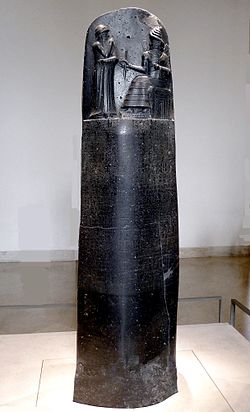
In the 18th century BC, the Code of Hammurabi referenced dental extraction twice as it related to punishment, showing how dentistry intersected with law in ancient Mesopotamia.
Image source: Code of Hammurabi
1700 BC
% complete
The Edwin Smith Papyrus, written in the 17th century BC but which may reflect previous manuscripts from as early as 3000 BC, discusses the treatment of dislocated or fractured jaws.
Image source: Edwin Smith Papyrus
600 BC - 400 BC
% complete
The Phoenicians crafted dentures during the 6th–4th century BC, fashioning them from gold wire and incorporating two ivory teeth, an early example of prosthetic dentistry.
500 BC
% complete
The Romans had likely borrowed this technique by the 5th century BC, spreading dental practices across their expanding empire.
700 BC - 1400
% complete
The legend of the worm is found in the Homeric Hymns, and as late as the 14th century AD the surgeon Guy de Chauliac still promoted the belief that worms cause tooth decay.
659
% complete
The earliest dental amalgams were first documented in a Tang dynasty medical text written by the Chinese physician Su Kung in 659; they later appeared in Germany in 1528.
1300 - 1400
% complete
In the 14th century, Guy de Chauliac most probably invented the dental pelican (resembling a pelican's beak), which was used to perform dental extractions up until the late 18th century.
Image source: Guy de Chauliac
1530
% complete
The first book focused solely on dentistry was the Artzney Buchlein in 1530, marking the beginning of dedicated dental literature in Europe.
1656
% complete
The English physician Thomas Browne wrote A Letter to a Friend around 1656, contributing to medical thought during the period when modern dentistry began to develop.
Image source: A Letter to a Friend
1685
% complete
The first dental textbook written in English was called Operator for the Teeth by Charles Allen in 1685, expanding access to dental knowledge for English-speaking practitioners.
Image source: List of dentists
1650 - 1800
% complete
It was between 1650 and 1800 that the science of modern dentistry developed, transforming dental practice from crude extractions to a more scientific discipline.
1690 - 1730
% complete
Despite the limitations of primitive surgical instruments during the late 17th and early 18th centuries, Fauchard was a highly skilled surgeon who made remarkable improvisations of dental instruments, often adapting tools from watchmakers, jewelers and even barbers.
Image source: Pierre Fauchard
1728
% complete
Pierre Fauchard, often referred to as the 'father of modern dentistry,' wrote the first comprehensive book on the subject in 1728, titled Le chirurgien dentiste or The Surgeon Dentist.
1763
% complete
In 1763, John Hunter entered into a period of collaboration with the London-based dentist James Spence, furthering scientific study of the teeth.
Image source: Killing of Monique and Spencer Tepe
1771
% complete
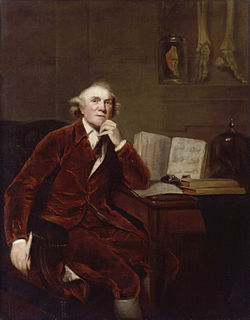
British surgeon John Hunter published Natural History of Human Teeth in 1771, followed by Practical Treatise on the Diseases of the Teeth in 1778 — two important books advancing dental science.
Image source: John Hunter (surgeon)
Feb 21, 1828
% complete
The first dental college, Baltimore College of Dental Surgery, opened in Baltimore, Maryland, US in 1840. Its associated building opened on 21 February 1828, and today is a dental museum.
Image source: University of Maryland School of Dentistry
1845
% complete
The second dental college in the United States was the Ohio College of Dental Surgery, established in Cincinnati, Ohio, in 1845.
1852
% complete
The Philadelphia College of Dental Surgery followed in 1852, expanding formal dental education in the United States.
Image source: University of Pennsylvania School of Dental Medicine
1859
% complete
In the United Kingdom, the first dental schools, the London School of Dental Surgery and the Metropolitan School of Dental Science, both in London, opened in 1859. Until then there had been no formal qualification for providers of dental treatment in the UK.
1878
% complete
The British Dentists Act 1878 and the 1879 Dentists Register limited the title of 'dentist' and 'dental surgeon' to qualified and registered practitioners.
Image source: Dentistry
1880
% complete
The British Dental Association, formed in 1880 with Sir John Tomes as president, played a major role in prosecuting dentists practising illegally.
Image source: British Dental Association
1907
% complete
In 1907, Temple University accepted a bid to incorporate the school, integrating dental education into a larger university structure.
Image source: Temple University
1921
% complete
The practice of dentistry in the United Kingdom became fully regulated with the 1921 Dentists Act, which required the registration of anyone practising dentistry and limited the profession to those professionally qualified.
1979
% complete
The Royal Commission on the National Health Service in 1979 reported that there were then more than twice as many registered dentists per 10,000 population in the UK than there were in 1921.
Or browse the full history timeline directory, with more than 2,000 topics.
This History of Dentistry timeline was generated with the help of AI, using information found on the internet.
We work hard to keep these timelines accurate, but mistakes do get through. If you spot one, email us at [email protected] and we'll fix it for future visitors.
Generate yours with AI or build it from scratch, for free.

Export your timeline, add your own events, edit or remove AI-generated events, and much more
No credit card required.
Cancel anytime.
Cancel anytime.
You can create an unlimited number of timelines with up to 10 events on each one, customize how they look, export them to PDF, PNG, PowerPoint, CSV, and Excel, and share them with a link. Paid plans raise the event limit and add features like spreadsheet imports and collaborators.
Yes. You can cancel your subscription from your account page at any time, and you will not be charged again. Your subscription stays active for the rest of the period you already paid for.
Yes. We will email you a reminder before the annual renewal, and we will also email you a receipt.
Yes. You can email us within 15 days of any payment, and we will issue you a full refund.
Check out our pricing docs or send us an email anytime: [email protected].