-
Use Cases
-
Resources
-
Pricing
Dublin, the capital of Ireland, boasts a history spanning over a millennium. Founded by Vikings around 841 AD at the River Liffey, it grew under Norman rule after 1170, flourished as the center of English administration, and experienced a Georgian golden age in the 18th century. The city played a pivotal role in Irish nationalism, witnessing the Easter Rising of 1916 and the War of Independence. Today, Dublin is a thriving European capital known for its literary heritage, universities, and economic vitality. More Less
500
% complete
Before the arrival of the Vikings, Gaelic communities inhabited the area around the mouth of the River Liffey, where the settlement of Áth Cliath (Ford of Hurdles) existed. These early settlements laid the foundation for what would later become Dublin, Ireland's capital city.
Image source: History of Dublin
841
% complete
Norse Vikings established a fortified settlement at Dubh Linn, meaning 'Black Pool,' near the confluence of the River Poddle and the Liffey. This Viking town grew into a major trading port and became one of the most important Norse settlements outside Scandinavia.
Apr 23, 1014
% complete
High King of Ireland Brian Boru led Irish forces against a Viking-Leinster alliance near Dublin at Clontarf. Although Brian Boru was killed, the battle broke Norse power in Ireland and marked a turning point in the struggle between Gaelic Irish and Norse settlers.
Image source: Battle of Clontarf
1191
% complete
Archbishop John Comyn raised the church at St Patrick's to cathedral status around 1191, establishing it as the National Cathedral of Ireland. It became closely associated with Jonathan Swift in later centuries, who served as its dean from 1713.
Image source: St Patrick's Cathedral, Dublin
1170
% complete
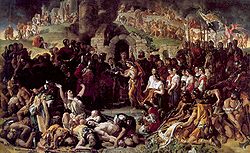
Following the Norman invasion of Ireland led by Strongbow (Richard de Clare) and Dermot MacMurrough's forces, Dublin fell to the Anglo-Normans in 1170. The capture transformed the city into the center of English power in Ireland for the following centuries.
Image source: Anglo-Norman invasion of Ireland
1204
% complete
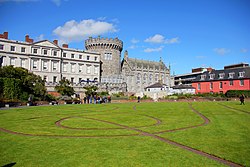
King John of England ordered the construction of a major castle in Dublin to serve as the seat of English administration in Ireland. Built on high ground overlooking the city, Dublin Castle remained the center of British rule in Ireland for over 700 years until independence.
Image source: Dublin Castle
1534 - 1535
% complete
Lord Thomas FitzGerald, known as Silken Thomas, led an uprising in Dublin against King Henry VIII's authority. The rebellion was crushed, and Thomas and his five uncles were executed at Tyburn, ending the powerful FitzGerald influence over Dublin.
Image source: Thomas FitzGerald, 10th Earl of Kildare
1592
% complete
Queen Elizabeth I granted the charter founding Trinity College, modelled on the universities of Oxford and Cambridge. It became Ireland's oldest university and one of Europe's great institutions of learning, producing writers such as Swift, Wilde, and Beckett.
Image source: Trinity College Dublin
1607
% complete
The departure of Hugh O'Neill and other Gaelic lords from Ireland consolidated English control over the island, cementing Dublin's role as the administrative heart of English and later British governance in Ireland.
Image source: Flight of the Earls
1649
% complete
Cromwell landed at Ringsend near Dublin in August 1649 during his conquest of Ireland, using the city as his base for campaigns that devastated much of the country. His conquest brought harsh reprisals against Irish Catholics and reshaped land ownership in Ireland.
1680 - 1700
% complete
In the decades after the Restoration, Dublin expanded rapidly as a hub for wool, beef, and linen exports. Its growing merchant class funded the development of quays along the Liffey, transforming the medieval city into a bustling commercial capital.
1348 - 1349
% complete
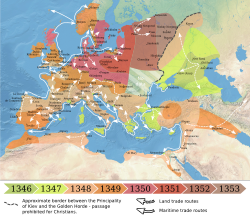
The bubonic plague swept through Dublin in 1348, killing a large proportion of the population. The pandemic devastated the medieval city, disrupting trade and society across Ireland as it did throughout Europe.
Image source: Black Death
1726
% complete
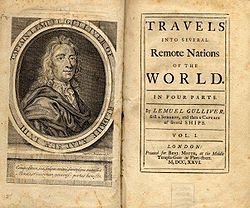
Dean of St Patrick's Cathedral Jonathan Swift published his satirical masterpiece, which became an instant success. Swift became a celebrated figure in Dublin's literary life and a fierce advocate for Irish causes, including opposition to English economic exploitation.
Image source: Gulliver's Travels
1796
% complete
The Grand Canal reached Dublin's docklands by 1779 and the Royal Canal by 1796, connecting the capital to the Shannon and the midlands. These waterways boosted trade and helped fuel Georgian Dublin's economic growth.
Image source: Grand Canal (Ireland)
May 24, 1798 - Sep 23, 1798
% complete
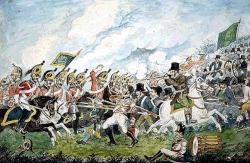
Inspired by French revolutionary ideals, the Society of United Irishmen launched a rising against British rule. Although the rebellion failed, its suppression radicalized Irish nationalism and set the stage for the Act of Union two years later.
Image source: Irish Rebellion of 1798
Jan 1, 1801
% complete
The Act of Union abolished the Irish Parliament in Dublin, transferring legislative power to Westminster. Dublin lost its status as a national capital, leading to economic decline as the aristocracy and political elite departed for London.
Image source: Acts of Union 1800
1829
% complete
Daniel O'Connell, 'The Liberator,' won Catholic emancipation in 1829 after massive peaceful campaigns. A statue of him still dominates Dublin's O'Connell Street, which bears his name and became the city's main thoroughfare.
Image source: Daniel O'Connell
1845 - 1852
% complete
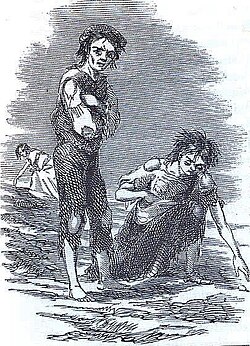
Potato blight caused mass starvation and emigration across Ireland. While Dublin was less devastated than rural areas, the city struggled to cope with destitute migrants fleeing famine-stricken counties, straining workhouses and charities.
Image source: Great Famine (Ireland)
Apr 24, 1916 - Apr 29, 1916
% complete
Irish republicans led by Patrick Pearse and James Connolly seized key buildings in Dublin, including the General Post Office, proclaiming an Irish Republic. The six-day rising was suppressed by British forces, but the execution of its leaders galvanized public support for independence.
Image source: Easter Rising
Jan 21, 1919 - Jul 11, 1921
% complete
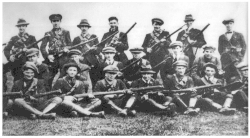
The Irish Republican Army waged guerrilla warfare against British forces, while Dáil Éireann declared independence in Dublin. Violence escalated sharply in 1920-21, culminating in the Anglo-Irish Treaty that created the Irish Free State.
Image source: Irish War of Independence
Nov 21, 1920
% complete
One of the deadliest days of the War of Independence: the IRA assassinated British intelligence officers across Dublin in the morning, and Crown forces opened fire on spectators at Croke Park in the afternoon, killing fourteen civilians.
Image source: Bloody Sunday (1920)
May 25, 1921
% complete
The IRA launched its largest operation of the War of Independence, setting fire to the Custom House, the symbolic headquarters of British administration in Ireland. Five IRA members were killed and over eighty captured, but the destruction shocked public opinion.
Image source: Burning of the Custom House
Dec 6, 1921
% complete
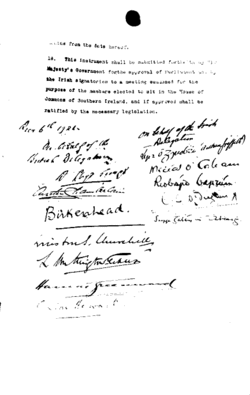
Negotiations in London ended the War of Independence, creating the Irish Free State as a dominion within the British Empire. The treaty split Irish opinion, particularly over partition and the oath of allegiance, setting the stage for civil war.
Image source: Anglo-Irish Treaty
Jun 28, 1922 - Jul 5, 1922
% complete
Free State forces shelled anti-Treaty fighters occupying the Four Courts in Dublin, igniting the Civil War. A week of fighting destroyed much of central Dublin, including the Public Records Office, whose archives went up in flames.
Image source: Battle of Dublin
Apr 18, 1949
% complete
Under Taoiseach John A. Costello, Ireland formally left the Commonwealth and became the Republic of Ireland. Dublin solidified its role as the political, cultural, and economic capital of the fully independent state.
Image source: Republic of Ireland
Mar 8, 1966
% complete
A republican bomb toppled the towering column commemorating Admiral Nelson that had dominated O'Connell Street since 1809. Its removal sparked debate about Dublin's identity, and the site later hosted the Spire of Dublin, erected in 2003.
Image source: Nelson's Pillar
May 17, 1974
% complete
Loyalist paramilitaries detonated car bombs in Dublin city centre during rush hour, killing 26 people and injuring hundreds—the deadliest attack of the Troubles. The bombings deeply shocked Ireland and remain a subject of controversy over official responses.
Image source: Dublin and Monaghan bombings
1991 - 1996
% complete
State-led redevelopment revitalized Temple Bar as a cultural district of galleries, music venues, pubs, and festivals. The area became emblematic of Dublin's transformation into a vibrant European tourist and creative destination.
Image source: Temple Bar, Dublin
1995 - 2007
% complete
Rapid economic growth driven by foreign investment, technology companies, and low corporate taxes made Dublin one of Europe's wealthiest capitals. Skyrocketing property prices, new construction, and immigration dramatically reshaped the city's skyline and demographics.
Image source: Celtic Tiger
May 17, 2011 - May 20, 2011
% complete
Queen Elizabeth II made the first state visit by a British monarch to independent Ireland, addressing the Irish people in Dublin Castle and laying wreaths honoring those who fought British rule. The visit symbolized the normalization of Anglo-Irish relations.
Image source: State visit by Elizabeth II to the Republic of Ireland
Mar 27, 2016
% complete
Ireland marked 100 years since the Easter Rising with parades, exhibitions, and ceremonies across Dublin. Hundreds of thousands attended the commemoration at the GPO, reflecting renewed engagement with the events that shaped modern Irish statehood.
Image source: Centenary of the Easter Rising
Or browse the full history timeline directory, with more than 2,000 topics.
This History of Dublin timeline was generated with the help of AI, using information found on the internet.
We work hard to keep these timelines accurate, but mistakes do get through. If you spot one, email us at [email protected] and we'll fix it for future visitors.
Generate yours with AI or build it from scratch, for free.
Export your timeline, add your own events, edit or remove AI-generated events, and much more
No credit card required.
Cancel anytime.
Cancel anytime.
You can create an unlimited number of timelines with up to 10 events on each one, customize how they look, export them to PDF, PNG, PowerPoint, CSV, and Excel, and share them with a link. Paid plans raise the event limit and add features like spreadsheet imports and collaborators.
Yes. You can cancel your subscription from your account page at any time, and you will not be charged again. Your subscription stays active for the rest of the period you already paid for.
Yes. We will email you a reminder before the annual renewal, and we will also email you a receipt.
Yes. You can email us within 15 days of any payment, and we will issue you a full refund.
Check out our pricing docs or send us an email anytime: [email protected].