
-
Use Cases
-
Resources
-
Pricing
The history of Greenland spans thousands of years, beginning with Paleo-Eskimo migrations around 2500 BCE. Norse Vikings led by Erik the Red settled the island around 985 CE, while successive Inuit cultures, including the Thule people, arrived later. Denmark-Norway claimed Greenland in the early 18th century, establishing colonial rule that lasted centuries. In the 20th century, Greenland became a Danish province, gained home rule in 1979, and achieved greater self-government in 2009. Today, Greenland is an autonomous territory of the Kingdom of Denmark with a growing movement toward full independence. More Less
800 BC
% complete
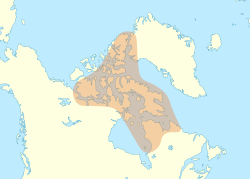
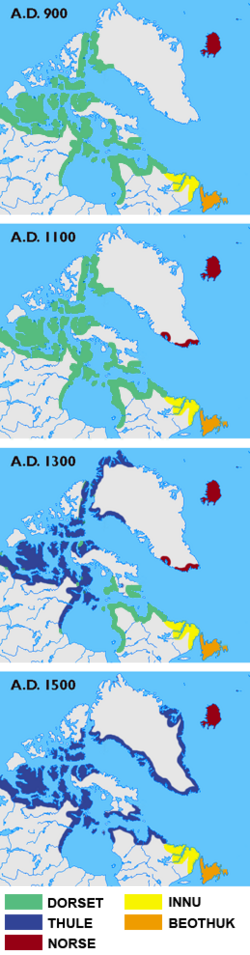
The Dorset culture spread into Greenland around 800 BC, succeeding the Saqqaq people. Their distinctive art and tools have been found at sites across Greenland, though they eventually vanished before the Thule people arrived.
Image source: Dorset culture
985
% complete
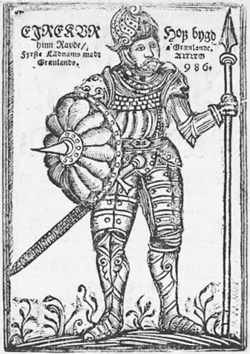
Exiled from Iceland for manslaughter, Erik the Red sailed west and established the first Norse settlements in southern Greenland around 985. He named the land 'Greenland' partly to attract settlers, and colonies soon flourished at Brattahlíð.
Image source: Erik the Red
1000
% complete
The Norse expanded northward to establish the Western Settlement near modern Nuuk. At their height, Norse Greenlanders numbered several thousand, farming sheep and cattle while trading walrus ivory with Europe.
Image source: Western Settlement
1000
% complete
Leif Erikson, son of Erik the Red, departed from Greenland and became the first European known to reach North America, landing in a place he called Vinland, roughly five centuries before Columbus.
Image source: Leif Erikson
1200
% complete
The ancestors of today's Inuit, the Thule people, migrated from Alaska across Arctic Canada and reached Greenland around 1200. Skilled whalers using kayaks and umiaks, they spread rapidly across the island's coasts.
Image source: Thule people
1261
% complete
In 1261, the Norse Greenlanders swore allegiance to the Norwegian king, formally bringing Greenland under the Norwegian crown and integrating its trade into the expanding Norwegian kingdom.
Image source: Greenland crisis
1350
% complete
By around 1350, the Western Settlement was abandoned, likely due to a cooling climate, declining trade, and pressure from Inuit groups. A ship sent to investigate found only empty farms and livestock.
1408
% complete
A wedding recorded at Hvalsey Church in September 1408 is the last known written account of the Norse in Greenland. The Eastern Settlement disappeared sometime in the 15th century as the Little Ice Age made farming untenable.
Image source: History of Greenland
1585
% complete
English navigator John Davis made voyages to Greenland in 1585–1587 searching for the Northwest Passage, charting the strait now called Davis Strait and re-establishing European contact with Greenland after centuries.
Image source: John Davis (explorer)
1721
% complete
Missionary Hans Egede arrived in Greenland in 1721 seeking descendants of the lost Norse colonists. Instead he found the Inuit, and his mission marked the beginning of Danish colonial rule that would last for centuries.
Image source: Danish colonization of the Americas
Aug 29, 1728
% complete
The colonial capital Godthåb, meaning 'Good Hope', was founded by Governor Claus Paarss in 1728 at the site of Hans Egede's earlier Hope Colony. It grew into present-day Nuuk, Greenland's capital and largest city.
Image source: Nuuk
1774
% complete
Denmark established a state trading monopoly through the Royal Greenland Trading Department in 1774, closing Greenland to all foreign commerce and tightly controlling trade with the Inuit population for nearly two centuries.
Image source: Grønlandske Handels Plads
Jan 14, 1814
% complete
After the Napoleonic Wars, the Treaty of Kiel ceded mainland Norway from Denmark to Sweden, but Greenland remained with Denmark, cementing its status as a Danish dependency rather than a Norwegian possession.
Image source: Treaty of Kiel
1870
% complete
American expeditions, including Charles Francis Hall's Polaris expedition of 1871, used Greenland as a base for Arctic exploration, drawing international scientific attention to the island's ice sheet and geography.
Image source: Polaris expedition
1888
% complete
Norwegian explorer Fridtjof Nansen led the first successful crossing of Greenland's interior ice sheet in 1888, skiing from east to west. The feat revolutionized polar travel techniques and inspired future explorers.
Image source: Nansen's Fram expedition
1900
% complete
American explorer Robert Peary explored and claimed parts of northern Greenland between 1891 and 1909, including what he believed was Peary Land. His claims raised questions about sovereignty later settled in Denmark's favor.
Image source: Robert Peary
1921
% complete
Denmark formally declared sovereignty over the entire island of Greenland in 1921, ending lingering disputes over claims in the north. Norway initially protested but recognized Danish rule in 1925.
1931 - 1933
% complete
Norway occupied uninhabited eastern Greenland in 1931, calling it Erik the Red's Land. The Permanent Court of International Justice ruled against Norway in 1933, confirming Danish sovereignty and prompting Oslo to withdraw.
Image source: Erik the Red's Land
Apr 9, 1940
% complete
When Germany invaded Denmark on April 9, 1940, Greenland was cut off from Copenhagen. With Danish approval, the United States assumed responsibility for protecting the island, establishing diplomatic ties directly with Greenland's governor.
Image source: Greenland in World War II
1941 - 1945
% complete
Under a 1941 agreement, the United States built a network of weather stations and air bases codenamed 'Bluie' across Greenland. These facilities supported transatlantic ferry flights and patrols against German U-boats during the war.
Image source: Pituffik Space Base
1943 - 1944
% complete
Germans secretly established weather stations in northeastern Greenland to aid U-boat operations. Allied forces, including the sledge patrol Sirius Dog Sled Patrol, hunted them down, and the last stations were destroyed in 1944.
Image source: Operation Zitronella
1945
% complete
After Germany's defeat, the United States returned administrative control of Greenland to Denmark in 1945, although strategic interest in the island's bases continued throughout the Cold War.
1951
% complete
As part of NATO defense arrangements, the United States built Thule Air Base in northwest Greenland, completed in 1953. It became a key Cold War radar and missile warning site, displacing some local Inuit communities.
Image source: 1968 Thule Air Base B-52 crash
1953
% complete
Denmark's 1953 constitution abolished Greenland's colonial status, making it an equal county within the Kingdom of Denmark. Greenlanders became full Danish citizens, and modernization programs accelerated dramatically.
Image source: Constitution of Denmark
1960 - 1966
% complete
The US Army secretly built Camp Century beneath the Greenland ice sheet to test the feasibility of mobile nuclear missile launches. Abandoned in 1966, the buried camp and its radioactive waste remain entombed in the ice.
Image source: Project Iceworm
Jan 21, 1968
% complete
A US B-52 bomber carrying four hydrogen bombs crashed onto the ice near Thule Air Base, causing radioactive contamination. The cleanup took months and sparked controversy over nuclear weapons in Denmark.
Image source: 1968 Thule Air Base B-52 crash
May 1, 1979
% complete
Following a 1979 referendum, Greenland achieved home rule from Denmark, establishing its own parliament, the Inatsisartut, and government, the Naalakkersuisut, with authority over most internal affairs.
Feb 1, 1985
% complete
Despite Denmark's EU membership, Greenland voted to leave the European Economic Community in 1982, largely over fishing rights disputes, and formally exited on February 1, 1985 — the first territory ever to do so.
Image source: Withdrawal of Greenland from the European Communities
1987
% complete
The cryolite mine at Ivittuut, which had operated since the mid-19th century and once supplied the world's aluminum industry, closed in 1987, marking the end of Greenland's historic mining era.
Image source: Ivittuut
Jun 21, 2009
% complete
On June 21, 2009, Greenland assumed expanded self-rule, making Greenlandic the official language and granting the island greater control over resources, police, courts, and a pathway toward potential independence.
Jun 21, 2009
% complete
With the 2009 self-governance act, June 21 was designated Greenland's national day, celebrating Greenlandic identity and culture, and symbolizing the island's long-term ambition of eventual full independence from Denmark.
Or browse the full history timeline directory, with more than 2,000 topics.
This History of Greenland timeline was generated with the help of AI, using information found on the internet.
We work hard to keep these timelines accurate, but mistakes do get through. If you spot one, email us at [email protected] and we'll fix it for future visitors.
Generate yours with AI or build it from scratch, for free.
Export your timeline, add your own events, edit or remove AI-generated events, and much more
No credit card required.
Cancel anytime.
Cancel anytime.
You can create an unlimited number of timelines with up to 10 events on each one, customize how they look, export them to PDF, PNG, PowerPoint, CSV, and Excel, and share them with a link. Paid plans raise the event limit and add features like spreadsheet imports and collaborators.
Yes. You can cancel your subscription from your account page at any time, and you will not be charged again. Your subscription stays active for the rest of the period you already paid for.
Yes. We will email you a reminder before the annual renewal, and we will also email you a receipt.
Yes. You can email us within 15 days of any payment, and we will issue you a full refund.
Check out our pricing docs or send us an email anytime: [email protected].