-
Use Cases
-
Resources
-
Pricing
1600 CE
% complete
The Chickasaw Indian tribe emerged about the 17th century, or migrated into the area. Twentieth-century scholar Patricia Galloway says the Chickasaw may have been migrants from the west rather than descendants of the pre-historic Mississippian culture.
Image source: Chickasaw
1739
% complete
Fort Assumption was a French fortification constructed in 1739 on the fourth Chickasaw Bluff on the Mississippi River by Jean-Baptiste Le Moyne, Sieur de Bienville's French army, used as a base against the Chickasaw in the abortive Campaign of 1739.
Image source: Fort Assumption
Apr 3, 1790
% complete
On April 3, 1790, promotion of a town at Chickasaw Bluffs was undertaken with leases offered by John Rice, Esq., an early attempt to organize European settlement on the site of future Memphis.
Image source: Memphis, Tennessee
1795
% complete
Hopefield, Arkansas was founded by the Spanish Governor in 1795, across from Memphis near present-day West Memphis, Arkansas. It later became the eastern terminal for the Memphis and Little Rock Railroad in 1857.
1796
% complete
In 1796, the site became the westernmost point of the newly admitted state of Tennessee in the newly independent United States, though the land remained largely unorganized territory throughout most of the 18th century.
Image source: Tennessee
1818
% complete
The area of West Tennessee became available for white settlement after the Federal Government purchased it from the Chickasaw Nation in the 1818 Jackson Purchase.
Image source: Jackson Purchase
May 22, 1819
% complete
Memphis was founded on May 22, 1819, by a group of investors including John Overton, James Winchester, and Andrew Jackson. The city was not founded until this date and was later incorporated as a city in 1826.
1831
% complete
In 1831, French writer Alexis De Tocqueville witnessed a numerous band of Choctaws crossing the River at Memphis, part of the broader forced removals of Native Americans during this era.
1826
% complete
The first Memphis schools were chartered in 1826, but until 1848 all Memphis schools were private. The first free public schools opened in 1848, though at first they nominally charged a $2 tuition.
Image source: Memphis City Schools
1848
% complete
The first free public schools opened in 1848, but at first nominally charged a $2 tuition. By 1852, there were 13 public schools supported by taxpayers.
1862
% complete
LeMoyne-Owen College, a private, historically black, church-affiliated college, traces its history to 1862 when the American Missionary Association opened an elementary school for freedmen and escaped slaves.
Image source: LeMoyne–Owen College
1868
% complete
The first city school for black students opened in 1868 during Reconstruction, when the biracial state legislature founded public education. For a century afterward the city maintained separate, racially segregated school facilities.
1871
% complete
Christian Brothers University was founded in 1871, first located on Adams Street downtown before moving to its current location on East Parkway in Midtown Memphis.
1878
% complete
The University of Tennessee College of Dentistry was founded in 1878, making it the oldest dental college in the South and the third-oldest public college of dentistry in the United States.
Image source: University of Tennessee College of Dentistry
1900
% complete
At the beginning of the 20th century, landscape architect George Kessler designed Overton Park and the Memphis park system (including King Riverside Park) as a comprehensive plan for the growing city.
Image source: George Kessler
1911
% complete
The University of Tennessee College of Medicine in Memphis was created in 1911 through the merger of five independent Tennessee medical schools following the influential Flexner Report.
Image source: University of Tennessee Health Science Center
1912
% complete
The University of Memphis first opened as the West Tennessee State Normal School in 1912, growing into the city's flagship public university.
Image source: University of Memphis
1916
% complete
Clarence Saunders, a Memphis inventor and entrepreneur, opened a self-service grocery store in 1916 and founded the first supermarket chain, Piggly Wiggly, revolutionizing retail.
Image source: Piggly Wiggly
1923
% complete
The storied Peabody Hotel opened in 1923 and became a symbol of upper-class Southern elegance, famous for its grand lobby and ducks.
Image source: Peabody Hotel
1923
% complete
The Commercial Appeal was awarded a Pulitzer Prize in 1923 for its coverage of, and editorial opposition to, the activities of the Ku Klux Klan, which was at a peak in urban areas following the Klan's revival in 1915.
Image source: The Commercial Appeal
1925
% complete
Rhodes College, then known as Southwestern at Memphis, moved to Memphis from Clarksville, Tennessee in 1925, settling into its campus in Midtown.
Image source: Rhodes College
1927 - 1928
% complete
In 1927–1928 the Poplar Boulevard Viaduct was constructed to span the railyards, allowing eastward expansion of the city into new residential areas.
Image source: Hokkaido University poplar avenue
1950
% complete
In 1950, Sam Phillips opened the Memphis Recording Service, where he recorded for his Sun Records label, launching a legendary era of rock and roll and blues recording in Memphis.
Image source: Sun Records
1952
% complete
The first national motel chain, Holiday Inn, was founded in Memphis by Kemmons Wilson in 1952, transforming American travel lodging.
Image source: Holiday Inn
1957
% complete
Stax Records, which opened in Memphis in 1957, produced almost exclusively African-American music and became legendary for soul artists like Otis Redding and Booker T. & the M.G.'s.
Image source: Stax Records
1962
% complete
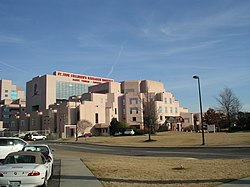
Danny Thomas founded St. Jude Children's Research Hospital in downtown Memphis in 1962, creating a world-renowned center for pediatric cancer treatment and research.
Image source: St. Jude Children's Research Hospital
1973
% complete
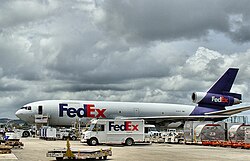
FedEx Corporation (originally Federal Express) was founded in Little Rock, Arkansas in 1971, but moved its operations to Memphis in 1973 to take advantage of the city's more extensive airport facilities, making Memphis the hub of global overnight shipping.
Image source: FedEx
1841
% complete
Henry Van Pelt began publishing The Appeal newspaper, ancestor of today's Commercial Appeal, in a wooden shack along the Wolf River in 1841.
1842 - 1899
% complete
The Gayoso House Hotel was built overlooking the Mississippi River in 1842 and became a Memphis landmark; it stood until 1899, when it burned down.
Image source: Gayoso Hotel
1850
% complete
In the 19th century, Memphis grew as a center for transporting, grading, and marketing growing volumes of cotton produced in the nearby Mississippi Delta, becoming known for King Cotton commerce.
Image source: King Cotton
1857 - 1861
% complete
Memphis was one of the two eastern termini of the Butterfield Overland Mail stagecoach route to California from 1857 to 1861, connecting the city to transcontinental communications.
Image source: Butterfield Overland Mail
1857
% complete
In 1857 the Memphis & Charleston Railroad was completed, linking an Atlantic Ocean port with one on the Mississippi River, greatly boosting Memphis's commercial reach.
Image source: Memphis and Charleston Railroad
Jun 6, 1862
% complete
Tennessee seceded from the Union in June 1861 and Memphis briefly became a Confederate stronghold. Union forces moving down the Mississippi River captured Memphis from the Confederacy in the First Battle of Memphis on June 6, 1862.
Image source: First Battle of Memphis
1865
% complete
By 1865, there were 20,000 blacks in Memphis, a sevenfold increase from the 3,000 before the war. By 1870, the black population was 15,000 in a city total of 40,226.
1866
% complete
In 1866 there was a major massacre with whites attacking blacks. The presence of black Union soldiers was resented by ethnic whites in the city, where thousands of Irish had immigrated since the mid-19th century. On July 24, 1866, Tennessee became the first southern state re-admitted to the Union.
Image source: Memphis massacre of 1866
1873
% complete
Extensive yellow fever epidemics in the 1870s devastated the city. In 1873 some 2,000 people died, the highest fatalities of any inland city, foreshadowing even worse outbreaks to come.
1873
% complete
The Memphis Cotton Exchange was founded in 1873 by a group of cotton traders led by Napoleon Hill, cementing the city's role as a major cotton marketing hub.
Image source: Memphis Cotton Exchange
Aug 5, 1878 - 1879
% complete
When yellow fever was diagnosed on August 5, 1878, more than 25,000 people left the city within two weeks; tens of thousands fled and more than 5,000 died, with hundreds more dying in the next year's epidemic. Fleeing families reportedly left their houses with doors wide open and silver standing on the sideboards.
Image source: Yellow fever
1879 - 1893
% complete
So many people died or fled the yellow fever epidemics that in 1879 Memphis lost its city charter and went bankrupt. Until 1893 Memphis was governed by the state as a Taxing District.
Jan 1880
% complete
Construction of the sewers began in January 1880, and by 1893 had expanded to over 50 miles of sewers, a crucial public health improvement following the devastating epidemics.
1887
% complete
In 1887, a source of abundant and pure artesian water was found beneath the city, which guaranteed its water supply and aided its recovery after the yellow fever years.
Image source: Geography of Memphis, Tennessee
1892
% complete
In 1892, the first Mississippi River bridge at Memphis opened, connecting the city to Arkansas and the western rail networks.
Image source: Frisco Bridge
1893
% complete
As a result of sanitation improvements and the discovery of artesian water, the city began to prosper again, and it regained its charter and home rule in 1893.
1897
% complete
In 1897, as a conspicuous claim to its revival, Memphis displayed a pyramid-shaped pavilion prominently at the Tennessee Centennial exposition, embracing the city's Egyptian namesake.
Image source: Tennessee Centennial and International Exposition
1900
% complete
By the early 20th century, cotton was still a major commodity crop; Memphis grew into the world's largest spot cotton market and the world's largest hardwood lumber market.
Image source: Economy of Memphis, Tennessee
1900 - 1950
% complete
Attracting workers from rural areas as well as new immigrants, from 1900 to 1950 the city increased nearly fourfold in population, from 102,350 to 396,000 residents.
1910 - 1954
% complete
Boss Edward Crump obtained a state law in 1911 establishing a commission to manage the city. He retained full control until his death in 1954, and Roger Biles argues the political system remained virtually unchanged from 1910 into the 1950s and 1960s thanks to Crump's wire-pulling. The city retained commission government until 1967.
Image source: E. H. Crump
1942
% complete
In 1942, the US Navy built the Millington Naval Air Station (now the Naval Support Activity Mid-South) in Millington, Tennessee, just north of Memphis, boosting wartime industry and employment.
Image source: Naval Support Activity Mid-South
1968
% complete
During the 1960s Memphis was a center of civil rights activity. In 1968, the Memphis sanitation strike began for living wages and better working conditions; the workers were overwhelmingly African American.
Image source: Memphis sanitation strike
Apr 4, 1968
% complete
Martin Luther King Jr. stayed at the Lorraine Motel in Memphis, where he was assassinated by a sniper on April 4, 1968, the day after giving his prophetic I've Been to the Mountaintop speech at the Mason Temple.
Image source: Assassination of Martin Luther King Jr.
1973
% complete
A federal court order in 1973 required Memphis to provide busing to fully integrate the schools. After the riots and busing, about 40,000 of the system's 71,000 white students abandoned the system in four years.
Image source: Desegregation busing
Dec 23, 1988
% complete
On December 23, 1988, a tanker truck hauling liquefied propane crashed at the I-40/I-240 interchange in Midtown and exploded, starting multiple vehicle and structural fires.
Image source: Memphis tanker truck disaster
1991
% complete
In 1991 the city of Memphis elected its first African-American mayor, Dr. W. W. Herenton, marking a milestone in the city's political history.
Image source: W. W. Herenton
1997
% complete
By the time it closed in 1997, the Memphis Army Depot had 130 buildings on site with more than 4,000,000 square feet of enclosed industrial space, and its redevelopment transformed parts of the city.
Sep 12, 2025
% complete
On September 12, 2025, President Donald Trump announced the deployment of National Guardsmen to Memphis, saying that Memphis is deeply troubled. On September 15 he signed a memorandum ordering federal law enforcement deployment as part of a task force with Tennessee's National Guard, and on October 1, 2025 the federal presence increased in the city.
Image source: Domestic military deployments by the second Trump administration
Or browse the full history timeline directory, with more than 2,000 topics.
This History of Memphis timeline was generated with the help of AI, using information found on the internet.
We work hard to keep these timelines accurate, but mistakes do get through. If you spot one, email us at [email protected] and we'll fix it for future visitors.
Generate yours with AI or build it from scratch, for free.
Export your timeline, add your own events, edit or remove AI-generated events, and much more
No credit card required.
Cancel anytime.
Cancel anytime.
You can create an unlimited number of timelines with up to 10 events on each one, customize how they look, export them to PDF, PNG, PowerPoint, CSV, and Excel, and share them with a link. Paid plans raise the event limit and add features like spreadsheet imports and collaborators.
Yes. You can cancel your subscription from your account page at any time, and you will not be charged again. Your subscription stays active for the rest of the period you already paid for.
Yes. We will email you a reminder before the annual renewal, and we will also email you a receipt.
Yes. You can email us within 15 days of any payment, and we will issue you a full refund.
Check out our pricing docs or send us an email anytime: [email protected].