-
Use Cases
-
Resources
-
Pricing
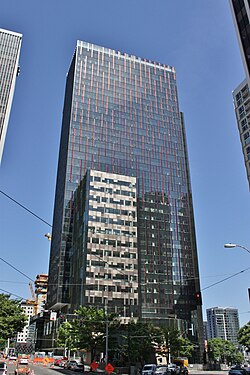
Nashville, the capital of Tennessee and known worldwide as 'Music City,' was founded in 1779 as Fort Nashborough on the Cumberland River. It became the state capital in 1843, endured Union occupation during the Civil War, and grew into a major center of commerce and education. The city rose to international fame in the 20th century with the Grand Ole Opry and its country music industry, while also playing a key role in the Civil Rights Movement. Today, Nashville is one of America's fastest-growing cities, blending rich history with a vibrant cultural scene. More Less
1475 - 1500
% complete
All archaeological evidence for Mississippian culture appears to vanish from the Nashville area by around AD 1475–1500, leaving no reliable historical or archaeological evidence of Native American presence in the region from 1500 through the late 1600s.
1540
% complete
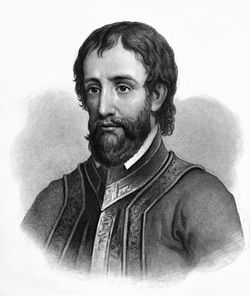
The first Europeans to enter what would become Tennessee were part of the expedition led by Hernando de Soto in the 16th century, marking the beginning of European contact with the region that would later include Nashville.
Image source: Hernando de Soto
1685 - 1700
% complete
The region between the Ohio and Tennessee Rivers was a hunting ground for many tribes. While the Shawnee occupied the area in the later part of the 17th century, by 1700 they were being challenged by the Cherokee and Chickasaw.
1689
% complete
The earliest Europeans in what would become Nashville were French fur traders such as Martin Chartier, who established a trading post in 1689 on the Cumberland River, near the present-day site of the city.
Image source: Martin Chartier
1710
% complete
Jean du Charleville (aka Charles Charleville) established a trading post in 1710 at a natural sulfur and saline spring near what is now Bicentennial Capitol Mall State Park.
1769
% complete
In 1769, French-Canadian hunter Timothy DeMonbreun began a series of trips up the Cumberland to Nashville and built a cabin near the lick to use as a base of operations for fur trapping during his visits to the area. He settled there permanently in 1788 and ran a tavern and mercantile business.
1779
% complete
In 1779, Fort Nashborough was built by pioneers from North Carolina on the southern side of the Cumberland River above the French Lick, on the high ground where Nashville now stands.
Image source: Fort Nashborough
Dec 25, 1779
% complete
James Robertson left the Watauga settlement in northwestern North Carolina, traveled overland for two months, and arrived on the banks of the Cumberland River near the center of present downtown Nashville on Christmas Day, 1779.
Image source: James Robertson (explorer)
Apr 23, 1780
% complete
Robertson's friend John Donelson, along with some 60 families including women and children, came in 30 flatboats and several pirogues down the Tennessee River and up the Cumberland, arriving April 23, 1780.
1784
% complete
In 1784 the settlement was officially created and named Nashville, incorporated as a town by an act of the North Carolina legislature.
Image source: Nashville, Tennessee
1796
% complete
In 1796, the Southwest Territory was admitted to the union as the state of Tennessee, making Nashville part of the new state.
Image source: Tennessee
1806
% complete
In 1806, Nashville was chartered as an incorporated city. By 1800 the city had 345 residents, including 136 enslaved Blacks and 14 free Blacks.
1812 - 1828
% complete
In the War of 1812, General Andrew Jackson, a Nashville lawyer and politician, defeated the Creek Indians at Horseshoe Bend and the British at New Orleans, becoming a western hero. Building on his militia connections, he built a strong political base and in 1828 was elected president.
Image source: Andrew Jackson
Oct 7, 1843
% complete
More than 30 years after receiving its charter, Nashville was selected as the permanent capital of Tennessee on October 7, 1843.
Image source: Tennessee State Capitol
1845 - 1859
% complete
The Tennessee State Capitol building was constructed over fourteen years from 1845 to 1859. Fifteen enslaved Black men worked on carving the Capitol's limestone cellar from 1845 to 1847 under Nashville stonemason A.G. Payne.
1897
% complete
In 1897, Nashville hosted the Tennessee Centennial and International Exposition, a World's Fair celebrating the 100th anniversary of Tennessee's entry into the Union. The city's population rose from 16,988 in 1860 to 80,865 by 1900, with African-Americans increasing from 23 to 38 percent between 1860 and 1870.
Image source: Tennessee Centennial and International Exposition
Jun 24, 1861
% complete
Tennessee was the last state to join the Confederacy on June 24, 1861, when Governor Isham G. Harris signed the secession act.
Image source: Tennessee in the American Civil War
Feb 16, 1862
% complete
The General Assembly was still in session at Nashville when Fort Donelson fell on February 16, 1862. Nashville was seized by Federal troops and became a major Union military base for the remainder of the war.
Image source: Battle of Fort Donelson
Dec 2, 1864 - Dec 16, 1864
% complete
On December 2, 1864, the Confederate Army of Tennessee arrived south of the city and set up fortifications facing the Union Army. Hood's forces were decisively defeated in the Battle of Nashville, effectively destroying the Confederate army in the West.
Image source: Battle of Nashville
1866
% complete
When the Union army left, the Fisk Free Colored School took over the Fort Gillem grounds north of downtown and was renamed Fisk University in 1872. It became a leading institution of African-American higher education.
Image source: Fisk University
1889
% complete
In the late 1880s, Nashville's African-American and poor white populations were affected by changes to state laws that made voter registration more difficult, including imposition of a poll tax in 1889.
Image source: Disfranchisement after the Reconstruction era
Mar 22, 1916
% complete
On March 22, 1916, a fire erupted in East Nashville, destroying more than 500 homes. It became known as the Great Fire of 1916.
Image source: Val Gagné, Ontario
Jul 9, 1918
% complete
On July 9, 1918, in Nashville, an inbound local train collided with an outbound express, killing 101 people in one of the deadliest rail disasters in U.S. history.
Image source: Great Train Wreck of 1918
Aug 1920
% complete
Tennessee was the state that put the 19th Amendment, allowing women to vote, over the top, and the ratification struggle convulsed the city of Nashville in August 1920.
Image source: Nineteenth Amendment to the United States Constitution
Mar 1, 1941
% complete
On March 1, 1941, W47NV began operations in Nashville as the first fully licensed commercial FM radio station in the United States.
Image source: WSM-FM (1941–1951)
1942
% complete
In 1942, Roy Acuff co-founded the first major Nashville-based country music publishing company, Acuff-Rose Music. Entrepreneurs like Acuff made Nashville the country music capital after World War II.
1949
% complete
In 1949, the city administration claimed 96 acres in Hell's Half Acre, a black neighborhood northwest of the state capital that housed the poorest African-Americans in the city.
Image source: Hell's Half Acre (Nashville, Tennessee)
Jan 1951 - Feb 1951
% complete
During the winter of 1951, Nashville experienced the most severe blizzard in the city's history. It holds third place for the most snow recorded from a single storm system, behind the blizzard of 1892 and Winter Storm Jonas in 2016.
Image source: List of ice storms
1957
% complete
In 1957, public schools began to be desegregated using the 'stair-step' plan proposed by Dan May. People protested integration and, at Hattie Cotton Elementary School, a bomb was detonated.
Image source: Desegregation busing
Feb 13, 1960
% complete
On February 13, 1960, hundreds of college students involved in the Nashville Student Movement launched a sit-in campaign to desegregate lunch counters throughout the city.
Image source: Nashville sit-ins
1961
% complete
The first movement credited to SNCC was the 1961 Nashville Open Theater Movement, directed and strategized by James Bevel, which desegregated the city's theaters.
Image source: Student Nonviolent Coordinating Committee
Jun 28, 1962
% complete
Although a similar proposal had failed in 1958, Davidson County voters approved consolidation in a referendum on June 28, 1962. In 1963, Nashville and Davidson County were consolidated under a single charter administered by a mayor and council.
1998
% complete
The expansion of the National Hockey League brought the Nashville Predators to Nashville in 1998. The franchise has performed exceptionally well, valued at $270 million in 2016.
Apr 16, 1998
% complete
On April 16, 1998, an F3 tornado struck the downtown area at around 3:30 p.m., causing serious damage, blowing out hundreds of windows from skyscrapers, raining shattered glass on streets, and closing the business district for nearly four days.
Image source: Tornado outbreak of April 15–16, 1998
1999
% complete
Shortly after the NHL expansion in 1998, the Tennessee Oilers moved from Memphis to Nashville in 1999, beginning their inaugural season as the Tennessee Titans.
2000
% complete
In 2000, Nashville native Bill Frist rose to national political prominence when he became majority leader of the U.S. Senate.
Image source: Bill Frist
2006
% complete
In 2006, commuter rail service from Nashville to Lebanon opened to the public. Further plans to expand the Music City Star (now WeGo Star) were halted during the Great Recession of 2008–09 but remain an objective for the city.
Image source: WeGo Star
Apr 30, 2010 - May 7, 2010
% complete
From April 30 through May 7, 2010, significant flooding impacted Nashville and its suburbs, causing extensive damage across the region.
Image source: 2010 Tennessee floods
Jan 8, 2013
% complete
On January 8, 2013, The New York Times declared Nashville an 'It' city in a publication titled 'Nashville's Latest Hit Could Be the City Itself.' The article spurred new growth and construction, leading to Nashville being declared the 5th fastest growing city in America by the end of 2013.
May 28, 2013
% complete
On May 28, 2013, the newly anticipated Music City Center opened its doors in the SoBro District of Downtown Nashville, sparking numerous new construction projects in SoBro and other parts of the city through 2015.
Image source: Music City Center
Nov 2014
% complete
In November 2014, Bridgestone announced it would keep its North American headquarters in Nashville and invest $200 million to build a new 35-story skyscraper bringing 1,700 jobs to downtown Nashville.
Image source: Bridgestone
Jan 26, 2015
% complete
On January 26, 2015, Google announced it was bringing its Fiber service to the Nashville area, providing super fast internet using fiber optic cables in the ground.
Apr 17, 2015
% complete
On April 17, 2015, First Tennessee Park opened in the Germantown district of Nashville, providing a new home for the AAA baseball team the Nashville Sounds.
Image source: First Horizon Park
Jan 22, 2016
% complete
On January 22, 2016, Winter Storm Jonas brought blizzard conditions to Nashville, producing more than eight inches of snow, the second-most snowfall from a single storm system in city history.
Image source: January 2016 United States blizzard
2017
% complete
In 2017, Nashville surpassed Memphis as Tennessee's most populous city, exceeding it by roughly 8,000 people. That year Zillow ranked Nashville the hottest housing market in the U.S., Milken Institute ranked it the 7th best performing city, and the city had been growing by about 82 residents per day since 2016.
Aug 2017
% complete
In August 2017, British Airways announced the launch of the first nonstop transatlantic flight from Nashville to London's Heathrow Airport, beginning on May 4, 2018.
Image source: British Airways
May 2018
% complete
In May 2018, The New York financial firm AllianceBernstein announced it would relocate its corporate headquarters to downtown Nashville's Fifth and Broadway development, bringing at least 1,000 new corporate jobs.
Image source: AllianceBernstein
Nov 12, 2018
% complete
On November 12, 2018, Nashville was announced as the East coast operations hub for Amazon's logistics and retail department, bringing at least 5,000 new corporate jobs to the Nashville Yards development — the largest jobs announcement in Tennessee history.
Image source: Amazon (company)
Apr 25, 2019 - Apr 27, 2019
% complete
From April 25–27, 2019, Nashville hosted the 2019 NFL draft, drawing massive crowds downtown after being named host in June 2018.
Image source: 2019 NFL draft
Mar 3, 2020
% complete
In the early hours of March 3, 2020, Nashville was once again struck by a deadly tornado, causing significant damage across the city.
Image source: Tornado outbreak of March 2–3, 2020
Dec 25, 2020
% complete
On December 25, 2020, a car bomb exploded in downtown Nashville at the city's business district outside the AT&T Building, injuring at least three people.
Image source: 2020 Nashville bombing
Mar 27, 2023
% complete
On March 27, 2023, a mass shooting occurred at The Covenant School in Nashville's Green Hills neighborhood, killing three adults, three children, and the perpetrator.
Image source: 2023 Nashville school shooting
Dec 9, 2023
% complete
On December 9, 2023, a violent storm with multiple tornadoes left a line of destruction some hundred miles long through the area around Nashville.
Image source: Tornadoes of 2023
Or browse the full history timeline directory, with more than 2,000 topics.
This History of Nashville timeline was generated with the help of AI, using information found on the internet.
We work hard to keep these timelines accurate, but mistakes do get through. If you spot one, email us at [email protected] and we'll fix it for future visitors.
Generate yours with AI or build it from scratch, for free.
Export your timeline, add your own events, edit or remove AI-generated events, and much more
No credit card required.
Cancel anytime.
Cancel anytime.
You can create an unlimited number of timelines with up to 10 events on each one, customize how they look, export them to PDF, PNG, PowerPoint, CSV, and Excel, and share them with a link. Paid plans raise the event limit and add features like spreadsheet imports and collaborators.
Yes. You can cancel your subscription from your account page at any time, and you will not be charged again. Your subscription stays active for the rest of the period you already paid for.
Yes. We will email you a reminder before the annual renewal, and we will also email you a receipt.
Yes. You can email us within 15 days of any payment, and we will issue you a full refund.
Check out our pricing docs or send us an email anytime: [email protected].