-
Use Cases
-
Resources
-
Pricing
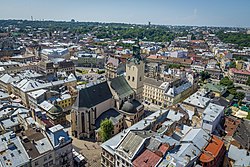
Reykjavik, the capital and largest city of Iceland, traces its origins to 874 AD when Norse settler Ingólfr Arnarson established one of the first permanent settlements on the island. Over the centuries it evolved from a small farming village into a major trading port and, ultimately, a modern Nordic capital known for its culture, geothermal energy, and vibrant civic life. More Less
1752
% complete
In 1752, King Frederik V of Denmark donated the estate of Reykjavík to the Innréttingar corporation, spurring the beginnings of industry and urban development on the site.
Image source: Reykjavík
1786
% complete
The Danish Crown abolished monopoly trading in 1786 and granted six communities around the country an exclusive trading charter. Reykjavík was officially founded that year as a trading town, and 1786 is regarded as the date of the city's founding.
1880
% complete
After 1880, free trade was expanded to all nationalities, and the influence of Icelandic merchants started to grow, helping the young trading town develop steadily.
1845
% complete
In 1845, the Alþingi, the general assembly originally formed in 930 AD and suspended decades earlier when located at Þingvellir, was re-established in Reykjavík.
Image source: Althing

1850 - 1900
% complete
Throughout the 19th century, Icelandic nationalist sentiment gained influence, and the idea of Icelandic independence became widespread among the population.
Image source: Icelandic nationalism
1874
% complete
In 1874, Iceland was given a constitution; with it, Alþingi gained some limited legislative powers and in essence became the institution that it is today.
Image source: Constitution of Iceland
1904
% complete
Home Rule was granted in 1904, moving most executive power to Iceland. The office of Minister for Iceland was established in Reykjavík, cementing the city as the centre of government.
Dec 1, 1918
% complete
On 1 December 1918, Iceland became a sovereign country, the Kingdom of Iceland, in personal union with the Crown of Denmark, with Reykjavík as its capital.
Image source: Kingdom of Iceland
1929 - 1978
% complete
The Independence Party was historically Reykjavík's ruling party, holding an overall majority from its establishment in 1929 until 1978, when it narrowly lost control of the city council.
Image source: Independence Party (Iceland)
1978 - 1982
% complete
From 1978 until 1982, after the Independence Party narrowly lost its long-held majority, Reykjavík was governed by a three-party coalition composed of the People's Alliance, the Social Democratic Party, and the Progressive Party.
1982 - 1994
% complete
In 1982, the Independence Party regained an overall majority in the Reykjavík City Council, which it held for three consecutive terms until the landmark 1994 election.
Oct 11, 1986 - Oct 12, 1986
% complete
The 1986 Reykjavík Summit between US President Ronald Reagan and Soviet leader Mikhail Gorbachev underlined Reykjavík's international status as a venue for high-profile diplomacy during the Cold War.
Image source: Reykjavík Summit
1994 - 2006
% complete
The 1994 election was won by Reykjavíkurlistinn (the R-list), an alliance of Icelandic socialist parties led by Ingibjörg Sólrún Gísladóttir. The alliance won majorities in three consecutive elections before being dissolved for the 2006 election, when five different parties were on the ballot.
Jun 2006
% complete
After the R-list dissolved, the Independence Party won seven seats in the 2006 election and, together with the one Progressive Party seat, formed a new majority in the council which took over in June 2006.
Oct 2007
% complete
In October 2007, a new majority was formed on the city council consisting of members of the Progressive Party, the Social Democratic Alliance, the Left-Greens and the F-list (liberals and independents), after controversy regarding REI, a subsidiary of OR, the city's energy company.
Jan 24, 2008 - Aug 2008
% complete
On 24 January 2008, Magnússon, leader of the F-list, was elected mayor of Reykjavík. In March 2009, the Independence Party was due to appoint a new mayor amid shifting council dynamics.
Aug 14, 2008
% complete
The political situation changed once again on 14 August 2008 when the fourth coalition of the term was formed by the Independence Party and the Social Democratic Alliance, with Hanna Birna Kristjánsdóttir becoming mayor of Reykjavík.
Image source: Hanna Birna Kristjánsdóttir
May 2010 - Jun 2014
% complete
In the May 2010 city council election, the new Best Party, led by comedian Jón Gnarr, won six of 15 seats and formed a coalition with the Social Democratic Alliance, making Gnarr mayor of Reykjavík.
Image source: Jón Gnarr
Jul 2013
% complete
In July 2013, mayor Jón Gnarr filed a motion before the city council to terminate the city's relationship with Moscow, in response to a trend of anti-gay legislation in Russia.
May 2014
% complete
At the 2014 election, the Social Democratic Alliance had its best showing yet, gaining five seats, while Bright Future (successor to the Best Party) received two seats; the two parties formed a coalition with the Left-Green movement and the Pirate Party, which won one seat each.
2023
% complete
In 2023, Lviv in Ukraine replaced Moscow as Reykjavík's sister city, completing the break initiated by Jón Gnarr's 2013 motion over anti-gay legislation in Russia.
Image source: Lviv
1907 - 1908
% complete
The post of city architect in Reykjavík was created in 1907 and advertised in 1908, marking the growing professionalization of urban planning in the expanding town.
1909
% complete
Safnahúsið, the Culture House, opened in 1909 and houses a number of important exhibits. Originally built to house the National Library and National Archives, it was also previously home to the National Museum and Natural History Museum.
1955
% complete
Icelandic author Halldór Laxness was awarded the Nobel Prize for Literature in 1955 for 'vivid epic power which has renewed the great narrative art of Iceland', bringing worldwide attention to Icelandic literary tradition rooted in Reykjavík.
Image source: Halldór Laxness
1963
% complete
The Grafarholt golf course opened in 1963, making it the oldest 18-hole golf course in Iceland. The Reykjavík Golf Club itself had been established earlier, in 1934.
Jul 1972 - Sep 1, 1972
% complete
In 1972, Reykjavík hosted the famous World Chess Championship between American Bobby Fischer and Soviet champion Boris Spassky, a match that captured global attention during the Cold War.
Image source: World Chess Championship 1972
Mar 1, 1989
% complete
Beer was banned in Iceland until 1 March 1989 but has since become popular among many Icelanders as their alcoholic drink of choice, contributing to Reykjavík's vibrant bar culture.
1997
% complete
The Korpa golf course opened in 1997, adding a second course to the Reykjavík Golf Club alongside the historic Grafarholt course.
2000
% complete
In 2000, Safnahúsið was re-modeled to promote the Icelandic national heritage, transforming the former library and archives building into a modern culture house.
Jul 31, 2009
% complete
The Arnamagnæan Manuscript Collection was added to the UNESCO Memory of the World Register on 31 July 2009, recognizing the medieval Icelandic manuscripts whose language modern Icelanders can still read with relative ease.
2011
% complete
In 2011, Reykjavík was designated a UNESCO City of Literature and joined the UNESCO Creative Cities network, honouring the city's deep literary heritage stretching back to medieval manuscripts.
Image source: Creative Cities Network
Jan 1918
% complete
January 1918 is the coldest month on record in Reykjavík, with an average temperature of −7.2 °C (19 °F). The lowest-ever recorded temperature, −24.5 °C (−12 °F), was recorded on 21 January 1918.
Jun 2007 - Jul 2007
% complete
In the summer of 2007, no rain was measured in Reykjavík for one month, an unusual dry spell for the famously wet subpolar oceanic climate.
2008
% complete
Many of Reykjavík's urban development projects were halted during the 2008 financial crisis, which hit Iceland particularly hard and stalled construction across the capital region.
Image source: 2008–2011 Icelandic financial crisis
Jul 30, 2008
% complete
The highest temperature ever recorded in Reykjavík was 25.7 °C (78 °F), reported on 30 July 2008.
Jul 2019
% complete
July 2019 was the warmest month on record in Reykjavík, with an average temperature of 13.4 °C (56 °F).
2025
% complete
As of 2025, the first phase of Reykjavík's new public transport project is due to open in 2031, marking a shift away from the road-transport-based policies of the latter half of the 20th century.
Image source: Transport in Iceland
2026
% complete
There has been discussion of the relocation or removal of Reykjavík Airport, but no decision has been made as of 2026, leaving one of the city's most debated planning questions unresolved.
Image source: Reykjavík Airport
2026
% complete
As of 2026, Reykjavík has a population of around 140,000, while the surrounding Capital Region has about 252,000 residents, constituting approximately 64% of Iceland's population.
Jan 1, 2026
% complete
On 1 January 2026, first- and second-generation immigrants numbered 37,348 of the city's population of 139,804 (26.7%), up sharply from 3,106 (2.9%) in 1998. As of 2024, about 64.8% of foreign residents originate in EU and EFTA member states.
Or browse the full history timeline directory, with more than 2,000 topics.
This History of Reykjavik timeline was generated with the help of AI, using information found on the internet.
We work hard to keep these timelines accurate, but mistakes do get through. If you spot one, email us at [email protected] and we'll fix it for future visitors.
Generate yours with AI or build it from scratch, for free.
Export your timeline, add your own events, edit or remove AI-generated events, and much more
No credit card required.
Cancel anytime.
Cancel anytime.
You can create an unlimited number of timelines with up to 10 events on each one, customize how they look, export them to PDF, PNG, PowerPoint, CSV, and Excel, and share them with a link. Paid plans raise the event limit and add features like spreadsheet imports and collaborators.
Yes. You can cancel your subscription from your account page at any time, and you will not be charged again. Your subscription stays active for the rest of the period you already paid for.
Yes. We will email you a reminder before the annual renewal, and we will also email you a receipt.
Yes. You can email us within 15 days of any payment, and we will issue you a full refund.
Check out our pricing docs or send us an email anytime: [email protected].