-
Use Cases
-
Resources
-
Pricing
The telegraph revolutionized long-distance communication by transmitting messages over wires using electrical signals. Developed in the 1830s and 1840s by inventors such as Samuel Morse in America and William Cooke and Charles Wheatstone in Britain, it enabled near-instantaneous communication across continents. Landmark achievements included Morse's first message 'What hath God wrought' in 1844 and the first successful transatlantic cable in 1866. The telegraph laid the foundation for modern telecommunications before being gradually replaced by the telephone and internet. More Less
Mar 2, 1791
% complete
Claude Chappe and his brother Ignace demonstrated an optical semaphore system in France, sending a message between Brûlon and Parcé using pivoting arms visible through telescopes. This early 'telegraph' (meaning 'far writer') laid the groundwork for the first practical long-distance communication network.
Image source: Optical telegraph
1793
% complete
The French government commissioned Claude Chappe to build a chain of semaphore towers between Paris and Lille, a distance of about 230 kilometers. Completed in 1794, the network could relay messages in minutes rather than days, revolutionizing military and governmental communication.
Dec 24, 1795
% complete
Francisco Salvá i Campillo presented an electrostatic telegraph to the Barcelona Academy of Sciences, using one wire for each letter of the alphabet with sparks indicating characters. Though never widely adopted, it was among the earliest proposals for electrical signaling over wires.
Image source: Francisco Salva Campillo
1809
% complete
German scientist Samuel Thomas von Sömmerring constructed a telegraph that used electric current passed through water to release gas bubbles at electrodes corresponding to letters. It was demonstrated over several kilometers of wire but proved too slow for practical use.
Image source: Samuel Thomas von Sömmerring
1820
% complete
Following Ørsted's discovery of electromagnetism, André-Marie Ampère suggested using pairs of compass needles deflected by electric currents as a signaling system. His proposal inspired later needle telegraphs developed by Cooke, Wheatstone, and others.
Image source: André-Marie Ampère

1825
% complete
English mathematician Peter Barlow reported that electric signals weakened significantly over long cables, leading many scientists to conclude that long-distance electric telegraphy was impractical. This pessimism persisted until improvements in batteries, insulation, and detection methods emerged.
Image source: Peter Barlow (mathematician)
1832
% complete
Russian diplomat Pavel Schilling demonstrated a working electromagnetic telegraph in Saint Petersburg, using needles that deflected in response to current pulses. He also devised an early binary code of signals, influencing later telegraph code design.
Image source: Pavel Schilling
1833
% complete
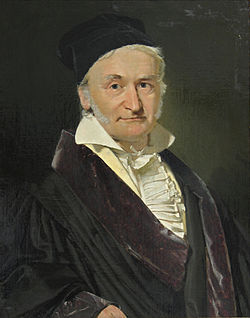
Mathematician Carl Friedrich Gauss and physicist Wilhelm Weber constructed a 1.2-kilometer double-wire telegraph connecting the Göttingen observatory and physics institute. They used current-induced needle deflections and a binary-like code, proving reliable electrical transmission was possible.
Image source: Carl Friedrich Gauss
Jun 10, 1837
% complete
William Fothergill Cooke and Charles Wheatstone received a British patent for an electric telegraph using multiple needles to indicate letters. Their system became the first commercially successful electric telegraph, adopted by British railways.
Image source: Cooke and Wheatstone telegraph
Sep 2, 1837
% complete
American artist Samuel Morse publicly demonstrated his recording telegraph at New York University, marking dots and dashes on paper tape. With Alfred Vail's assistance, he refined the device and developed the dot-dash code that became known as Morse code.
Image source: Samuel Morse
Jul 25, 1839
% complete
The Great Western Railway opened a 21-kilometer Cooke and Wheatstone five-needle telegraph along its Paddington-to-West Drayton route. It quickly proved invaluable for railway operations, including tracking trains and catching criminals.
Image source: Great Western Railway
Mar 3, 1843
% complete
The United States Congress appropriated $30,000 for Samuel Morse to build an experimental telegraph line between Washington, D.C., and Baltimore. The project marked the U.S. government's first major investment in electrical communication.
Image source: Baltimore–Washington telegraph line
May 24, 1844
% complete
Samuel Morse transmitted the biblical phrase 'What hath God wrought' from the U.S. Capitol to the B&O Railroad depot in Baltimore, inaugurating the first American telegraph line. The demonstration electrified public imagination about instantaneous communication.
May 1846
% complete
Five New York newspapers formed the Associated Press to share costs of telegraphing news from the Mexican–American War front. The telegraph transformed journalism, enabling near-instantaneous reporting across vast distances.
Image source: Associated Press
Apr 1861 - Apr 1865
% complete
Both Union and Confederate forces relied heavily on telegraph lines for command and coordination during the Civil War. President Lincoln famously used the War Department telegraph office extensively, making it a de facto command center.
Image source: U.S. Military Telegraph Corps
Oct 24, 1861
% complete
Western Union completed the first transcontinental telegraph line, linking California with the eastern United States. The Pony Express ceased operations just two days later, as messages that once took ten days by horseback now crossed the country in minutes.
Image source: First transcontinental telegraph
1867
% complete
Improved stock tickers connected to telegraph networks delivered price quotations to brokers across cities in real time. Telegraphic arbitrage linked markets like New York and London, creating the first truly integrated global financial markets.
Image source: Ticker tape
1872
% complete
Joseph Stearns introduced the duplex telegraph, allowing two messages to be transmitted simultaneously in opposite directions on a single wire. Later multiplex systems expanded capacity further, dramatically increasing the efficiency of existing infrastructure.
May 17, 1865
% complete
Twenty European states signed the first International Telegraph Convention in Paris, establishing standardized rules and tariffs for international telegrams and founding what became the International Telecommunication Union (ITU).
Image source: International Telecommunication Union
Jul 27, 1866
% complete
After earlier failures in 1857 and 1858, the steamship Great Eastern successfully laid a durable transatlantic cable from Ireland to Newfoundland. Cyrus Field's achievement enabled direct telegraphic communication between Europe and North America.
Image source: Transatlantic telegraph cable
1870
% complete
The Indo-European Telegraph Company completed a land and submarine route connecting Britain with India via Persia and the Persian Gulf. Messages between London and Calcutta that once took weeks by ship could now arrive within hours.
Oct 31, 1902
% complete
Completion of the Pacific cable between Canada and Australia finished the 'All Red Line,' a network of telegraph routes circling the globe entirely on British territory. It provided secure imperial communications independent of foreign-controlled cables.
Image source: All Red Line
Aug 5, 1914 - Nov 11, 1918
% complete
On the first day of World War I, Britain cut Germany's undersea cables, forcing German traffic onto British-controlled or neutral routes that could be intercepted. Cable control became a crucial element of Allied intelligence throughout the war.
Image source: United States in World War I
Jan 17, 1917
% complete
British cryptographers decrypted a German diplomatic telegram proposing a Mexican alliance against the United States. Its publication inflamed American public opinion and helped bring the United States into World War I.
Image source: Zimmermann Telegram
1920
% complete
Teleprinters (teletypes) allowed operators to type messages directly onto punched tape and transmit them automatically using start-stop codes. They replaced manual Morse keying on many circuits and paved the way for data networks.
Image source: Teleprinter
Nov 25, 1927
% complete
The Washington conference unified regulations for radiotelegraphy and wired telegraphy, assigning frequency bands and standardizing procedures as radio began competing with cable telegraphy for international traffic.
Sep 25, 1956
% complete
The first transatlantic telephone cable began service, carrying 36 voice channels that also handled telegraph traffic. Voice-grade circuits and later digital technologies gradually displaced traditional telegraph services.
Image source: TAT-1
Jan 27, 2006
% complete
Western Union quietly ended its domestic telegram service after 155 years, citing competition from email and text messaging. The shutdown symbolized the end of the classic telegram era in the United States.
Image source: Western Union
Jul 14, 2013
% complete
State-run Bharat Sanchar Nigam Limited closed India's telegraph service, which had operated since 1851. Thousands of Indians queued to send final telegrams before the network shut down, marking the end of one of the world's last major public telegraph systems.
Dec 29, 2017
% complete
Belgium's bpost shut down its last public telegraph counter, widely reported as the end of commercial public telegraphy in Europe. The closure underscored how thoroughly internet-era messaging had rendered the 19th-century technology obsolete.
Image source: Telegraphy
Or browse the full history timeline directory, with more than 2,000 topics.
This History of the Telegraph timeline was generated with the help of AI, using information found on the internet.
We work hard to keep these timelines accurate, but mistakes do get through. If you spot one, email us at [email protected] and we'll fix it for future visitors.
Generate yours with AI or build it from scratch, for free.
Export your timeline, add your own events, edit or remove AI-generated events, and much more
No credit card required.
Cancel anytime.
Cancel anytime.
You can create an unlimited number of timelines with up to 10 events on each one, customize how they look, export them to PDF, PNG, PowerPoint, CSV, and Excel, and share them with a link. Paid plans raise the event limit and add features like spreadsheet imports and collaborators.
Yes. You can cancel your subscription from your account page at any time, and you will not be charged again. Your subscription stays active for the rest of the period you already paid for.
Yes. We will email you a reminder before the annual renewal, and we will also email you a receipt.
Yes. You can email us within 15 days of any payment, and we will issue you a full refund.
Check out our pricing docs or send us an email anytime: [email protected].