-
Use Cases
-
Resources
-
Pricing
Whaling has been practiced by coastal communities for thousands of years, evolving from small-scale subsistence hunting into a massive global industry. The commercial whaling era, peaking in the 17th to 20th centuries, drove several whale species near extinction before international regulation and the 1986 moratorium dramatically reduced hunting worldwide. More Less
2000 BC
% complete
Indigenous Arctic peoples developed sophisticated techniques for hunting bowhead and other whales using skin boats, harpoons, and floats. Whaling became central to their subsistence, culture, and spirituality, with traditions continuing for millennia.
Image source: Aboriginal whaling
800 AD
% complete
Norse hunters along the Norwegian coast began systematic hunting of small whales and dolphins using stone-age derived harpoons and shore-based spotting, establishing one of the earliest organized whaling cultures in Europe.
Image source: Whaling in Norway
1050 AD
% complete
Basque fishermen pioneered the first true commercial whaling industry, pursuing right whales from small open boats launched from coastal watchtowers. Their success made whale products a valuable trade commodity across medieval Europe.
Image source: History of Basque whaling
1200
% complete
Japanese coastal communities began organized whaling using hand harpoons, later developing net-based methods in the Edo period. Whaling became embedded in regional cuisine and religious festivals, particularly around Taiji and Nagato.
Image source: Whaling in Japan
1530 - 1600
% complete
Basque whalers crossed the Atlantic to hunt right and bowhead whales at Red Bay in Labrador and Quebec, creating the world's first transoceanic commercial whaling operation. The station processed thousands of whales before stocks declined.
Image source: Red Bay, Newfoundland and Labrador
1611
% complete
Following voyages by Henry Hudson's crew who reported abundant bowhead whales, English Muscovy Company ships initiated large-scale Arctic whaling near Spitsbergen, soon joined by Dutch, Danish, and French fleets.
Image source: Spitsbergen
1619 - 1657
% complete
The Dutch founded Smeerenburg ('Blubber Town') on Amsterdam Island, Spitsbergen, a major shore station where blubber was rendered into oil. At its peak it hosted hundreds of men and multiple rendering ovens before overhunting depleted stocks.
Image source: Smeerenburg
1650
% complete
English colonists in New England organized shore-based drift whaling for right whales washed ashore or spotted offshore, evolving into organized boat crews and laying the foundation for America's later dominance in deep-sea whaling.
Image source: Whaling in the United States
1712
% complete
Christopher Hussey of Nantucket is traditionally credited with killing a sperm whale offshore, spurring a shift toward pelagic sperm whaling. Nantucket and other New England ports grew into major whaling centers chasing sperm whales for oil and spermaceti candles.
Image source: Nantucket
1750 - 1770
% complete
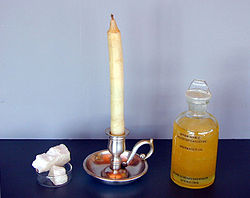
Sperm whale oil became prized for clean-burning, odorless candles. Colonial merchants built processing works and formed the United Company of Spermaceti Candlers (1763), making spermaceti one of colonial America's most valuable industries.
Image source: Spermaceti
1775 - 1783
% complete
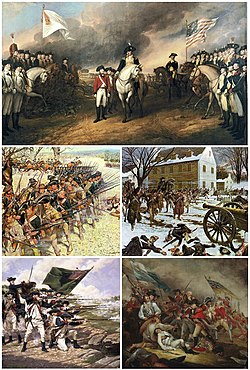
The Revolutionary War devastated American whaling: British naval blockades and privateers captured or destroyed most of the colonial fleet, and many Nantucket whalemen relocated to Nova Scotia or England during the conflict.
Image source: American Revolutionary War
1775 - 1800
% complete
The Enderby family firm sponsored pioneering British whaling voyages into the South Pacific and Southern Ocean, opening new grounds for sperm and southern right whaling and challenging Dutch and American dominance.
Image source: Samuel Enderby & Sons
1790 - 1820
% complete
Post-war recovery saw New Bedford, Nantucket, and other ports rapidly expand. By 1820 the American fleet dominated global whaling, with hundreds of ships undertaking multi-year Pacific voyages for sperm oil.
1791
% complete
Following the arrival of convict ships, British colonists established bay whaling stations for southern right whales along Australian coasts and pelagic sperm whaling fleets based at Sydney and Hobart, which became significant colonial industries.
Image source: Whaling in Australia
1820 - 1840
% complete
American whalers pushed into previously unexploited 'Japan Grounds' and the Northwest Coast, dramatically increasing catches of sperm and right whales and bringing them into contact—and sometimes conflict—with Japanese authorities.
Image source: Japan Ground Self-Defense Force
Nov 20, 1820
% complete
The Nantucket whaleship Essex was rammed and sunk by an enraged sperm whale in the South Pacific. The crew endured a horrific open-boat ordeal with cannibalism; only 8 survivors were rescued months later, inspiring Herman Melville's Moby-Dick.
Image source: Essex (whaleship)
1846 - 1856
% complete
The U.S. whaling industry reached its zenith with over 700 ships and tens of thousands of crew, producing millions of gallons of whale oil annually. New Bedford became the wealthiest city per capita in America on whaling profits.
1848 - 1855
% complete
News of California gold lured thousands of experienced whalemen to desert ships at San Francisco, causing chronic crew shortages and rising costs that weakened the industry even before petroleum arrived.
Image source: California Gold Rush
1851
% complete
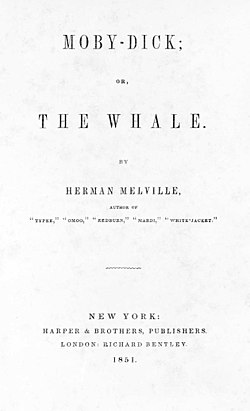
Drawing on his own experience aboard whaleships, Melville published Moby-Dick; or, The Whale, a novel that immortalized the dangers and romance of whaling even as the industry approached its golden age peak.
Image source: Moby-Dick
Aug 27, 1859
% complete
Edwin Drake's successful oil well at Titusville, Pennsylvania launched the petroleum age. Refined kerosene quickly replaced whale oil as the dominant lamp fuel, undercutting the economic foundation of American whaling.
1864
% complete
Foyn mounted a grenade-tipped harpoon gun on steam-powered catcher boats, revolutionizing whaling. The technology made fast-swimming rorquals—blue, fin, and humpback whales—commercially exploitable for the first time.
Image source: Svend Foyn
1870
% complete
Foyn's adoption of air compressors to inflate dead whales so they floated allowed factories to process entire carcasses rather than abandoning them, greatly increasing efficiency and profitability of industrial whaling.
Image source: Whaling
1903
% complete
Floating factory ships with stern slipways let whalers process carcasses at sea anywhere in the oceans. Combined with catchers, they enabled unprecedented slaughter of blue, fin, and humpback whales, especially in Antarctic waters.
Image source: Factory ship
1925 - 1962
% complete
Pelagic factory fleets, led by Norway, Britain, Japan, and later the USSR, killed hundreds of thousands of whales in the Southern Ocean. Blue whale populations collapsed first, followed by fin, sei, and humpbacks in successive waves of depletion.
Dec 2, 1946
% complete
Representatives of 15 nations signed the ICRW in Washington, D.C., establishing the International Whaling Commission (IWC) to conserve whale stocks and regulate orderly whaling—a landmark, if initially weak, step toward international management.
Image source: International Convention for the Regulation of Whaling
1947 - 1987
% complete
Soviet factory fleets systematically falsified catch reports while killing well over 300,000 protected whales worldwide, including endangered species. The true scale was exposed only in the 1990s after whistleblower testimony, shocking conservation scientists.
Image source: Whaling in Russia
1949
% complete
The IWC adopted the Blue Whale Unit quota system and later reduced overall catch limits, though enforcement remained poor. Continued overexploitation prompted growing scientific criticism of the commission's management.
1970 - 1982
% complete
Environmental groups like Greenpeace staged dramatic confrontations with whaling ships, while recordings of humpback whale songs captivated the public. Mass campaigns transformed whales into icons of conservation and pressured governments toward protection.
Image source: Anti-whaling
Oct 21, 1972
% complete
The MMPA banned commercial whaling by U.S. citizens, ending American commercial whaling permanently and establishing broad protections for all marine mammals in U.S. waters, reflecting rising environmental consciousness.
Image source: Marine Mammal Protection Act
1982 - 1986
% complete
The IWC voted for a moratorium on all commercial whaling, effective from the 1986 season. Japan, Norway, and Peru lodged objections, but the ban marked the decisive turning point in ending large-scale industrial whaling.
1987 - 2019
% complete
Japan launched JARPA and JARPA II programs taking hundreds of minke whales annually in the Antarctic and North Pacific under Article VIII research provisions, widely criticized as disguised commercial whaling amid ongoing Sea Shepherd confrontations and legal disputes.
1993
% complete
Norway resumed commercial minke whale hunting in the North Atlantic despite the moratorium, exploiting its formal objection. Annual quotas have continued since, keeping Norway among the few nations conducting commercial whaling.
Mar 31, 2014
% complete
The International Court of Justice ordered Japan to halt its JARPA II Antarctic program, finding its 'research' lacked legitimate scientific basis. Japan suspended Antarctic takes briefly before resuming under a redesigned program in 2015.
Jun 30, 2019
% complete
After decades of tension, Japan left the International Whaling Commission and resumed limited commercial minke, Bryde's, and sei whale hunts within its own exclusive economic zone, ending its controversial Antarctic research whaling.
2020
% complete
Following decades of protection, some populations—including humpbacks in several regions and western gray whales—have shown measurable recovery, though most great whale numbers remain far below pre-whaling levels due to slow reproduction rates and ongoing threats.
Image source: Whale conservation
Or browse the full history timeline directory, with more than 2,000 topics.
This History of Whaling timeline was generated with the help of AI, using information found on the internet.
We work hard to keep these timelines accurate, but mistakes do get through. If you spot one, email us at [email protected] and we'll fix it for future visitors.
Generate yours with AI or build it from scratch, for free.
Export your timeline, add your own events, edit or remove AI-generated events, and much more
No credit card required.
Cancel anytime.
Cancel anytime.
You can create an unlimited number of timelines with up to 10 events on each one, customize how they look, export them to PDF, PNG, PowerPoint, CSV, and Excel, and share them with a link. Paid plans raise the event limit and add features like spreadsheet imports and collaborators.
Yes. You can cancel your subscription from your account page at any time, and you will not be charged again. Your subscription stays active for the rest of the period you already paid for.
Yes. We will email you a reminder before the annual renewal, and we will also email you a receipt.
Yes. You can email us within 15 days of any payment, and we will issue you a full refund.
Check out our pricing docs or send us an email anytime: [email protected].