-
Use Cases
-
Resources
-
Pricing
The Khmer Empire was a powerful Hindu-Buddhist kingdom that dominated Southeast Asia from the 9th to 15th centuries. Centered in modern-day Cambodia with its capital at Angkor, it is renowned for monumental temple architecture, most famously Angkor Wat, advanced irrigation systems, and its influence over much of mainland Southeast Asia. More Less
800 - 1000
% complete
Arab writers of the 9th and 10th centuries hardly mentioned the region for anything other than its perceived backwardness, but they considered the king of Al-Hind (India and Southeast Asia) one of the four great kings in the world.
802
% complete
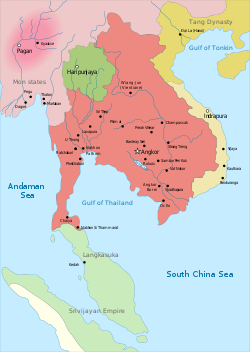
Known as Kambuja by its inhabitants, the Khmer Empire grew out of the former civilisation of Chenla and lasted from 802 to 1431 AD, becoming one of the most powerful states in Southeast Asia.
900
% complete
At the beginning of the 10th century, the empire fractured, leading to a period of internal division among competing princes.
Image source: Khmer Empire
968 - 1001
% complete
The son of Rajendravarman II, Jayavarman V reigned from 968 to 1001 after establishing himself as the new king over the other princes.
Image source: Jayavarman VII
1006 - 1050
% complete
Three kings reigned simultaneously as antagonists until Suryavarman I ascended to the throne by taking the capital Angkor. His wife was Viralakshmi, and following his death in 1050 he was succeeded by Udayadityavarman II, who built the Baphuon and West Baray.
Image source: Suryavarman I
1000 - 1300
% complete
Satellite imaging has revealed that Angkor's elaborate water management network was, during its peak in the 11th to 13th centuries, the most extensive pre-industrial urban complex in the world.
Image source: Angkor
1000 - 1100
% complete
The great bronze statue discovered at the West Mebon is estimated to have been made in the 11th century and would have been between 5–6 metres long. It was found in 1936 by Frenchman Maurice Glaize on an island in Angkor's largest pond.
Image source: West Mebon
1113 - 1150
% complete
Under Suryavarman II (reigned 1113–1150) the empire united internally and Angkor Wat, dedicated to the god Vishnu, was built over a period of 37 years.
Image source: Angkor Wat
1181 - 1219
% complete
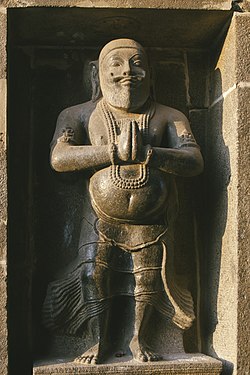
King Jayavarman VII (reigned 1181–1219) was generally considered Cambodia's greatest king. He continued to wage war against Champa for another 22 years until the Khmer defeated the Chams in 1203 and conquered large parts of their territory.
Image source: Jayavarman VII
1195
% complete
According to Chinese sources, Jayavarman VII added Pegu to the territory of the Khmer Empire in 1195.
1200 - 1300
% complete
The Greater Angkor Region had a population of approximately 700,000 to 900,000 at its peak in the 13th century CE.
1200 - 1300
% complete
The empire's official religions included Hinduism and Mahayana Buddhism until Theravada Buddhism prevailed, even among the lower classes, after its introduction from Sri Lanka in the 13th century.
Image source: Buddhism in Cambodia
1203
% complete
In 1203 the Khmer managed to push back and defeat Champa, conquering large parts of its territory.
Image source: Champa
Aug 1, 1296 - Jul 31, 1297
% complete
In August 1296, the Chinese diplomat Zhou Daguan arrived in Angkor and remained at the court of Srindravarman until July 1297. He recorded that 'in the recent war with the Siamese, the country was utterly devastated,' confirming that Siamese warlords had revolted and disrupted Khmer hegemony. His report, The Customs of Cambodia, provides key information on 13th-century Cambodia.
1000 - 1010
% complete
In the first decade of the 11th century, Kambuja came into conflict with the kingdom of Tambralinga in the Malay Peninsula.
Image source: Tambralinga
1074
% complete
In 1074, conflict arose between Harshavarman III, the younger brother and successor of Udayadityavarman II, and the Champa king Harivarman IV.
1100 - 1200
% complete
The 12th century was a time of conflict and brutal power struggles within the Khmer Empire.
1114
% complete
In 1114, Suryavarman II sent a mission to Chola and presented a precious stone to the Chola emperor Kulottunga I.
Image source: Kulottunga I
1145 - 1149
% complete
In the east, Suryavarman II's campaigns against Champa and Dai Viet were unsuccessful, though he sacked Vijaya in 1145 and deposed Jaya Indravarman III. The Khmers occupied Vijaya until 1149, when they were driven out by Jaya Harivarman I.
Image source: Khmer–Cham wars
1177
% complete
In 1177 the capital was raided and looted in a naval battle on the Tonlé Sap lake by a Cham fleet under Jaya Indravarman IV, and Khmer king Tribhuvanadityavarman was killed.
Image source: Fall of Angkor
1283
% complete
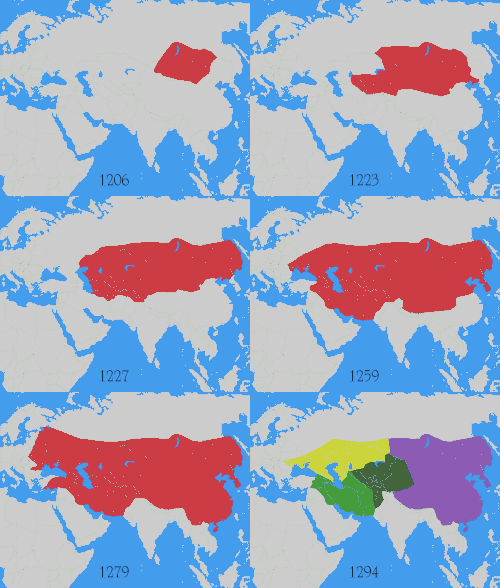
Kambuja was threatened externally in 1283 by the Mongol-led Yuan dynasty.
Image source: Mongol invasions and conquests
1285
% complete
Jayavarman VIII avoided war with general Sogetu, the governor of Guangzhou, China, by paying annual tribute to the Mongols starting in 1285.
1219 - 1243
% complete
After the death of Jayavarman VII, his son Indravarman II (reigned 1219–1243) ascended to the throne.
1220
% complete
In 1220, under mounting pressure from the increasingly powerful Đại Việt and its ally Champa, the Khmer withdrew from many of the provinces previously conquered from the Chams.
1243 - 1295
% complete
Indravarman II was succeeded by Jayavarman VIII (reigned 1243–1295).
1295
% complete
Jayavarman VIII's rule ended in 1295 when he was deposed by his son-in-law Srindravarman (reigned 1295–1309).
1327
% complete
The last Sanskrit inscription is dated 1327 and describes the succession of Indrajayavarman by Jayavarmadiparamesvara.
1330 - 1345
% complete
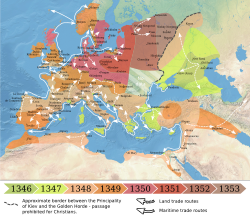
By the 14th century, Kambuja had suffered a long, arduous decline. The Black Death had affected Asia: the plague first appeared in China around 1330 and reached Europe around 1345. Archaeologists also noted that historical inscriptions were lacking from the 14th to 17th centuries.
Image source: Black Death
1352 - 1353
% complete
Angkor was besieged by the Ayutthayan king Uthong in 1352, and following its capture the next year, the Khmer king was replaced with successive Siamese princes.
Image source: 2025 Cambodian–Thai border crisis
1357
% complete
1365
% complete
A Javanese source, the Nagarakretagama canto 15, composed in 1365 in the Majapahit Empire, claimed Java had established diplomatic relations with Kambuja together with Ayutthaya, Champa, Annam and other polities, describing how the rise of Ayutthaya had taken its toll on Cambodia.
Image source: Nagarakretagama
1393 - 1394
% complete
In 1393, the Ayutthayan king Ramesuan besieged Angkor again, capturing it the next year.
1431
% complete
Finally, in 1431, the Khmer king Ponhea Yat abandoned Angkor as indefensible and moved to the Phnom Penh area, marking the traditional end of the Khmer Empire, although scholars still debate the reasons for its collapse.
Image source: Ponhea Yat
1566 - 1576
% complete
Under the rule of Khmer king Barom Reachea I (reigned 1566–1576), who temporarily succeeded in driving back Ayutthaya, the royal court was briefly returned to Angkor, and there is evidence of further use of Angkor after the 15th century.
1600 - 1632
% complete
Inscriptions from the 17th century testify to Japanese settlements alongside those of the remaining Khmer. The best-known inscription tells of Ukondayu Kazufusa, who celebrated the Khmer New Year in Angkor in 1632.
Or browse the full history timeline directory, with more than 2,000 topics.
This Khmer Empire timeline was generated with the help of AI, using information found on the internet.
We work hard to keep these timelines accurate, but mistakes do get through. If you spot one, email us at [email protected] and we'll fix it for future visitors.
Generate yours with AI or build it from scratch, for free.
Export your timeline, add your own events, edit or remove AI-generated events, and much more
No credit card required.
Cancel anytime.
Cancel anytime.
You can create an unlimited number of timelines with up to 10 events on each one, customize how they look, export them to PDF, PNG, PowerPoint, CSV, and Excel, and share them with a link. Paid plans raise the event limit and add features like spreadsheet imports and collaborators.
Yes. You can cancel your subscription from your account page at any time, and you will not be charged again. Your subscription stays active for the rest of the period you already paid for.
Yes. We will email you a reminder before the annual renewal, and we will also email you a receipt.
Yes. You can email us within 15 days of any payment, and we will issue you a full refund.
Check out our pricing docs or send us an email anytime: [email protected].