-
Use Cases
-
Resources
-
Pricing
Nelson Mandela (1918–2013) was a South African anti-apartheid revolutionary, lawyer, and political leader who spent 27 years in prison for opposing racial segregation. After his release in 1990, he negotiated the peaceful end of apartheid and became South Africa's first Black president (1994–1999). He was awarded the Nobel Peace Prize in 1993 and is celebrated worldwide as a symbol of reconciliation and human rights. More Less
Jul 18, 1918
% complete
Nelson Rolihlahla Mandela was born on July 18, 1918, in the village of Mvezo in the Eastern Cape of South Africa. Born into the Thembu royal family, his father Gadla Henry Mphakanyiswa was a local chief. The name 'Rolihlahla' colloquially means 'troublemaker,' a fitting precursor to his revolutionary future.
Image source: Nelson Mandela
Jan 1, 1925
% complete
Around 1925, Mandela began primary school at a local mission school in Qunu. On his first day, his teacher gave him the English name 'Nelson,' as it was customary for African children to receive Christian names at school. This name would later become known around the world.
Jan 1, 1930
% complete
Mandela's father died around 1930 when Nelson was approximately nine years old. Following his father's death, Mandela was placed under the guardianship of Jongintaba Dalindyebo, the regent of the Thembu people, who became a significant figure in his upbringing.
Jan 1, 1939 - Dec 31, 1940
% complete
In 1939, Mandela enrolled at the University of Fort Hare, the premier institution for black South Africans. He studied for a Bachelor of Arts degree but was expelled in 1940 after joining a student protest over poor food quality and campus policies, alongside his friend Oliver Tambo.
Jan 1, 1941 - Dec 31, 1943
% complete
In 1941, Mandela fled an arranged marriage and moved to Soweto, Johannesburg, where he worked as a night watchman and studied law by correspondence through the University of South Africa. He completed his BA degree in 1943 and then began studying law at the University of the Witwatersrand.
Jan 1, 1944
% complete
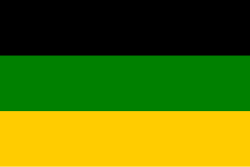
In 1944, Mandela joined the African National Congress (ANC), South Africa's principal liberation movement. He also helped found the ANC Youth League that same year, along with Walter Sisulu and Oliver Tambo, advocating for more radical forms of resistance against racial discrimination.
Image source: African National Congress
Jun 26, 1952 - Dec 31, 1952
% complete
The Defiance Campaign of 1952 was the first large-scale, multi-racial political campaign against apartheid laws. As volunteer-in-chief, Mandela traveled the country organizing civil disobedience against unjust laws. The campaign saw thousands deliberately break apartheid laws and significantly boosted ANC membership from roughly 20,000 to over 100,000.
Image source: Defiance Campaign
Aug 1, 1953
% complete
In August 1953, Mandela and Oliver Tambo opened South Africa's first black law firm, Mandela and Tambo, in Johannesburg. The firm provided affordable legal counsel to black South Africans who otherwise had little access to legal representation under the oppressive apartheid system.
Jun 26, 1955
% complete
The Congress of the People, held in Kliptown on June 26, 1955, adopted the Freedom Charter, a visionary document outlining the principles of a free, democratic South Africa. Though Mandela was banned from attending due to government restrictions, he played a key role behind the scenes in organizing the event.
Image source: Freedom Charter
Dec 5, 1956 - Mar 29, 1961
% complete
On December 5, 1956, Mandela and 155 other activists were arrested and charged with high treason. The trial dragged on for over four years before all defendants were acquitted in March 1961. During the trial, Mandela met his second wife Winnie Madikizela and emerged as a leading figure in the struggle.
Image source: 1956 Treason Trial
Mar 21, 1960
% complete
On March 21, 1960, police opened fire on unarmed protesters in Sharpeville, killing 69 people. The massacre shocked the world and prompted the government to ban the ANC and other anti-apartheid organizations, pushing Mandela and others to reconsider their commitment to nonviolent resistance.
Image source: Sharpeville massacre
Dec 16, 1961
% complete
On December 16, 1961, Mandela co-founded Umkhonto we Sizwe ('Spear of the Nation'), the armed wing of the ANC. Having concluded that nonviolent methods were failing against escalating state violence, Mandela became its first commander, though he insisted on targeting infrastructure while avoiding loss of life.
Image source: UMkhonto we Sizwe
Jan 1, 1962 - Jul 31, 1962
% complete
In early 1962, Mandela secretly left South Africa to attend the Pan-African Freedom Movement conference in Ethiopia and undergo guerrilla warfare training in Algeria and Morocco. He traveled under the alias David Motsamayi and raised funds and support for the ANC cause across Africa and in Britain.
Aug 5, 1962 - Nov 7, 1962
% complete
On August 5, 1962, Mandela was arrested near Howick after 17 months underground, tipped off by informants. In November 1962 he was sentenced to five years in prison for leaving the country illegally and inciting workers to strike, beginning his long years behind bars.
Jul 9, 1963 - Jun 12, 1964
% complete
The Rivonia Trial began in July 1963 after police raided the Liliesleaf farm and seized documents incriminating the ANC leadership. Mandela, already imprisoned, joined eight co-defendants facing charges of sabotage. At the trial's close in June 1964, he delivered his famous speech declaring democracy an ideal 'for which I am prepared to die.'
Jun 12, 1964
% complete
On June 12, 1964, Mandela and seven co-accused were sentenced to life imprisonment for sabotage. He was sent to Robben Island, where he would spend the next 18 years of his sentence performing hard labor in a limestone quarry and becoming known as Prisoner 46664.
Jan 1, 1970 - Dec 31, 1989
% complete
Throughout the 1970s and 1980s, international pressure to free Mandela intensified. The song 'Free Nelson Mandela' (1984), concerts like Wembley's Nelson Mandela 70th Birthday Tribute (1988), sanctions campaigns, and UN resolutions made him the world's most famous political prisoner.
Image source: Free Nelson Mandela
Feb 10, 1985
% complete
On February 10, 1985, State President P.W. Botha offered Mandela freedom if he renounced violence. Mandela refused, stating through his daughter Zindzi at a rally in Soweto that only a free man could negotiate, and that his freedom was inseparable from the freedom of his people.
Dec 9, 1988
% complete
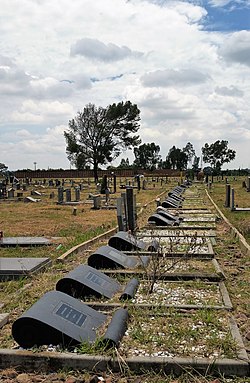
After recovering from tuberculosis contracted at Pollsmoor Prison, Mandela was transferred in December 1988 to Victor Verster Prison, where he lived in relative comfort in a warden's house. There, secret talks with the apartheid government began, laying groundwork for negotiations.
Image source: Drakenstein Correctional Centre
Feb 11, 1990
% complete
On February 11, 1990, after 27 years in prison, Mandela walked free from Victor Verster Prison, hand in hand with his wife Winnie. Broadcast live to millions worldwide, his release marked the beginning of the end of apartheid. He immediately committed himself to negotiating a peaceful transition to democracy.
Jul 5, 1991
% complete
At the ANC's first national conference held inside South Africa since its banning, Mandela was elected president of the organization on July 5, 1991, succeeding Oliver Tambo. He led the ANC into negotiations with the apartheid government over a democratic transition.
Oct 15, 1993
% complete
In October 1993, Mandela and F.W. de Klerk jointly received the Nobel Peace Prize for their work in peacefully ending apartheid and laying the foundations for a new democratic South Africa. The award recognized the courage of both men in steering the country away from civil war.
Image source: List of Nobel Peace Prize laureates
Apr 27, 1994 - Apr 29, 1994
% complete
From April 26-29, 1994, South Africa held its first multiracial democratic elections, in which citizens of all races could vote. Millions queued for hours, and the ANC won over 62% of the vote. April 27 is now celebrated annually as Freedom Day in South Africa.
Image source: 1994 South African general election
May 10, 1994
% complete
On May 10, 1994, Nelson Mandela was inaugurated as South Africa's first Black president, taking office in Pretoria before dignitaries from around the world. His inauguration symbolized the birth of the 'Rainbow Nation' and the peaceful defeat of apartheid after centuries of racial oppression.
Image source: Presidency of Nelson Mandela
Jan 1, 1995
% complete
Under Mandela's leadership, the Truth and Reconciliation Commission, chaired by Archbishop Desmond Tutu, was established in 1995 to document human rights abuses committed during apartheid. Its emphasis on truth-telling and amnesty in exchange for confession became a global model for post-conflict reconciliation.
Image source: Truth and Reconciliation Commission (South Africa)
Jun 24, 1995
% complete
On June 24, 1995, South Africa's Springboks won the Rugby World Cup on home soil. Mandela famously wore a Springbok jersey — once a symbol of white Afrikanerdom — while presenting the trophy to captain Francois Pienaar. The moment, immortalized in the film 'Invictus,' became an iconic gesture of national unity.
Image source: 1995 Rugby World Cup
Dec 10, 1996
% complete
On December 10, 1996, Mandela signed South Africa's new constitution at Sharpeville. Widely regarded as one of the most progressive constitutions in the world, it enshrined equal rights, protections against discrimination, and the foundations of a constitutional democracy for all South Africans.
Image source: Constitution of South Africa
Jun 16, 1999
% complete
After serving a single five-year term, Mandela voluntarily stepped down as president on June 16, 1999, handing power to Thabo Mbeki. His decision to relinquish office after one term set a powerful example of democratic leadership on a continent often marred by leaders clinging to power.
Jul 18, 2007
% complete
On his 89th birthday, July 18, 2007, Mandela helped found The Elders, a group of independent global leaders including Desmond Tutu, Jimmy Carter, and Kofi Annan, working together for peace and human rights worldwide. Mandela announced the group in Johannesburg, lending his moral authority to its mission.
Image source: The Elders (organization)
Jul 18, 2010
% complete
In November 2009, the United Nations General Assembly declared July 18 — Mandela's birthday — as International Nelson Mandela Day, first observed in 2010. People worldwide are asked to dedicate 67 minutes to community service, symbolizing the 67 years Mandela devoted to public service and the struggle for justice.
Image source: Mandela Day
Dec 5, 2013
% complete
Nelson Mandela died on December 5, 2013, at his home in Houghton, Johannesburg, at age 95, following a prolonged respiratory illness. His death prompted a ten-day period of national mourning and a memorial service attended by world leaders, with tens of thousands gathering to honor his legacy of forgiveness and freedom.
Image source: Death and state funeral of Nelson Mandela
Or browse the full history timeline directory, with more than 2,000 topics.
This Nelson Mandela timeline was generated with the help of AI, using information found on the internet.
We work hard to keep these timelines accurate, but mistakes do get through. If you spot one, email us at [email protected] and we'll fix it for future visitors.
Generate yours with AI or build it from scratch, for free.
Export your timeline, add your own events, edit or remove AI-generated events, and much more
No credit card required.
Cancel anytime.
Cancel anytime.
You can create an unlimited number of timelines with up to 10 events on each one, customize how they look, export them to PDF, PNG, PowerPoint, CSV, and Excel, and share them with a link. Paid plans raise the event limit and add features like spreadsheet imports and collaborators.
Yes. You can cancel your subscription from your account page at any time, and you will not be charged again. Your subscription stays active for the rest of the period you already paid for.
Yes. We will email you a reminder before the annual renewal, and we will also email you a receipt.
Yes. You can email us within 15 days of any payment, and we will issue you a full refund.
Check out our pricing docs or send us an email anytime: [email protected].