
-
Use Cases
-
Resources
-
Pricing
Postmodernism is a broad intellectual, artistic, and cultural movement that emerged in the mid-20th century as a reaction against modernism. It is characterized by skepticism toward grand narratives, embrace of irony and pastiche, questioning of objective truth, and blending of high and popular culture across art, architecture, literature, philosophy, and criticism. More Less
1870
The term "postmodern" was first used in 1870 by the artist John Watkins Chapman, who described "a Postmodern style of painting" as a departure from French Impressionism. Although the word appeared in print this early, it only began to circulate with its current range of meanings in the 1950s–60s.
1914
In a 1914 article, Thompson used the term to describe changes in attitudes and beliefs in the critique of religion, writing that "the raison d'être of Post-Modernism is to escape from the double-mindedness of modernism by being thorough in its criticism by extending it to religion as well as theology."
1916
The first citation given by the Oxford English Dictionary for the term is dated to 1916, describing Gus Mager as "one of the few 'post' modern painters whose style is convincing," an early artistic use anticipating later debates.
1916
Cultural critic Randolph Bourne used the word "postmodern" to describe Japan in his essay "Trans-National America," an early extension of the term beyond painting into cultural commentary.
1926
In 1926, Bernard Iddings Bell, president of St. Stephen's College, employed the term "postmodern" in his writings, continuing its gradual circulation through religious and cultural discourse before its later philosophical adoption.
Image source: Postmodernism

1939
Arnold J. Toynbee, in a 1939 essay, stated that "Our own Post-Modern Age has been inaugurated by the general war of 1914–1918," linking the postmodern condition to the upheavals of World War I.
1942
In 1942, the literary critic and author H. used the term in literary contexts, one of several mid-century appearances that anticipated the fuller postmodern debate of the second half of the twentieth century.
1949
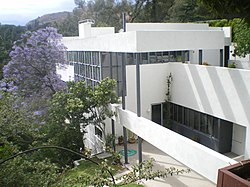
Also in the arts, the term was first used in 1949 to describe a dissatisfaction with the modernist architectural movement known as the International Style, foreshadowing postmodern architecture's rise.
Image source: International Style
1961
Sculptor Claes Oldenburg, at the forefront of pop art, declared: "I am for an art that is political-erotical-mystical… I am for an art that embroils itself with everyday crap." That year he opened The Store in New York's Lower East Side, blurring the line between art and commerce by selling brightly painted plaster replicas of everyday objects.
Image source: Claes Oldenburg

1970 - 1975
Scholarship on postmodernism and architecture is closely linked with critic-turned-architect Charles Jencks, beginning with his lectures in the early 1970s and culminating in his essay "The Rise of Post-Modern Architecture" from 1975.
Image source: Charles Jencks

This Postmodernism timeline was generated with the help of AI, using information found on the internet.
We work hard to keep these timelines accurate, but mistakes do get through. If you spot one, email us at [email protected] and we'll fix it for future visitors.
Generate yours with AI or build it from scratch, for free.


