-
Use Cases
-
Resources
-
Pricing
The Progressive Era was a period of widespread social activism and political reform in the United States, roughly spanning from the 1890s to the 1920s. Progressives sought to address problems caused by industrialization, urbanization, immigration, and political corruption. Key reforms included antitrust legislation, women's suffrage, labor protections, food and drug safety regulation, and the direct election of senators. More Less
Sep 1889
% complete
Jane Addams co-founded Hull House in Chicago, offering education, childcare, and social services to immigrant communities. Though predating the era proper, it became the model for hundreds of settlement houses that trained Progressive reformers and shaped social work as a profession.
Image source: Hull House
1890 - Aug 1920
% complete
Formed from the merger of two rival suffrage groups under Susan B. Anthony and Elizabeth Cady Stanton, NAWSA coordinated state-by-state campaigns for voting rights. Under Carrie Chapman Catt's Winning Plan, its sustained lobbying proved decisive in achieving the Nineteenth Amendment.
Image source: National American Woman Suffrage Association
Jan 1903
% complete
McClure's Magazine published landmark exposés by Ida Tarbell on Standard Oil and Lincoln Steffens on municipal corruption, ushering in the era of muckraking journalism. Investigative reporting exposed corporate abuses and political graft, fueling public demand for Progressive reform.
Image source: McClure's
Feb 15, 1904
% complete
Reformers including Florence Kelley founded the National Child Labor Committee to end exploitative child labor. Photographer Lewis Hine documented children working in mills and mines, generating public outrage that supported state child labor laws and eventual federal action.
Image source: National Child Labor Committee
Feb 26, 1906
% complete
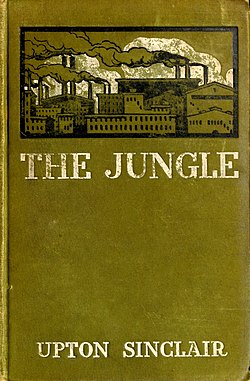
Upton Sinclair's novel The Jungle exposed the horrific conditions of Chicago's meatpacking industry. Its shocking depiction of unsanitary practices and worker exploitation outraged the public and galvanized support for food safety regulation, directly influencing the passage of federal meat inspection laws later that year.
Image source: The Jungle
Feb 12, 1909
% complete
The NAACP was founded in New York City by a multiracial group of activists, including W. E. B. Du Bois and Ida B. Wells, to fight racial segregation, disenfranchisement, and violence against African Americans. It became one of the most influential civil rights organizations in American history.
Image source: NAACP
Mar 3, 1913
% complete
Alice Paul organized a massive suffrage parade down Pennsylvania Avenue the day before Wilson's inauguration, drawing thousands of marchers. Despite harassment from crowds, the event revitalized the national suffrage movement and pressured the new administration.
Image source: Woman Suffrage Procession
Jan 16, 1919
% complete
The Eighteenth Amendment banned the manufacture, sale, and transportation of intoxicating liquors, the culmination of decades of temperance activism by groups like the Woman's Christian Temperance Union and Anti-Saloon League. National Prohibition took effect in 1920 before repeal in 1933.
Image source: Eighteenth Amendment to the United States Constitution
Aug 18, 1920
% complete
The Nineteenth Amendment guaranteed women the right to vote nationwide, capping decades of campaigning by suffragists like Susan B. Anthony, Alice Paul, and Carrie Chapman Catt. It was one of the most significant democratic expansions in American history.
Sep 14, 1901
% complete
After President William McKinley was assassinated by anarchist Leon Czolgosz, Vice President Theodore Roosevelt assumed office at age 42, becoming the youngest president in history. His Square Deal agenda of trust-busting, conservation, and consumer protection defined Progressive Era leadership.
Image source: Theodore Roosevelt
1902
% complete
Oregon citizens approved the Oregon System through ballot initiative, establishing statewide use of initiatives, referendums, and recalls. These direct democracy tools allowed citizens to bypass unresponsive legislatures and spread widely during the Progressive Era.
Image source: Initiatives and referendums in the United States
1903
% complete
Governor Robert M. La Follette pioneered Wisconsin's direct primary election system, weakening party bosses' control over nominations. Wisconsin became known as a laboratory of Progressive democracy, inspiring similar reforms across the country.
Image source: Robert M. La Follette
Jul 26, 1908
% complete
Attorney General Charles Bonaparte established a small force of special agents that became the Bureau of Investigation. Created partly to professionalize enforcement amid Progressive concerns about corruption in local policing, it later evolved into the FBI.
Image source: Federal Bureau of Investigation
Nov 5, 1912
% complete
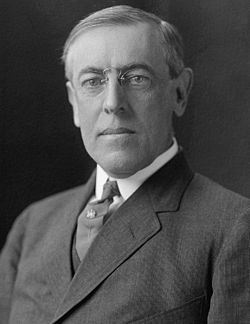
Woodrow Wilson defeated both incumbent William Howard Taft and former president Theodore Roosevelt, who ran on the third-party Bull Moose ticket championing a New Nationalism. Wilson's victory gave Progressives control of the White House and Congress, enabling landmark legislative reforms.
Image source: 1912 United States presidential election
Apr 8, 1913
% complete
The Seventeenth Amendment established the direct election of United States senators by popular vote, replacing election by state legislatures. It was a hallmark Progressive Era reform aimed at reducing corruption and making government more accountable to voters.
Image source: Seventeenth Amendment to the United States Constitution
May 12, 1902 - Oct 23, 1902
% complete
Some 147,000 coal miners led by John Mitchell of the United Mine Workers struck for higher wages and recognition. Theodore Roosevelt famously intervened by threatening federal troops to operate the mines if owners refused arbitration, marking an unprecedented presidential role in labor disputes.
Image source: 1902 anthracite coal strike
Nov 1902 - Oct 1904
% complete
Ida Tarbell's serialized exposé documented Standard Oil's ruthless business tactics and monopolistic practices. Her journalism swayed public opinion against the oil trust and contributed to legal actions that ultimately led to the company's breakup in 1911.
Image source: The History of the Standard Oil Company
Mar 25, 1911
% complete
A devastating fire at the Triangle Shirtwaist Factory in New York City killed 146 garment workers, many of them young immigrant women trapped behind locked doors. The tragedy sparked outrage over unsafe working conditions and led to sweeping reforms in workplace safety regulations.
Image source: Triangle Shirtwaist Factory fire
May 15, 1911
% complete
The Supreme Court ruled that Standard Oil violated the Sherman Antitrust Act and ordered its breakup into 34 separate companies. The decision marked a major triumph for Progressive antitrust efforts and demonstrated federal power to curb corporate monopolies.
Feb 3, 1913
% complete
The Sixteenth Amendment authorized a federal income tax, allowing Congress to tax incomes without apportionment among the states. Progressives saw it as a tool for redistributing wealth and funding expanded government programs; the Revenue Act followed later that year.
Mar 4, 1913
% complete
President William Howard Taft signed legislation creating the United States Department of Labor on his final day in office, elevating workers' interests within the federal cabinet. It reflected growing national attention to labor conditions during the Progressive Era.
Image source: United States Department of Labor
Oct 3, 1913
% complete
The Underwood Tariff significantly reduced tariff rates, fulfilling a longstanding Progressive goal of lowering costs for consumers. To offset lost revenue, it instituted a modest federal income tax, reshaping American fiscal policy for the twentieth century.
Image source: Revenue Act of 1913
Dec 23, 1913
% complete
The Federal Reserve Act created the Federal Reserve System, establishing a central banking system in the United States to provide a safer, more flexible monetary and financial system. It was a cornerstone of Woodrow Wilson's New Freedom agenda.
Image source: Federal Reserve Act
Oct 15, 1914
% complete
The Clayton Antitrust Act strengthened earlier antitrust laws by prohibiting specific monopolistic practices such as price discrimination and interlocking directorates. It also exempted labor unions from prosecution under antitrust law, earning praise from labor leader Samuel Gompers.
Image source: Clayton Antitrust Act of 1914
Sep 1, 1916
% complete
The Keating-Owen Act banned goods produced by child labor from interstate commerce, the first federal child labor law. Although the Supreme Court struck it down in 1918, it demonstrated Progressive commitment to protecting working children.
Image source: Keating–Owen Act
Feb 1, 1905
% complete
Under President Theodore Roosevelt, the Transfer Act moved forest reserves into the Department of Agriculture, creating the United States Forest Service with Gifford Pinchot as its first chief. This institutionalized scientific management of public forests and became central to the conservation movement.
Image source: United States Forest Service
Jun 8, 1906
% complete
The Antiquities Act gave presidents authority to designate federal lands as national monuments without congressional approval. Theodore Roosevelt used it extensively to protect landscapes and archaeological sites, including Devils Tower and the Grand Canyon, advancing the conservation movement.
Jun 30, 1906
% complete
The Pure Food and Drug Act prohibited the sale of misbranded or adulterated food and drugs in interstate commerce. Along with the Meat Inspection Act, it marked a major federal intervention in consumer protection and laid groundwork for what would become the Food and Drug Administration.
Jun 30, 1906
% complete
Prompted by Upton Sinclair's The Jungle, the Meat Inspection Act mandated federal inspection of meat products and set sanitation standards for slaughterhouses. It represented a major expansion of federal regulatory power over industry.
Apr 9, 1912
% complete
President Taft signed legislation creating the Children's Bureau, the first federal agency dedicated to the welfare of children. Led by Julia Lathrop, it investigated infant mortality, birth registration, and child labor, embodying Progressive maternalist reform.
Or browse the full history timeline directory, with more than 2,000 topics.
This Progressive Era timeline was generated with the help of AI, using information found on the internet.
We work hard to keep these timelines accurate, but mistakes do get through. If you spot one, email us at [email protected] and we'll fix it for future visitors.
Generate yours with AI or build it from scratch, for free.
Export your timeline, add your own events, edit or remove AI-generated events, and much more
No credit card required.
Cancel anytime.
Cancel anytime.
You can create an unlimited number of timelines with up to 10 events on each one, customize how they look, export them to PDF, PNG, PowerPoint, CSV, and Excel, and share them with a link. Paid plans raise the event limit and add features like spreadsheet imports and collaborators.
Yes. You can cancel your subscription from your account page at any time, and you will not be charged again. Your subscription stays active for the rest of the period you already paid for.
Yes. We will email you a reminder before the annual renewal, and we will also email you a receipt.
Yes. You can email us within 15 days of any payment, and we will issue you a full refund.
Check out our pricing docs or send us an email anytime: [email protected].