-
Use Cases
-
Resources
-
Pricing
The Russian Empire was a vast Eurasian state that existed from 1721, when Peter the Great proclaimed the empire after the Great Northern War, until 1917, when it collapsed following the February Revolution. At its height, it was the third-largest empire in history, spanning Eastern Europe, Siberia, Central Asia, and Alaska, ruled by the Romanov dynasty and characterized by autocratic monarchy, serfdom (abolished in 1861), industrialization, and extensive territorial expansion. More Less
Jan 16, 1547
% complete
Ivan IV, later known as Ivan the Terrible, was crowned the first Tsar of All Russia at the age of sixteen. This coronation elevated Moscow's ruler to the status of emperor-like sovereign, asserting Russia's claim as the successor to Byzantium and marking a new era of centralized autocratic rule that would define the Russian state for centuries.
Image source: Ivan the Terrible
1552
% complete
Tsar Ivan IV led Russian forces in the capture of the Khanate of Kazan, a powerful Tatar state on the Volga River. The victory opened the Volga region to Russian settlement, expanded the tsar's dominion significantly eastward, and began the incorporation of diverse Muslim and Turkic peoples into the expanding Russian realm.
Image source: Siege of Kazan
1556
% complete
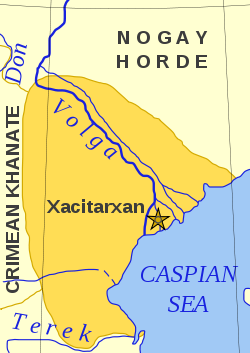
Russian forces annexed the Astrakhan Khanate at the mouth of the Volga, giving Russia control over the entire Volga river basin and access to the Caspian Sea. This conquest secured vital trade routes to Persia and Central Asia and consolidated Russian dominance over former Mongol successor states.
Image source: Astrakhan Khanate
1582
% complete
The Cossack leader Yermak Timofeyevich, backed by the Stroganov merchant family, led an expedition across the Ural Mountains and defeated the Khanate of Sibir. His campaign initiated the Russian conquest of Siberia, one of the most remarkable territorial expansions in history, which continued through the following century.
Image source: Yermak Timofeyevich
Jan 18, 1654
% complete
Bohdan Khmelnytsky and the Cossack Hetmanate swore allegiance to the Russian Tsar at Pereiaslav, bringing Left-Bank Ukraine under Muscovite protection. The agreement triggered a long war with Poland-Lithuania and marked the beginning of Russia's expansion into Ukrainian lands.
Image source: Pereiaslav Agreement
May 27, 1703
% complete
Peter the Great founded a new capital on marshy land at the Neva River delta, seized from Sweden during the Great Northern War. Built at enormous human cost, Saint Petersburg became Russia's 'window to Europe,' serving as the imperial capital for two centuries and symbolizing Russia's western orientation.
Image source: History of Saint Petersburg
Nov 2, 1721
% complete
Following victory in the Great Northern War, the Senate and Synod proclaimed Peter the Great Emperor of All Russia, formally transforming the Tsardom of Muscovy into the Russian Empire. The new title recognized Russia's elevation to great power status among European nations.
Image source: Russian Empire
1728 - 1730
% complete
Vitus Bering, commissioned by Peter the Great, sailed from Kamchatka and charted the strait separating Asia from North America. The expedition opened Siberia's Pacific coast to further exploration and eventually led to Russian claims in Alaska.
Image source: First Kamchatka Expedition
1783
% complete
Catherine the Great formally absorbed the Crimean Khanate into the empire, ending centuries of Tatar raids and establishing Russian naval supremacy on the Black Sea. Sevastopol was founded shortly after as the main base of the Black Sea Fleet.
Image source: Annexation of the Crimean Khanate by the Russian Empire
Mar 30, 1867
% complete
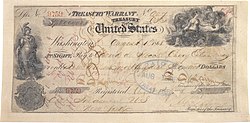
Russia sold its Alaskan territory to the United States for $7.2 million. Financial strain after the Crimean War and fears Britain might seize the distant colony motivated the sale, ending nearly a century of Russian presence in North America.
Image source: Alaska Purchase
1558 - 1583
% complete
Tsar Ivan IV launched a war against Livonia seeking access to Baltic Sea ports. The prolonged conflict drew in Sweden, Poland-Lithuania, and Denmark, ultimately ending without territorial gains for Russia and contributing to domestic strains that would soon plunge the country into crisis.
Image source: Livonian War
1700 - 1721
% complete
Russia, joined by Denmark-Norway and Saxony-Poland, attacked the Swedish Empire under Charles XII. After early defeats such as Narva, Russia gradually gained the upper hand and emerged victorious, breaking Swedish dominance of the Baltic and establishing Russia as a major European power.
Image source: Great Northern War
Jul 8, 1709
% complete
Peter the Great decisively defeated Charles XII's Swedish army in Ukraine, destroying the myth of Swedish invincibility. The catastrophic defeat forced Charles into exile in the Ottoman Empire and turned the tide of the Great Northern War irrevocably in Russia's favor.
Image source: Battle of Poltava
1768 - 1774
% complete
Catherine the Great's forces defeated the Ottoman Empire, winning independence for Crimea and granting Russia access to the Black Sea through the Treaty of Küçük Kaynarca. The victory marked the beginning of Russia's southward expansion toward warm-water ports.
Image source: Russo-Turkish War (1768–1774)
1772 - 1795
% complete
Russia, Prussia, and Austria carved up the Polish-Lithuanian Commonwealth in three successive partitions. Russia acquired vast territories including Belarus, Lithuania, and western Ukraine, eliminating Poland as an independent state and greatly enlarging the empire westward.
Image source: Partitions of Poland
Jun 24, 1812 - Dec 14, 1812
% complete
Napoleon Bonaparte invaded Russia with the Grande Armée of over 600,000 men. After the bloody Battle of Borodino and the burning of Moscow, winter, disease, and scorched-earth tactics annihilated the invaders, making this one of history's greatest military disasters.
Image source: French invasion of Russia
Oct 4, 1853 - Mar 30, 1856
% complete
Russia clashed with an alliance of Britain, France, the Ottoman Empire, and Sardinia over influence in the declining Ottoman lands. The disastrous siege of Sevastopol and Russia's defeat exposed the empire's technological and administrative backwardness and shattered its European preeminence.
Image source: Crimean War
1877 - 1878
% complete
Russia went to war supporting Balkan Slavs against the Ottomans, winning victories at Plevna and reaching Constantinople's outskirts. The subsequent Treaty of San Stefano granted large gains, but the Congress of Berlin revised them downward amid British and Austrian objections.
Image source: Russo-Turkish War (1877–1878)
Feb 8, 1904 - Sep 5, 1905
% complete
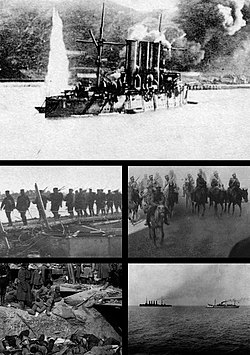
Japan attacked Russian positions in Manchuria and Port Arthur over competing imperial ambitions. Russia suffered humiliating naval defeats at Tsushima and land losses, undermining the prestige of the autocracy and shocking Europeans as an Asian power defeated a great European empire.
Image source: Russo-Japanese War
Jul 28, 1914
% complete
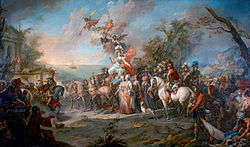
Russia mobilized in defense of Serbia against Austria-Hungary and Germany, entering World War I. Early victories in East Prussia gave way to devastating defeats like Tannenberg, and by 1916 the war effort strained the economy and morale to breaking point.
Image source: Ottoman Empire in World War I
1584 - 1613
% complete
The death of Ivan the Terrible ushered in the Time of Troubles, a period marked by dynastic crisis, famine, foreign intervention by Poland and Sweden, and widespread civil unrest. The chaos threatened the very existence of the Russian state until national resistance expelled foreign occupiers.
Image source: Time of Troubles
Feb 21, 1613
% complete
A Zemsky Sobor (assembly of the land) elected Mikhail Romanov as Tsar, founding the Romanov dynasty that would rule Russia for over three hundred years. His election ended the Time of Troubles and restored stability, order, and centralized authority to the exhausted Russian state.
Image source: Michael of Russia
1670 - 1671
% complete
The Cossack leader Stenka Razin led a massive uprising of Cossacks, peasants, and non-Russian peoples along the Volga against noble privilege and serfdom. Though brutally suppressed, the rebellion exposed deep social tensions and foreshadowed future peasant revolts including Pugachev's.
Image source: Stenka Razin
1682
% complete
Peter I ascended the throne, initially sharing power with his half-brother Ivan V and regent Sophia. Peter would become one of history's most transformative monarchs, dragging Russia into the European mainstream through sweeping military, administrative, and cultural reforms.
Image source: Peter the Great
1697 - 1698
% complete
Peter the Great traveled incognito across Western Europe studying shipbuilding, military organization, and technology while seeking allies against the Ottoman Empire. The journey inspired his determination to westernize Russia and recruit European experts to modernize his backward realm.
Image source: Grand Embassy of Peter the Great
Jul 9, 1762
% complete
Catherine II deposed her husband Peter III in a palace coup and began her thirty-four year reign. A German-born princess who embraced Enlightenment ideas, she presided over a golden age of Russian expansion, cultural flourishing, and autocratic reform.
Image source: Catherine the Great
1773 - 1775
% complete
Emelian Pugachev, claiming to be the murdered Peter III, led the largest peasant uprising in Russian history across the Urals and Volga regions. Cossacks, serfs, Old Believers, and indigenous peoples joined before the revolt was crushed; Catherine responded by tightening serfdom and provincial administration.
Image source: Pugachev's Rebellion
Apr 21, 1785
% complete
Catherine the Great issued the Charter to the Nobility, exempting nobles from taxes, corporal punishment, and compulsory service. The charter entrenched serfdom and made the nobility the social pillar of the autocracy, deepening the divide between gentry and peasants.
Mar 23, 1801
% complete
Alexander I took the throne after the assassination of his father Paul I. He initially pursued liberal reforms and administrative modernization with advisors like Mikhail Speransky, but increasingly turned to conservatism and mysticism after the Napoleonic Wars.
Image source: Alexander I of Russia
Dec 26, 1825
% complete
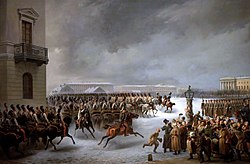
Army officers influenced by liberal ideas staged an armed protest on Senate Square demanding constitutional reform upon Nicholas I's accession. The revolt was swiftly crushed, its leaders executed or exiled, but it inspired generations of Russian revolutionary movements.
Image source: Decembrist revolt
Mar 3, 1861
% complete
The Emancipation Manifesto freed more than twenty-three million serfs, granting them land allotments subject to redemption payments. Known as the 'Tsar Liberator,' Alexander II launched the greatest single reform in imperial history, though flawed implementation bred rural poverty and lingering discontent.
Image source: Emancipation reform of 1861
Oct 30, 1905
% complete
Facing revolutionary pressure, Nicholas II issued the October Manifesto promising civil liberties and a legislative parliament, the State Duma. Though the tsar later curtailed its powers, the manifesto transformed Russia from absolute autocracy into a semi-constitutional monarchy.
Image source: October Manifesto
1666
% complete
Patriarch Nikon's liturgical reforms were enforced by church councils, causing a schism within Russian Orthodoxy. Those who rejected the reforms became known as Old Believers and faced severe persecution, creating religious dissent communities that persisted into modern times and profoundly shaped Russian cultural life.
Image source: Old Believers
1891 - 1916
% complete
Construction started on the world's longest railway, linking Moscow to Vladivostok across thousands of miles of wilderness. The railway accelerated Siberian settlement, boosted trade, enabled rapid military deployment, and symbolized Russia's drive toward industrial modernity and Asian expansion.
Image source: Trans-Siberian Railway
Mar 13, 1881
% complete
Members of the revolutionary group Narodnaya Voskaya Volya (People's Will) assassinated Alexander II with bombs on a Saint Petersburg street. His son Alexander III responded with repression, rolling back reforms and launching a period of rigid autocracy known as counter-reform.
Image source: Assassination of Alexander II of Russia
Jan 22, 1905
% complete
Troops fired on peaceful workers marching to petition Tsar Nicholas II in Saint Petersburg, killing hundreds. The massacre ignited the Revolution of 1905, unleashing nationwide strikes, mutinies, and peasant uprisings that shook the foundations of autocracy.
Image source: Bloody Sunday (1905)
Feb 23, 1917 - Mar 3, 1917
% complete
Bread riots, strikes, and troop mutinies in Petrograd escalated into revolution, forcing Nicholas II to abdicate on March 2, 1917. Three centuries of Romanov rule and over 350 years of imperial monarchy ended, replaced by a Provisional Government and dual power with soviets.
Image source: February Revolution
Jul 17, 1918
% complete
Bolshevik authorities shot the former Tsar Nicholas II, Empress Alexandra, their five children, and loyal servants in the basement of the Ipatiev House in Yekaterinburg during the Russian Civil War, definitively extinguishing the imperial dynasty.
Image source: Murder of the Romanov family
Or browse the full history timeline directory, with more than 2,000 topics.
This Russian Empire timeline was generated with the help of AI, using information found on the internet.
We work hard to keep these timelines accurate, but mistakes do get through. If you spot one, email us at [email protected] and we'll fix it for future visitors.
Generate yours with AI or build it from scratch, for free.
Export your timeline, add your own events, edit or remove AI-generated events, and much more
No credit card required.
Cancel anytime.
Cancel anytime.
You can create an unlimited number of timelines with up to 10 events on each one, customize how they look, export them to PDF, PNG, PowerPoint, CSV, and Excel, and share them with a link. Paid plans raise the event limit and add features like spreadsheet imports and collaborators.
Yes. You can cancel your subscription from your account page at any time, and you will not be charged again. Your subscription stays active for the rest of the period you already paid for.
Yes. We will email you a reminder before the annual renewal, and we will also email you a receipt.
Yes. You can email us within 15 days of any payment, and we will issue you a full refund.
Check out our pricing docs or send us an email anytime: [email protected].